
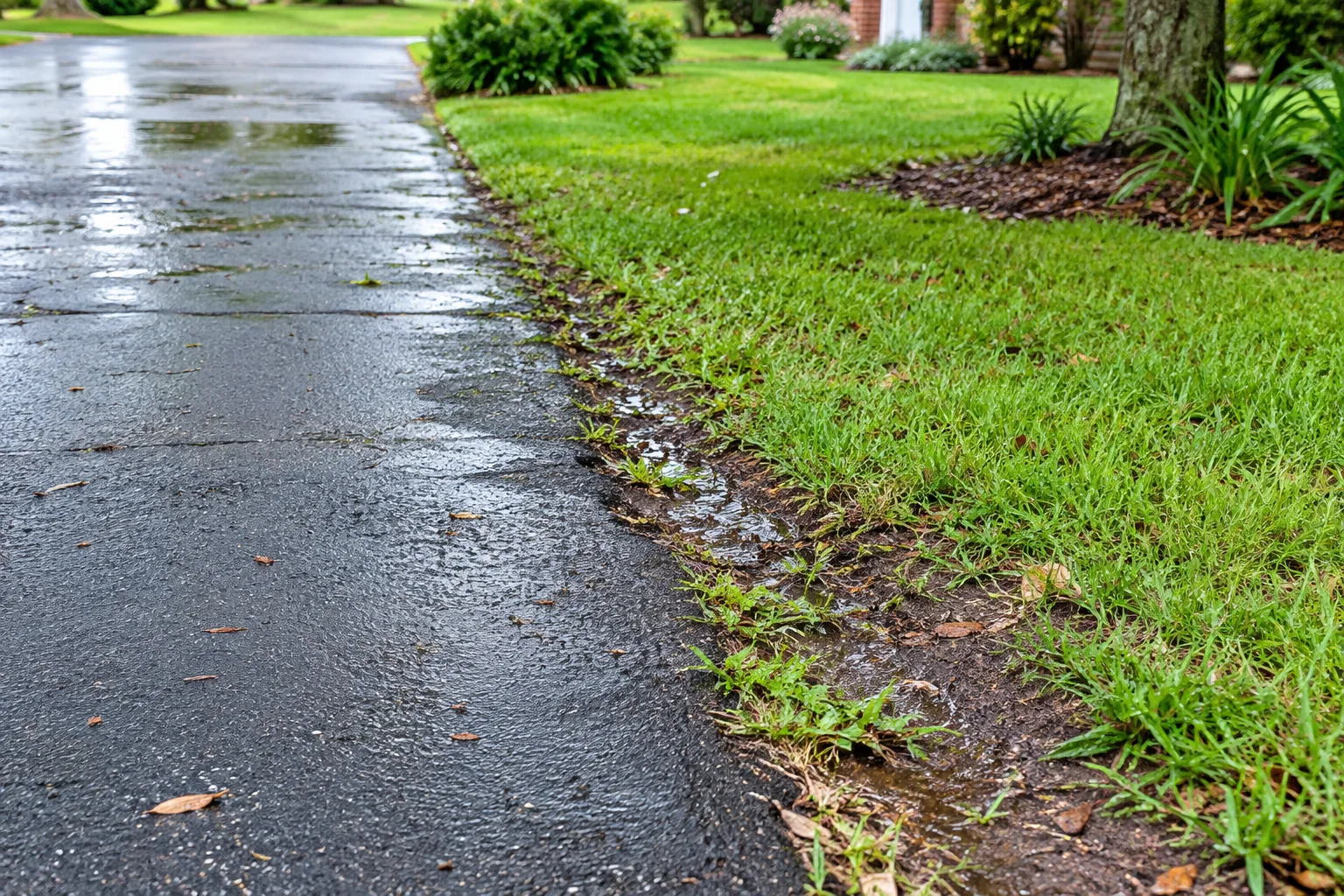
Begin with the observed water path
A concern about driveway water traveling toward adjoining property needs a clear record before pavement elevations are changed. Describe where water is seen, its apparent route and known conditions. Keep the observation separate from a conclusion about property rights, responsibility or the complete source of runoff. Those matters cannot be settled from a wet photograph.
Show the driveway and adjoining ground from safe locations you are entitled to access. Include relevant entrances, roof discharges, curbs and visible drainage features without declaring one the proven cause. A close image of a wet pavement edge leaves out much of the connection. The reviewer can explain what further information is required.
The goal is an intended water path reviewed for the actual site and responsibilities. Do not begin by telling a crew simply to send water elsewhere. The owner and relevant providers need to settle the intended outcome and coordination before treating a new surface as an approved drainage solution. A useful estimate identifies unresolved decisions instead of hiding them behind a general resurfacing description.
Use photographs with honest timing and limits
Safe after-rain photographs show water at a particular place and time. Note approximate timing and known conditions. If several observations exist, retain them separately rather than combine them into a claim that all storms behave identically. A dry overview can show fixed features and connections hidden by water in another image.
Mark an observed route on a copy of an overall image while identifying it as an observation aid. It is not a survey or drainage design. Say where the route becomes uncertain or leaves your view. There is no need to enter another property, approach moving water or stand in traffic to complete the record.
Do not invent slope measurements, volumes or precise boundary locations from the image. Ask which plans, measurements or professional review are needed. A useful initial record can acknowledge uncertainty without appearing more precise than its evidence. That gives the site conversation an accurate starting point and prevents a guessed measurement from becoming an unintended assumption in the work proposal.
Bring actual plans and known project history
Share available current surveys, site plans and relevant prior work records with the appropriate reviewer. Identify what is known to be current and what remains uncertain. A fence, hedge or pavement edge should not automatically be presented as the verified legal boundary. This guide does not resolve property rights or a disagreement between owners.
Describe known driveway work, grading, landscaping, roof-discharge and drainage changes with actual dates when available. Timing can help prepare the review without independently proving cause or responsibility. If history is incomplete, state that clearly. Do not build a definitive explanation from one water observation or from the fact that nearby work occurred earlier.
Identify shared features and people or providers whose participation may be needed. Ask who can authorize each proposed activity and which coordination must be resolved before construction. A paving estimate should not be interpreted as assurance that every off-property effect is permitted. Keep permissions and professional dependencies explicit rather than leave the crew to infer them from an owner's request.
Settle the intended connection before paving
Ask the relevant provider to explain the intended water path and its relationship to retained elevations and adjoining properties. If additional drainage or authority review is needed, identify the question and information required. A paving crew should not be left to choose a new discharge destination informally while material is being installed.
Clarify paving, drainage, grading and restoration as actual scopes. Separate providers can coordinate when the finished connections and order of work are understood. The owner should know who supplies an adjoining finished grade and who confirms any related infrastructure before the surface work is finalized. A generic promise that another provider will handle it is not a clear handoff.
This page does not prescribe a drainage design or determine local approvals. Actual site findings and applicable responsibilities govern those decisions. The preparation task is to expose observations, boundaries, intended results and unresolved coordination so the eventual proposal can be evaluated before an elevation change affects more than the driveway surface or creates an expectation no provider has accepted.
Compare proposals against the same intended outcome
Ask what each proposed approach is intended to accomplish and how its assumed water connection relates to the reviewed plan. Compare removal boundaries, retained surfaces, grading dependencies and related-provider work. Two prices may cover different portions of the concern rather than identical corrections offered at different costs. The owner needs that distinction before comparing totals.
Identify pending information and separate provisional items from firm inclusions. An allowance or excluded drainage task should be understandable as such. The owner should not infer that resurfacing settles an off-property concern when the relevant path remains unresolved. Ask which decision must be completed before the work can responsibly be scheduled.
Agree on a process for unexpected findings during authorized removal. Name who receives the information and who approves added work and pricing. New information should produce a reviewable decision rather than an improvised change in direction because no one identified responsibility for the adjoining connection. Keep the updated scope attached to the plan so all providers use the same intended outcome.
Coordinate operations and related-provider handoffs
Tell the contractor about household access, deliveries, parking and any shared route in the work area. Discuss closures against actual use. If a grading or drainage provider works before or after paving, identify the handoff and interim conditions requiring management. The schedule should reflect those dependencies instead of assume the surface activity can occur in isolation.
Clarify who communicates with relevant owners, managers and providers where coordination is needed. A contractor's site visit does not itself grant permission or settle a neighboring-property concern. The plan should describe who handles each discussion and what needs resolution before construction, without presuming that another party has already accepted an unspecified change.
Follow reopening and care instructions for actual activities and conditions. Document pending grading, drainage or restoration separately from paving completion. A new-looking driveway does not establish that the complete coordinated plan is finished. The owner needs to know what remains, which provider handles each task and how temporary arrangements are communicated until normal use resumes.
Check coordination before confirming the work date
Before the paving date is confirmed, check that the plan used by each relevant provider reflects the same intended connection. A surface estimate, an owner-marked photograph and a separate grading discussion should not silently describe different outcomes. Identify which document guides the work and who communicates approved changes. Keep any pending permission or professional review visible. The purpose is an understandable project decision for the actual site, not an assumption that the contractor will settle every boundary and water question during installation. This also helps distinguish completion of paving from completion of the coordinated work that must follow it.
Keep completion and later observations factual
Retain the agreed plan, scope, changes and genuine completion photos. Identify exclusions and retained conditions. One dry photo cannot establish performance under every future rain event. The record should explain what was provided and the intended connection without making a universal claim that all drainage and boundary questions have been resolved by new pavement.
If rain later raises a concern, safely document location, timing and extent for the responsible provider. Keep the observation separate from a conclusion about complete cause or legal responsibility. Before-work records and written tasks help direct the follow-up to the appropriate question instead of assigning every wet area to the same assumed mechanism.
Contact Asphalt Solutions with the actual project address, safe views and confirmed history. Most work is at customer properties. Slidell contact-location visits are by appointment only; listed hours mainly concern phone availability. Call or text to discuss the review needed before changing elevations. Bring questions about the intended water path and provider responsibilities so the initial conversation can identify the next concrete decision.
Questions about driveway water running toward a neighbor
The direct answer
Runoff must be considered beyond the repair boundaries. A proposed grade change should account for adjacent property and suitable discharge.
What to discuss before choosing a repair
Review runoff consequences and any needed permissions or professional drainage advice.
What to observe and record
- Record the existing water path
- Identify boundary conditions
- Show proposed work limits
A mistake to avoid
Moving water off one driveway does not make every discharge location appropriate.
Continue with the right next step
Property conditions determine the final scope. These planning notes do not replace a site evaluation. How to use our pavement guidance