
Describe the cover area without assuming underground damage
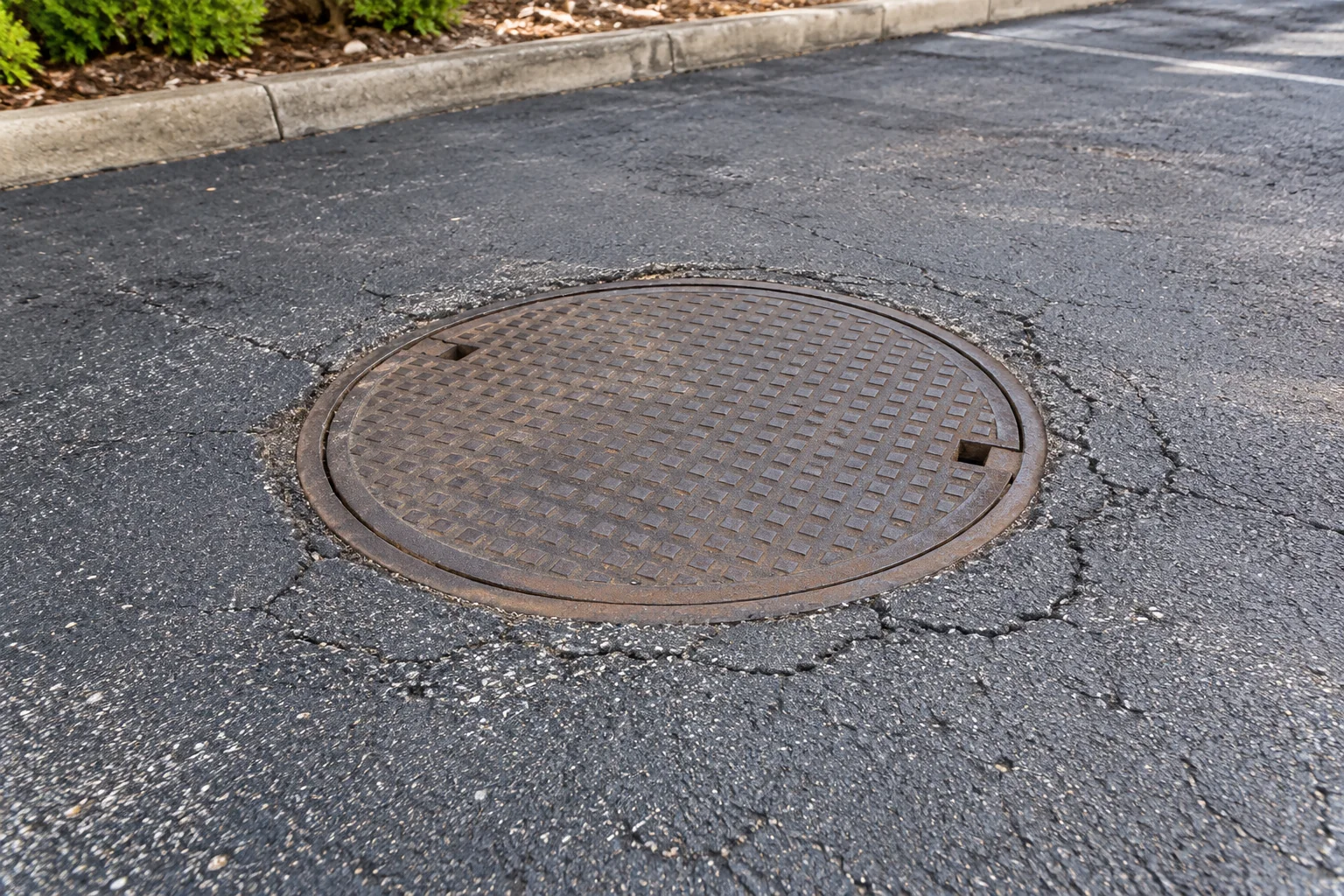
A crack pattern around a manhole calls for review of the surface connection and relevant utility responsibilities. Show the closed cover, frame and surrounding pavement together. The visible pattern does not prove underground damage or identify one cause. Begin with what can be seen and the practical concern the owner needs addressed.
Describe cracking, a level difference, loose material or an observation of movement separately. A close surface image cannot verify the condition beneath the frame or the utility system. The evaluator should explain which questions concern pavement, the frame connection and any appropriate utility review rather than treat all of them as one automatic repair.
Identify the cover location and the party responsible for the utility or structure if known. A paving estimate should not silently stand in for utility inspection or permission to alter the assembly. The initial conversation should make clear who participates, what information is required and which activity is being considered before a boundary is chosen.
Photograph the closed assembly and surrounding pattern
Use safe static views that locate the cover within the property and show the full surrounding crack pattern. Add representative close views while keeping the assembly closed. Include nearby repair boundaries, curbs and apparently unaffected pavement where useful. A cropped image of one crack leaves out important context about extent and retained connections.
Mark separate observations on an overall photo if more than one concern exists. Describe a visible transition without inventing a height or depth from the image. If movement was observed during ordinary use, report the actual event and timing without reproducing it. The evaluator can identify any appropriate examination and measurements for the property.
Do not lift the cover, enter the structure, pry at the frame or drive across it as a test. The initial request does not require opening or manipulating utility infrastructure. Ask the responsible provider what review is needed and how its scope will be defined. Safe surface observations and known history are enough to prepare the first discussion.
Gather confirmed utility and pavement history
Share available records of cover or frame adjustments, surrounding paving and previous repairs. Identify dates, boundaries and responsible parties where known. If the assembly details or original work history are undocumented, state that. Surface appearance alone cannot supply an accurate account of hidden construction or establish the purpose of every earlier patch.
Tell the evaluator which vehicles cross, turn or stand in the area and whether confirmed use has changed. Tire marks may help locate a route but do not independently prove a cause or load condition. Include operational information from the responsible manager or provider rather than guessing how the assembly is used from one photograph.
Keep actual history separate from responsibility conclusions. A concern appearing after work is relevant timing, not a complete fault or warranty determination. Retain agreements and contact the responsible provider about recent activities where appropriate. The current surface recommendation should be discussed against present findings and confirmed records without imply that a new contractor has settled another party's obligations.
Separate pavement work from utility and frame tasks
Ask whether the proposed scope addresses pavement around the assembly, frame adjustment, structure inspection or another activity. Those tasks can coordinate without all being included in a paving price. The owner should understand the boundary and provider for each before the proposal is treated as a complete manhole repair.
Where a utility provider or another responsible party must supply a finding, identify the needed question and sequence. The paving contractor needs to understand the intended retained connection before finalizing surface work. Avoid leaving providers to assume the other has already inspected or approved an unlisted part of the assembly.
This guide does not prescribe a frame adjustment, support detail or utility-system repair for an unseen location. Resolve the actual ownership, technical and coordination questions with appropriate parties. A clear plan can acknowledge uncertainty while still define what the paving activity is intended to accomplish and which findings must precede it.
Include water observations and fixed connections
If water collects around the cover, safely record its location and approximate timing after rain. Show surrounding pavement and visible drainage features without assuming the underground structure is the water source or a drain serving that area. The observation identifies a question, not the complete function or condition of unseen infrastructure.
Ask how proposed work relates to retained elevations and nearby surfaces. Adding material around a low-looking area is not automatically a suitable correction at a utility connection. The provider should explain the intended finished relationship and any separate assembly decision required before the surface scope is approved.
Compare alternatives by purpose, boundaries and retained conditions. A localized interface activity and larger removal around the structure may have different objectives. Identify preparation, restoration, exclusions and unresolved questions. A useful comparison explains these differences before the owner interprets the totals as different prices for an identical repair.
Agree on investigation, access and changes
If investigation is recommended, ask the specific question, location, extent and limits and how findings affect the next decision. A limited observation should not be presented as complete knowledge of the entire surrounding pavement or utility route. Clarify whether investigation and restoration are separate from the later work.
Agree how unexpected findings during authorized removal are communicated, priced and approved. Name decision authority and any need for utility-provider participation. Keep the approved boundary and related tasks recorded. New information should lead to a reviewable change rather than an improvised alteration of infrastructure outside the paving crew's agreed responsibility.
Discuss the route closure, temporary access and who communicates it to actual users. Include vehicle and walking needs and relevant operations. Follow actual provider instructions for reopening and any utility handoff. New pavement beside a closed cover does not independently confirm every connected task is ready for the intended traffic.
An example of separating surface and assembly work
Consider cracking around a cover where an owner also reports an occasional level difference felt during ordinary passage. Show the complete area and describe the observation without staging another drive-over event. Ask whether the paving recommendation depends on a utility or frame finding before the surface boundary is settled. A proposal for adjacent pavement and a proposal including assembly work may represent different objectives and responsible providers. Compare their actual scope, retained connections and dependencies rather than only price. Identify who can authorize any utility-related task and what information must be shared at the handoff. If further examination is proposed, clarify the question and its limits before treating a limited result as knowledge of the whole structure or surrounding route. Keep the work record clear at completion: identify the pavement activity performed and any findings supplied separately. The purpose is a coordinated decision without an owner opening the cover or a strip of new asphalt being presented as proof that every unseen component has been inspected and repaired.
Keep the completed connection identifiable
At closeout, retain genuine photos of the complete work area, the scope and approved changes. Identify retained pavement, completed related-provider tasks and exclusions. The record should not imply that an entire structure or system was inspected and repaired if the agreement covered only the surrounding surface.
For later concerns, report actual location, timing and observations without opening the cover or reproducing movement. Describe confirmed changes in use or nearby work separately. Earlier records make follow-up more precise and help the appropriate provider distinguish the activity provided from another condition left outside the scope.
Contact Asphalt Solutions with the actual project address, safe closed-cover views and known history. Most projects are handled at customer job sites. Slidell contact-location visits are appointment only, and listed hours mainly concern phone availability. Call or text to discuss surface review and any needed utility coordination before assuming the crack pattern proves a particular underground problem.
Questions about crack pattern around a manhole
The direct answer
A manhole and the surrounding pavement should be evaluated as a connection. Structure support, water entry and traffic can be relevant.
What to discuss before choosing a repair
Ask who handles the structure and which surrounding repairs are included.
What to observe and record
- Show the cover and surrounding cracks
- Note movement
- Record prior adjustments
A mistake to avoid
A surface patch should not be assumed to stabilize a moving structure.
Continue with the right next step
Property conditions determine the final scope. These planning notes do not replace a site evaluation. How to use our pavement guidance