
Plan the complete route before closing the work area
Pedestrian access during parking-lot work needs a plan for how people reach their actual destination. Start with arrival points, parking and active doors, then identify where the proposed work interrupts the route. A line around a repair area is not a complete access plan if users cannot understand how to reach the building.
Do not assume people can walk through an active pavement work area or simply pass around the nearest barrier. The responsible property operator and relevant providers need an appropriate arrangement for the actual site and users. Keep this decision in the planning discussion before work is scheduled rather than improvise it when customers arrive.
Explain which entrances must remain usable and who depends on them. Include the property's accessibility needs and identify any appropriate specialist review. This guide does not certify a temporary layout or prescribe dimensions. The practical goal is a reviewed, communicated route that fits the actual work phase, with clear responsibility for changes and reopening.
Map arrival points, doors and conflicts
Use an available site plan or overall photograph to identify active entrances, pedestrian connections and the planned work boundary. Include parking, loading, deliveries and vehicle circulation where they interact with walking access. The reviewer needs the whole journey rather than a close image of one sidewalk beside the work.
Describe busy times and actual user needs, including tenants, employees, visitors and residents as applicable. Identify a route that appears available without assuming it is suitable. Fixed levels, doors, surfaces and vehicle conflicts may need evaluation before it is selected. A photograph can prepare that review but cannot establish every measurement or applicable requirement.
Take observations from safe locations. Do not enter active work or traffic to trace a route for an image. If additional examination is needed, coordinate it with the responsible parties. A useful preparation record identifies the intended destination, known constraints and questions still needing review rather than present an owner-drawn detour as an approved access design.
Assign responsibility for the temporary arrangement
Identify who manages the property and who can approve access and closure decisions. Confirm the contractor's responsibilities and any separate design, traffic or accessibility review needed. A paving estimate should not silently be treated as approval of every temporary route, sign and operational arrangement on the property.
Agree who sets up, checks and changes the arrangement during work. The responsible parties should understand what happens when a phase changes, another provider arrives or the intended door becomes unavailable. A plan is easier to follow when the owner knows who receives a concern and who can authorize a revision.
Keep responsibilities understandable in writing. If signs, barriers or another control are part of the scope, identify them and their intended use without assuming one item by itself establishes a usable route. The complete arrangement needs to match actual conditions. Avoid leaving each provider to assume another person has reviewed an unlisted walking connection.
Coordinate phases with real property operations
Discuss which portions can close together and which connections must remain available. Include opening hours, tenant access, deliveries, collection and other activities that share the lot. A phase plan should reflect those operations rather than divide pavement into convenient rectangles without considering the destinations people need to reach.
If work progresses through several stages, identify the walking arrangement for each. Preparation, removal, paving, marking and related-provider work can have different boundaries. Users should not have to infer a new route every time equipment moves. Agree how changes will be reviewed and communicated before a stage begins.
Confirm any alternate entrance with the responsible operator. Another door is not automatically a suitable substitute simply because it exists. Consider the complete connection from arrival to destination and any applicable review. If no acceptable arrangement has been settled, keep that dependency visible before the work schedule is treated as confirmed.
Communicate the route before users reach the closure
Identify who informs tenants, staff, residents and relevant visitors about the arrangement. A message should explain which entrance or arrival area is available, when it applies and whom to contact about access. Keep the information consistent with the actual phase rather than announce a general lot closure that leaves important users guessing.
Coordinate the on-site arrangement with those communications. Information supplied in advance should match what people encounter at arrival. If conditions change, identify who updates both the physical arrangement and the message. A useful plan does not rely on someone at the work edge explaining an improvised bypass separately to every new visitor.
Do not promise that business operations remain unaffected unless the actual reviewed plan supports that expectation. Explain the constraints and agreed sequence plainly. The owner can make a better operational decision with an accurate closure and access account than with a broad reassurance that fails to describe how people reach the building during the work.
Set release and related-provider handoffs clearly
Agree who confirms when a route or phase may reopen. Follow instructions for the actual activities and conditions, including any separate walking or vehicle release. A surface that looks finished does not independently establish readiness, and a release for one area does not automatically cover every connected task.
If another provider must finish markings, equipment or a walking connection, identify the handoff and interim arrangement. The owner should know what is complete, what remains and who communicates the final return to normal use. Avoid treating departure of a paving crew as the automatic completion of a wider operational plan.
Keep relevant instructions with the scope and phase record. Give users one consistent arrangement rather than several assumed reopening times. If a concern is reported, direct it to the responsible party for review without ask users to test an uncertain route. Clear decision authority supports both the work sequence and an understandable handover.
An example of planning more than a work boundary
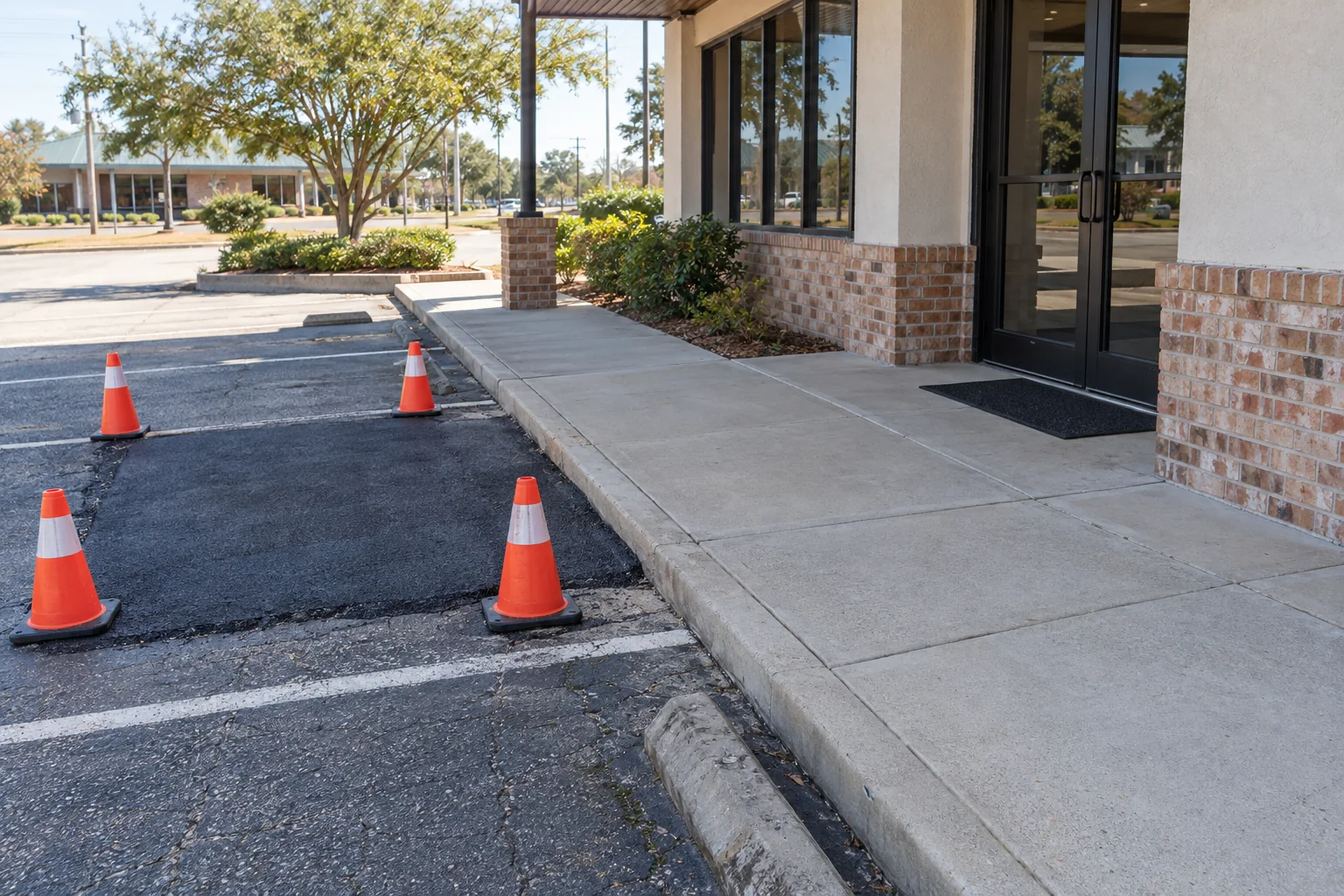
Suppose a parking repair closes the usual approach to the main door while part of the lot remains available. A drawing showing only the repair rectangle does not establish how visitors reach the building. Ask the responsible parties to review the complete connection from the available arrival area to an appropriate entrance for that phase. Identify vehicle conflicts, active doors and the users who depend on the route. If another entrance is proposed, confirm its actual suitability rather than assume any door provides an equivalent arrangement. Put decision authority, temporary controls, communication and changes in the plan. Before users arrive, coordinate the on-site direction with the information sent to staff, tenants or visitors. At the handoff, confirm the complete route and any related provider tasks are released according to actual instructions. The useful record explains the arrangement that was reviewed and used. It does not present a photograph of cones beside a walkway as certification that every access requirement or operational question has been evaluated.
Review the plan against completion and future work
At closeout, compare the completed activities with the agreed scope and phases. Keep genuine overall photos and approved changes where useful, with excluded or deferred tasks identified. A photo of cones beside a walkway does not certify that the whole temporary arrangement was appropriate or that every access question was evaluated.
Retain the operational lessons and any unresolved concern for later phases or future projects. Describe actual user difficulties and locations rather than assume all confusion resulted from the same cause. A clear record helps the responsible parties adjust a future plan against evidence instead of repeat an arrangement only because it was used before.
Contact Asphalt Solutions with the property address, overall views, active entrances and known access constraints. Most work is handled at customer job sites. Slidell contact-location visits require an appointment; listed hours mainly concern phone availability. Call or text to discuss the project and route coordination before the lot-repair schedule is finalized.
Questions about pedestrian access during lot repairs
The direct answer
Repairing a lot while a property operates requires a clear discussion of walking routes, entrances and temporary controls. Access assumptions belong in the scope.
What to discuss before choosing a repair
Ask how temporary routes and reopening instructions will be communicated.
What to observe and record
- Identify active doors
- Note accessible routes
- Record busiest times
A mistake to avoid
Keeping one vehicle lane open does not automatically preserve pedestrian access.
Continue with the right next step
Property conditions determine the final scope. These planning notes do not replace a site evaluation. How to use our pavement guidance
Background reading: U.S. Access Board accessible-route guidance. General guidance does not replace evaluation of the actual property.