
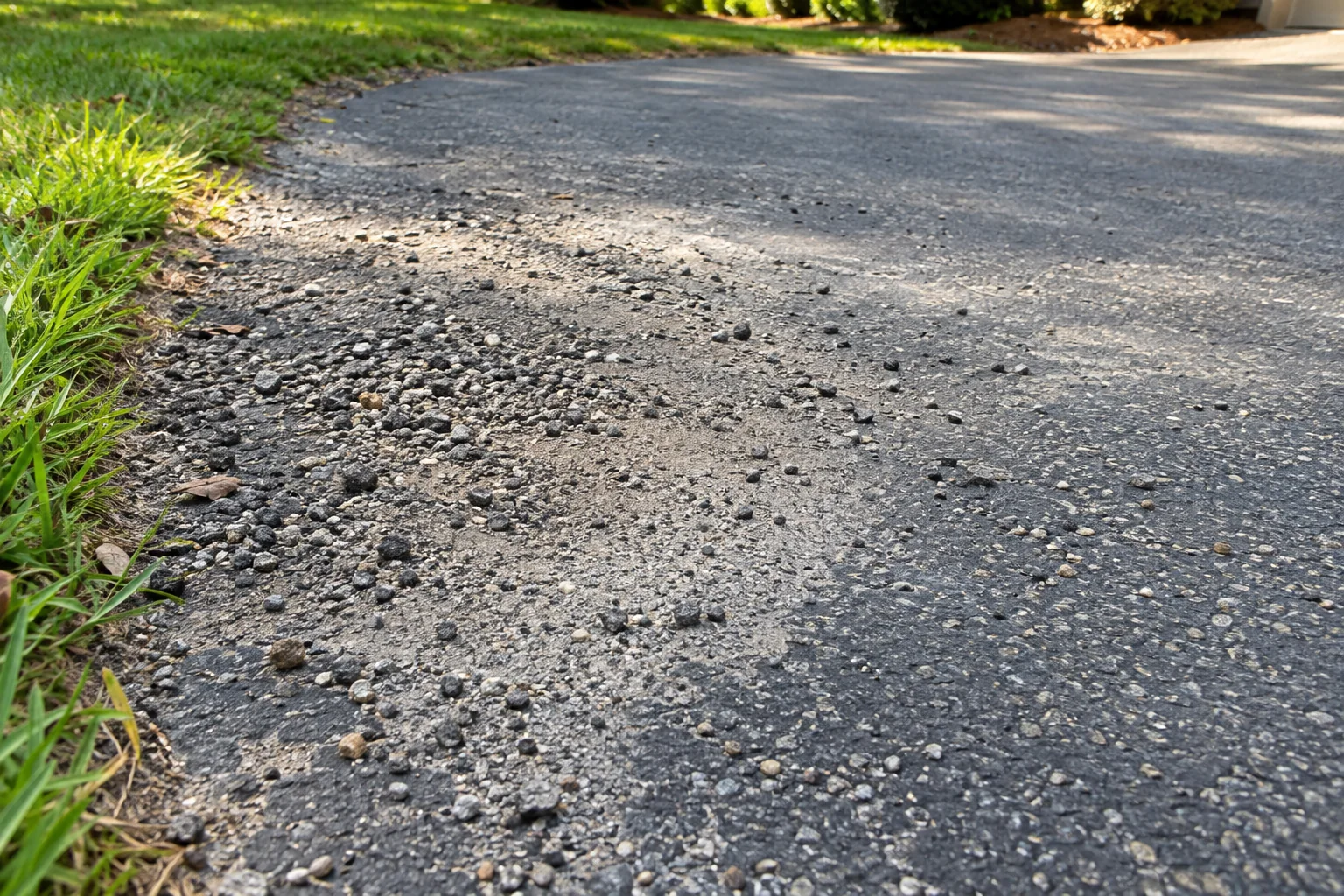
Describe the observation before assigning a cause
Dust or loose material noticed after paving work should be reported with location, timing and the activity actually performed. The observation alone does not establish that construction was incorrect or determine a particular remedy. Show the material and surrounding surface so the responsible provider can understand what needs review.
Distinguish fine dust, loose small aggregate, broken pieces or another visible material without guessing its identity. Describe the practical effect on access or property use. A close photograph may locate a concern but cannot verify the condition underneath or establish whether every loose particle came from the new work.
Begin with an accurate report to the provider, especially where work is recent. Ask how the observation relates to cleanup, the surface condition and the actual agreement. A useful conversation separates those questions before deciding whether the next step is review, a cleanup activity, a repair or another defined response. The owner does not need a technical diagnosis to make the initial report.
Provide wide and close views with locations
Take a safe overall image identifying the area and representative close views showing the material and surrounding texture. Include transitions to apparently unaffected surface and nearby edges where useful. A cropped pile can make it difficult to understand how much area is affected or whether the concern is isolated or widespread.
Mark several locations on an overall photograph when needed. Describe the amount and extent in terms you can support rather than inventing a measurement. If a comparison over time is available, retain the genuine dates and context. The provider needs to understand which pictures show the same place and which identify different concerns.
Do not enter moving traffic, handle unknown material or perform an improvised scraping test for a quote. Ask the provider what evidence is useful before changing the surface. Safe static observations are enough to start the report. If further examination is needed, its purpose and limits should be explained as part of an appropriate property-specific review.
Keep work dates and agreed activities available
Share the actual work date, scope and any care or reopening instructions. Paving, patching, surface treatment and related activities are different work histories. If the exact product or method is unknown, say so rather than infer it from color. The agreement helps the provider address the concern against what was actually supplied.
Describe when the material was first noticed and any confirmed events afterward, such as nearby work, vehicle use or a known spill. Timing provides context but does not by itself prove source or fault. Keep these observations distinct so a report does not silently turn an assumption into the basis of the next work decision.
If another provider completed adjacent work, identify that activity and its boundary where known. Material can be observed in a shared area without its source being established from a photograph. The appropriate parties can coordinate findings, but the owner should not be expected to determine responsibility through a home test or guessed construction account.
Ask how cleanup and surface questions differ
Clarify whether the proposed response concerns removing loose material, examining the retained surface or repairing an identified condition. These are different objectives. A cleanup activity should not automatically be read as a determination that no other concern exists, and loose material alone should not automatically be read as proof that the whole surface needs replacement.
The provider should explain what information supports the recommendation and which questions remain. Ask whether a visit or additional documentation is needed before a response is selected. A photograph can prepare the discussion without establish affected depth, construction quality or the suitability of every proposed treatment.
Do not apply a household chemical, aggressive cleaning method or improvised surface treatment to make the area appear resolved before review. Such actions change the condition and can complicate the history. Follow actual care instructions and ask what preparation, if any, is appropriate to the activity and material at this property.
Define any proposed activity and its limits
If work is proposed, locate its boundary and purpose in the agreement. Ask what is removed, retained and restored and whether related cleanup is included. A general instruction to fix loose material may leave the provider and owner with different expectations. The activity should be understandable before the work is scheduled.
Compare alternatives by function and actual condition findings. A limited cleanup, a localized repair and broader surface work may represent different objectives. Identify retained conditions, preparation, exclusions and any further review before compare totals as though they cover identical work. The owner needs the scope differences to evaluate a useful choice.
Agree how unexpected findings during authorized examination or removal are communicated, priced and approved. Name who has decision authority and record changes. Initial uncertainty can be stated clearly without treating the surface view as complete knowledge of hidden condition. A new finding should lead to a reviewable decision rather than an unexplained expansion of an informal cleanup request.
Coordinate access and follow actual instructions
Tell the provider which walking and vehicle routes use the affected area and whether it can close. Include deliveries, household parking or business operation where relevant. The response plan should fit actual use rather than assume the area seen empty during a visit can remain unavailable without coordination.
Agree who communicates temporary arrangements and any change in restrictions. If another provider has a connected task, identify the handoff and what remains pending. Users should understand where they can walk or park without interpreting a partly completed surface or deciding that swept-looking pavement is automatically ready for every activity.
Follow actual instructions for reopening and later use of any work performed. Do not choose a waiting period or care method from an unrelated project. If the original instructions are unclear, contact the responsible provider before testing the surface. A clear operational release belongs with the scope so everyone using the property receives the same guidance.
An example of separating a report from its explanation
Imagine an owner notices loose grit near one driveway edge and a different dusty appearance beside nearby work. Identify both locations and share the actual dates and work history rather than assume every particle has the same source. Ask the responsible provider which observations relate to cleanup and which need surface review. If an activity is proposed, identify its purpose and boundary at each location. A limited cleanup and a repair involving removal are different scopes and should be compared accordingly. Keep recent-work instructions available and describe actual use without performing a scrape or cleaning experiment to prove a diagnosis. Where another provider has worked nearby, share that confirmed activity and let the appropriate parties coordinate findings. At completion, retain the scope and genuine photos identifying the response and any remaining question. This gives follow-up an honest reference without deciding responsibility, affected depth or construction quality from the amount of grit in a cropped image.
Retain the report and completed response
Keep genuine before and completion photos, the agreement, provider findings and approved changes. Identify excluded or deferred concerns. The record should explain what response was provided rather than imply one image of a clean surface establishes every hidden condition or resolves every responsibility question related to the earlier work.
If material or another concern appears later, report actual location, timing and observations without recreating an event. Describe confirmed new use or nearby activities separately. Earlier records and instructions help the responsible provider understand follow-up against the actual scope instead of assume every new particle represents the same source or recurrence.
Contact Asphalt Solutions with the property address, safe wide and close views and known work history. Most projects are handled at customer job sites. Visits to the Slidell contact location require an appointment, and listed hours mainly concern phone availability. Call or text to discuss the concern and appropriate next review without needing to diagnose the material first.
Questions about dust or loose material after paving work
The direct answer
Loose material should be discussed in relation to the installed surface, construction process and cleanup scope. Document the area before deciding what it means.
What to discuss before choosing a repair
Ask which cleanup and follow-up tasks are included and whether the surface needs review.
What to observe and record
- Show close and wide views
- Identify the material if known
- Record when it appeared
A mistake to avoid
Do not infer pavement composition from a small amount of loose debris alone.
Continue with the right next step
Property conditions determine the final scope. These planning notes do not replace a site evaluation. How to use our pavement guidance