
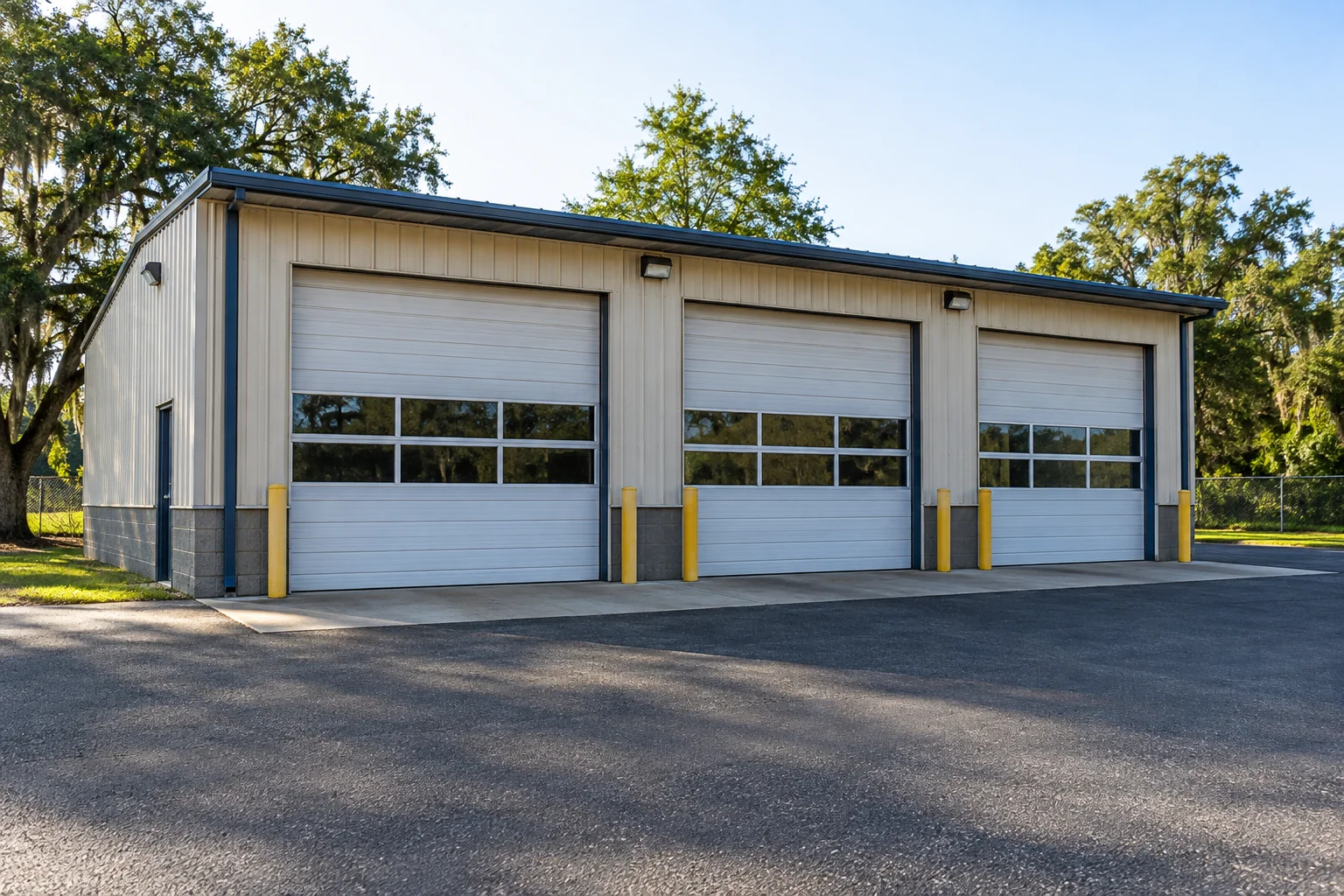
Keep the customer approach and shop handoff distinguishable
Consider an auto-service property where a customer arrival area connects directly to a bay approach. A repair proposal for one area may affect movements across the other. Show both in an overall photograph and explain how vehicles ordinarily move between them. State the intended use honestly without perform a turning, loading or other test on an uncertain surface for evidence.
Ask which boundary and activities the proposal includes. A retained concrete threshold, equipment area or another fixed feature may require a separate conversation. The owner should know which provider evaluates each relevant item and whether further information is needed before the task can be finalized. A general asphalt price does not resolve every question associated with shop operations.
Keep any known affected surface condition in the scope discussion without diagnosing contamination from a dark mark or photograph. Tell the responsible provider what is actually known about the location and prior work. If another specialist or service is needed, identify that responsibility and sequence rather than assume the pavement task silently includes it.
Use one current operating arrangement during the work
Identify who manages vehicle staging and customer arrival while the relevant area is unavailable. An empty-looking part of the lot is not automatically authorized for another use. Review the actual arrangement with the operator and providers, including any appropriate requirements, before staff begin directing people or vehicles there.
If another trade needs the same approach, clarify the handoff and who can approve a change. Keep the proposed work area, access instructions and operating decisions connected. A shift in the boundary may affect a bay movement or entrance even when the overall repair goal remains unchanged. Communicate the approved revision instead of letting different staff rely on separate early assumptions.
Follow provider instructions when the actual area is released, with the intended activities clearly understood. Do not infer readiness from appearance or extend a limited release to uses that were not discussed. Keep genuine completion views, the final scope and relevant directions with the property record. Record deferred or excluded tasks separately so later review can identify what was actually performed.
Contact Asphalt Solutions by call or text with the auto-service address, current concern and operational constraints. Most work is at customer job sites. Visits to the Slidell contact location are appointment only; listed hours mainly describe phone availability. Coordinate the actual site visit and work sequence directly rather than assume posted phone hours establish field availability.
Separate customer parking from shop operations
An automotive property can include customer parking, vehicle staging, shop approaches, service access and collection routes. These uses should be shown separately in a pavement discussion. Begin with a property sketch explaining how vehicles enter, move between areas and leave. The number of parking spaces alone does not describe the working routes.
Describe the vehicles and activities using each area, including occasional deliveries or recovery vehicles where relevant. Show turns, standing locations and the connection to the shop. Explain any area that must stay available during business hours. A photo taken while the property is empty cannot communicate those operating demands by itself.
Map the observed defects and include close-ups with surrounding views. Identify recurring patches, settlement, loose edges and water collection as observations. Share known repair history. The assessment still needs to consider conditions not visible in photographs, so avoid selecting one repair method solely from the apparent size of a defect.
Review affected or contaminated surfaces explicitly
Show oil-affected or otherwise contaminated areas and explain what is known about them. Ask the assessment to distinguish ordinary pavement condition from a surface requiring different preparation or another responsible party’s review. A dark coating should not be assumed to resolve every stain or affected area.
Clarify the preparation and material suitability described in the proposal. Surface maintenance, localized repair and replacement retain different conditions. Ask what the selected operation can address and which limitations remain. The goal is a defined project conversation, not an assumption that one coating applies identically throughout a working service property.
Assign any separate handling, cleanup or related coordination through the appropriate responsible party. Do not treat a pavement inquiry as instructions for disposal or management of shop materials. The paving scope should identify its boundaries and dependencies without silently including tasks that require a different process or provider.
Compare the construction scope at shop connections
Photograph the approaches to doors, retained concrete, drains and fixed shop features that the work touches. Explain their operational requirements and what will stay in place. Added pavement or a repaired area can change an interface, so the proposal should describe how the finished work meets those connections.
Ask the assessment to distinguish asphalt and concrete operations where both are relevant. A shop approach, localized pavement defect and separate concrete area can need different scopes. Compare preparation, removal, transitions and reopening rather than assume that one material or treatment is appropriate for every part of the property.
Define work boundaries before comparing totals. Identify any allowance or optional item and how changed conditions will be discussed. A smaller targeted repair and a broader reconstruction are different purchases. Ask for the reasoning and retained limitations so the owner can compare what each proposal actually addresses.
Plan vehicle staging and business access
Identify the customer, staff and shop vehicles that must move before a work area is released. Assign the relocation task within business operations. A paving quote should not be assumed to include moving customer vehicles, changing storage arrangements or coordinating every shop appointment. Confirm the contractor’s cleared-area and access needs in advance.
List the operating periods, deliveries and service commitments that affect phases. Distinguish a preferred work window from a route that cannot close together with another route. Ask which construction operations require broader or longer restrictions than the final pavement footprint. An after-hours preference is not a confirmed construction or reopening duration.
Trace the available routes during each proposed phase and explain the arrangement to the staff who direct vehicles. Have the responsible party review applicable site and operational requirements. The plan should reflect the actual shop’s layout rather than assume that any open parking zone can serve as a substitute service approach.
Discuss water, markings and retained features
Record water collection and apparent runoff paths near the shop, traffic routes and drains from safe locations. Ask whether drainage-related correction is included and which conditions remain. Patching or resurfacing should not be treated as a universal answer to water entering from another part of the property.
Confirm markings, signs, wheel stops and related concrete explicitly where the project includes them. Review the intended layout with the responsible party. A renewed surface does not automatically settle how customer parking, shop access and pedestrian connections should work. Keep the final arrangement tied to the agreed scope.
Identify landscape edges, retained pavement and fixed features around repair boundaries. Ask how new work connects and who handles separate restoration or adjustment. These details can explain why bids differ and help the business avoid discovering an unassigned task after the paving portion is visually complete.
Reopen for the use that was actually discussed
Ask for written reopening instructions for the actual work, material and vehicle demands. Straight passenger travel, stationary turning, service deliveries and other shop activities may need separate discussion. Share the guidance with every person directing vehicles onto the finished area instead of relying on its appearance.
Name the authorized approver and the operational contact before scheduling. Establish how discovered conditions or access conflicts will be raised. Keep the scope, phase sketch, relocation responsibilities and dated completion photographs together. These records help explain what was addressed if the business’s vehicle use or pavement condition changes later.
Start a commercial inquiry with the property address, mapped concerns, photographs and the routes the shop needs. Explain affected surfaces and any separate preparation questions without unrelated customer details. Ask for a property-specific comparison of suitable work and a practical access plan before committing vehicles or appointments to a construction arrangement.
Questions before you plan the work
Bring the property facts to the conversation
Parking lot paving, asphalt repair and pavement maintenance address different project questions. Compare the appropriate scope for your property.