
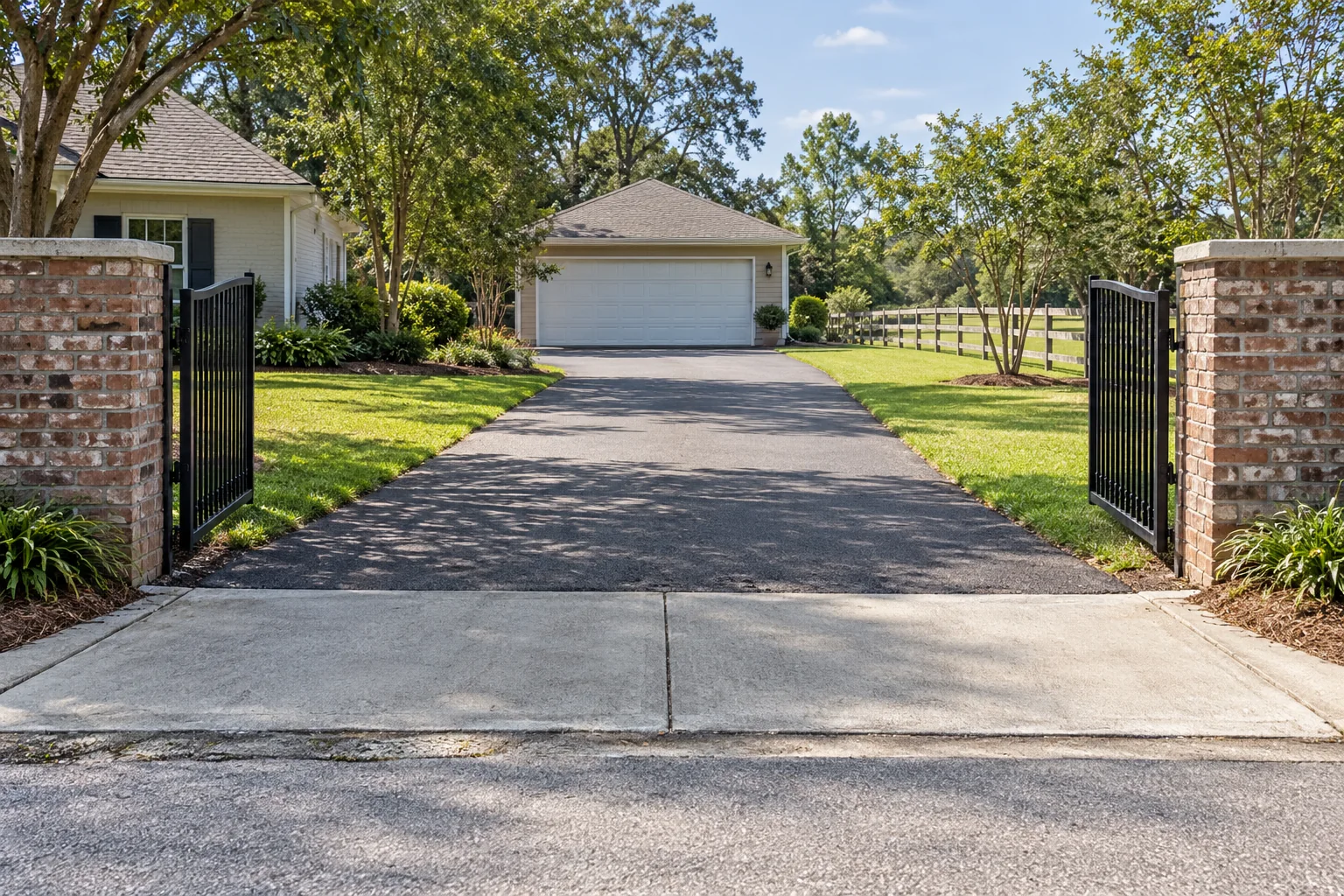
Coordinate a Covington gate detail before finalizing the approach
An owner planning driveway work near a gate may also be changing equipment, posts or an adjoining garage connection. Show the retained approach and relevant features in an overall image. Explain which details are confirmed and which depend on another provider. A photograph can locate the question without establishing clearance, an approved layout or the right construction sequence.
Ask who establishes the final gate arrangement and how the paving proposal connects to it. If the gate provider needs information or must complete a task first, identify that dependency and the person who confirms the handoff. Avoid relying on a universal rule about which trade goes first; the actual scope and site conditions should support the sequence.
Keep equipment access and household or tenant use in the same conversation. The route needed for a visit or construction may differ from the finished operating arrangement. Clarify who can authorize temporary restrictions and who communicates changes. The owner should be able to identify the current plan without reconstructing several separate conversations between providers.
Compare changed details against the current written scope
If the gate location or another retained connection changes, ask whether the pavement boundary and related tasks need revision. Keep the updated document identifiable and retain the reason for the change. An earlier estimate can remain useful history without being treated as the current instruction after a project detail has changed.
At completion, compare the actual work with the authorized scope and keep any separate-provider item visible. Follow the instructions for the specific surface and phase before returning it to use. A photograph can document the connection's appearance, while the actual agreement and provider findings describe what was reviewed and performed.
Send Asphalt Solutions the Covington property address, overall views and known dependencies by call or text. Most jobs are at customer sites. The Slidell contact location is appointment only, and listed hours mainly concern phone availability. Coordinate the site visit and work schedule as separate project arrangements.
Show the approach as well as the area to be paved
An estimate for a Covington property becomes more useful when it shows how the crew and property users reach the work. Start with the entrance, approach route, gates and the surface involved. A project with separated parking areas or a narrow connection can need a different access conversation from an open driveway. The paved area alone does not describe the working arrangement.
Take a wide photo from the entrance toward the project and another showing the return route. Label the parts of the property involved on a simple sketch. Include observed damage, retained surfaces and fixed connections. Tell the estimator where vehicles turn or wait and which route the household or business must keep available during the work.
Asphalt Solutions discusses driveway paving, asphalt repair, parking lot work, maintenance and related concrete projects in Covington and across the Northshore. Share the actual address and intended result. The service-area description prepares a project conversation; it does not establish a construction appointment or prove that a particular photographed pavement was built at a Covington location.
Separate a repair boundary from a complete renewal
Localized damage does not automatically define a whole-property replacement project. Show where material is missing, where cracks connect and where a depression or damaged edge affects use. Ask which areas need assessment and how the proposed repair boundary is selected. A simple request to make the surface new can hide the distinction between selected repairs and a broader reconstruction.
Repair, resurfacing, replacement and maintenance retain different conditions. Ask each option to explain removal, preparation and the material left in place. An overlay changes height while retaining existing pavement; a rebuilt area involves different boundaries and operations. Comparing those details alongside price makes it easier to understand the intended result rather than rely on broad labels.
If the budget calls for stages, record the purpose of the current approval and which concerns remain deferred. Ask how later work connects with the first stage. A maintenance treatment for suitable pavement should not be mistaken for a repair of every damaged area. Keep the agreed sequence with the proposal so the property team understands what the current price includes.
Include gates, garage thresholds and retained concrete
A gate opening, garage threshold or retained apron can govern the finished connection of a driveway. Show each fixed feature and explain its use. Ask how the selected pavement method meets it and what operations are included. Adding a layer without reviewing the interface can change clearance or the way people and vehicles move across the connection.
For concrete work, discuss the intended use, preparation, placement and joints through the actual project proposal. Include walkways, curbs and areas that remain. A finish photograph does not define the complete construction detail or guarantee an invisible match to retained concrete. Separate the functional connection from appearance options so both are understood before approval.
If another project is changing a gate, wall, landscape border or adjoining surface, share its sequence with the paving estimator. Identify who handles each operation and who approves the handoff. One project being visually complete does not establish that the next contractor has the access or finished conditions needed. Coordinate the interface rather than assume separate estimates automatically fit together.
Describe the water path and street connection honestly
Note water collection at the driveway, entrance or parking area, including when it happens and the nearby visible features. Add safe rainfall observations and dry-weather context photos. A puddle provides useful information but does not establish every buried support condition or the cause of a drain problem. Keep observations separate from suspected explanations in the inquiry.
Ask how the finished work connects to an existing drain, culvert approach, curb or roadway edge. Asphalt, concrete, outlet and structure work can be separate scope items. Clarify what is assessed, what remains and who handles related operations. A surface repair should not be assumed to correct every source of runoff or every feature connected to the water path.
Covington publishes an official right-of-way application for work in the City right-of-way, with review and approval before those operations begin. Use the City’s current Building Permits and Public Works resources for the specific address and proposed connection. A general driveway quote cannot determine the responsible jurisdiction or authorize work on an adjoining public feature.
Plan business routes with the people who use them
For a commercial property, map customers, employees, deliveries and refuse collection separately. Include operating hours, busy periods and occasional service vehicles. A parking lot may look lightly used during a visit while a delivery turn or entrance remains critical to the business. The estimator needs that operating pattern to discuss a practical sequence and construction boundary.
Trace each necessary route through the proposed phase and identify the agreed alternative where a connection closes. Preparation can need space different from the finished pavement footprint. Ask which activities require a larger restriction before announcing that the business can operate normally. The property team should review the suitability of temporary pedestrian and vehicle arrangements for the actual site.
Assign the contact who coordinates suppliers and tenants, and name the person who can authorize a scope change. These can be different roles. A construction window does not automatically change an outside carrier’s commitment, and a tenant’s access request does not establish financial approval. Clear assignments help keep the quote, operating plan and communications aligned.
Approve the scope and retain the project record
Give each estimator the same address, photos, route sketch, repair history and intended use. Compare the boundaries, preparation, retained surfaces, fixed connections and related operations. Ask which disposal, concrete, drainage or marking tasks are included and excluded. A lower price can reflect a narrower project rather than equivalent work at a better rate.
Clarify how discovered conditions will be raised and who can approve changes. Before scheduling, agree on vehicle relocation and the access that remains available. Request reopening guidance for the actual method and conditions, including turning or standing loads where relevant. A dark, smooth or dry-looking surface does not establish readiness for every kind of use.
Keep the written scope, approved options, dated photographs and care instructions together. Start a residential or initial inquiry through the quote form; use the commercial form for occupied-business constraints. Call or text (985) 788-0493 to discuss your Covington property. An inquiry begins assessment and does not confirm a final design, price, guaranteed lifespan or booked construction date.
Questions before you plan the work
Bring the property facts to the conversation
Driveway paving, asphalt repair and concrete services address different project questions. Compare the appropriate scope for your property.
Covington services and local planning reference
Explore Covington asphalt paving, Covington concrete services and Covington sealcoating. For business operating constraints, start a commercial inquiry.
Official local reference: City of Covington Building Permits, including its right-of-way application. Confirm current, property-specific requirements with the responsible office.