
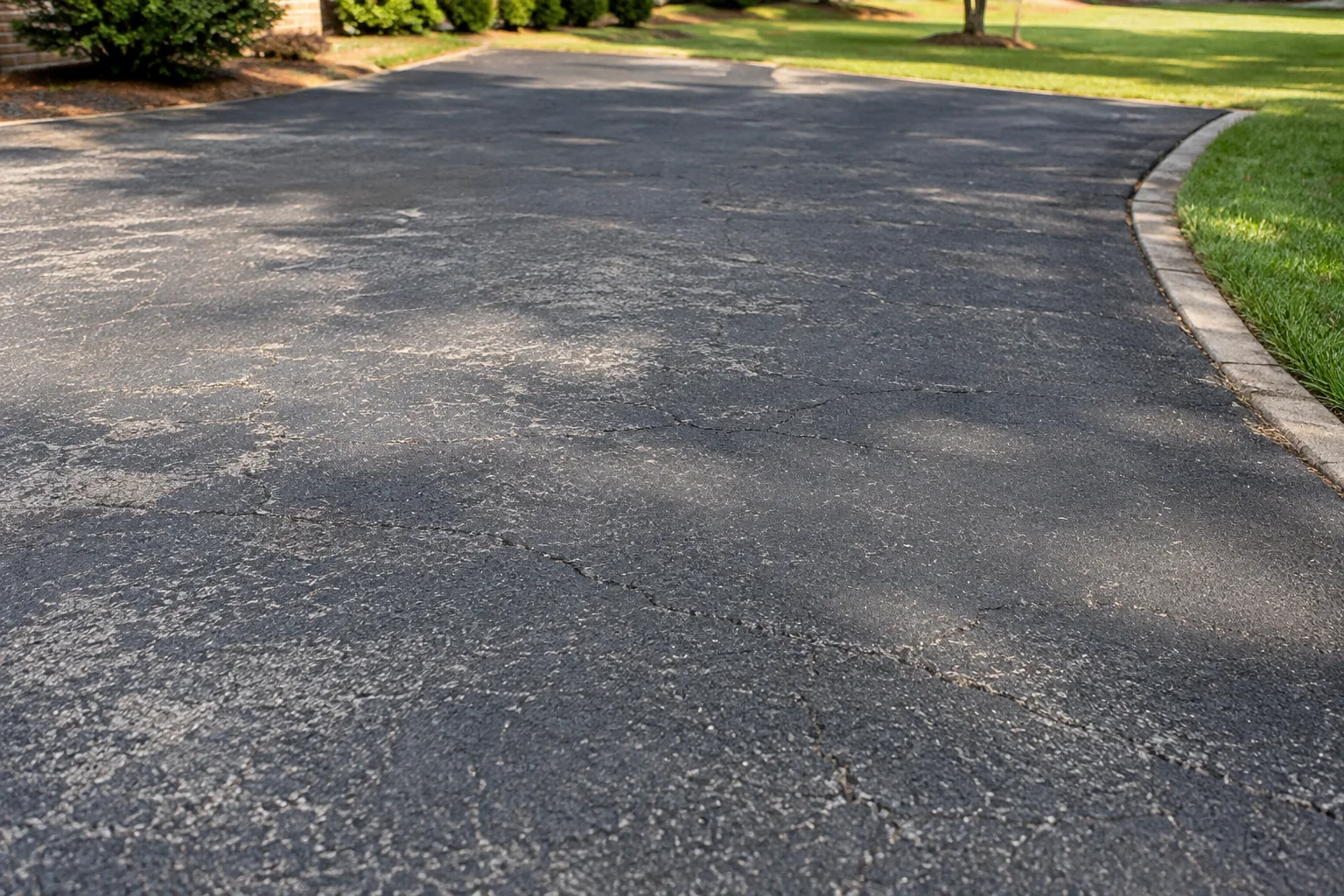
Start with the condition of the asphalt you want to maintain
Sealcoating is a maintenance discussion for a suitable asphalt surface. Start by showing the full driveway or parking lot and the areas that concern you. Identify fading, visible wear, cracks, holes, low areas and broken edges separately. A darker finish can improve appearance, but the first project decision is whether the retained pavement and its repair needs suit the proposed maintenance treatment.
Asphalt Solutions discusses sealcoating in Slidell for residential and commercial properties. Send your project address, overall photos, the approximate area and the use that must continue during work. For a home, describe driveway parking and garage access. For a business, identify customers, deliveries, refuse collection and tenant hours. These details help turn a broad sealing request into a practical project discussion.
The business contact address is 299 Ashton Parc, Slidell, LA 70458 (by appointment only). Call or text (985) 788-0493 to arrange a discussion before visiting. The estimate needs the actual construction location, even when it is nearby. Include the best contact method and any timing preference so the team can discuss an assessment and the appropriate scope for your property.
Separate coating from the repairs the surface needs
A pothole contains missing pavement. A recurring depression involves a finished-level or support question. A broken edge has a boundary and use problem to assess. Sealcoating does not rebuild these conditions simply by covering the surrounding surface. Mark them before requesting a maintenance quote and ask which repairs are proposed before coating, which remain and why.
Crack treatment can also be a separate operation. Ask which cracks are included, what preparation is planned and how the treatment relates to the coating work. Different surface conditions can call for different decisions. Avoid assuming that every visible crack disappears or becomes structurally repaired when the lot receives a fresh finish. The estimate should explain the purpose and limitations of the selected operations.
If repeated patching or widespread deterioration is the main issue, ask whether a broader repair or paving assessment should come first. Compare the maintenance scope with the underlying work that would remain necessary. Choosing a coating because it is the smallest initial expense becomes less useful when unresolved damage still interferes with the way the property needs to operate.
Make cleaning and preparation visible in the proposal
Ask what surface preparation is included before the selected material is applied. Show dirt accumulation, vegetation at edges, debris and locations with visible oil or other contamination. The estimator should explain the preparation proposed for those observations. A generic promise to seal the entire drive does not tell you how the affected spots will be handled or what limitations remain.
Discuss boundaries around retained concrete, walls, drains and landscaped margins. Mark the features that should remain outside the coating area and ask how the construction team will handle the interface. For a commercial property, include wheel stops, signs and marking requirements in the project discussion. Clarify which items move, which stay and which related operations are part of the quote.
Keep the surface accessible for the agreed preparation. Ask when vehicles, stored items or movable equipment need to leave the work area. Do not create your own cleaning or chemical-treatment plan immediately before construction without discussing it with the installer. Coordinating the preparation helps the team work from the agreed condition rather than arrive to an unexpected changed surface.
Choose the material and application around the actual project
Ask the contractor to identify the selected material and application approach in the proposal. Review what preparation it requires, which areas receive treatment and what limitations affect your property. Product descriptions, coats and quantities should be explained in relation to the assessed surface. A general website statement about a sealing product cannot establish the appropriate application for every driveway or occupied parking lot.
If two quotes describe different application scopes, ask each estimator to clarify the intended work. Compare preparation, repaired areas, selected material, boundaries and return-to-use instructions together. Do not assume that a similar finished color proves the same underlying work was included. The purpose of a written scope is to make the maintenance decision understandable before you choose a proposal.
Discuss any existing treatment, previous work or known material information you have. Share records or photographs without guessing at the exact product used years earlier. Ask whether the present condition affects the proposed method. Clear information about what is known and what needs assessment is more useful than selecting a product only because an unrelated property looked good after treatment.
Plan around weather and Slidell property conditions
Maintenance scheduling depends on the selected material and application conditions. Ask what weather conditions the installer requires and how a change will be communicated. Rainfall, surface moisture and the application window can affect the plan. A calendar reservation should be treated as a proposed construction window until the team confirms the conditions and sequence for the actual work.
Show shaded or low areas that stay wet longer than the rest of the pavement. Explain water arriving from downspouts or another part of the property. Sealcoating is not a drainage correction, so ask whether a separate assessment or repair is needed before maintenance. A finished coating does not establish a new water path or correct every source of moisture affecting the surface.
Arrange the work with enough flexibility to respond to the installer’s conditions rather than force an application around an event. Tell the team about important dates early, including business promotions, deliveries and travel that affect access. Ask what can be planned reliably and which steps depend on the confirmed application window. This gives the scheduling discussion a realistic connection to property use.
Keep driveways and occupied parking lots usable through the sequence
For a residential driveway, identify where vehicles will be parked while the work area remains closed. Include access through a gate or to a garage, expected deliveries and any visitor who needs a clear route. Ask the installer which parts of the drive are restricted and when each activity can resume. Communicate those instructions to everyone who uses the property.
For a commercial lot, show the customer entrance, pedestrian route and recurring service-vehicle path. Ask whether phased work is practical for the layout. A small closed connection can interrupt the rest of the lot even if most parking spaces remain untouched. Use the commercial quote form to describe operating hours and routes that need consideration in the proposed sequence.
If parking lines or other markings are part of the project, confirm their scope and place in the sequence. Existing lines may not remain useful after the maintenance operation. Ask who handles the marking plan, which related requirements the property team must review and when the finished area can reopen. Do not treat a freshly coated surface as a complete parking-layout decision.
Follow reopening guidance and plan the next maintenance decision
Follow project-specific installer instructions for walking, driving, parking and tight turns after application. Ask about heavier service vehicles and any unusual use before work begins. A surface that looks dry is not the same as a confirmed return-to-use instruction for every activity. Keep barriers and notices in place for the period the installer directs.
Ask what routine care and observation are useful after the work. Record damage, contamination or recurring water when it appears so a future assessment has clear information. Discuss the condition and use before selecting the next maintenance interval. A fixed universal calendar does not determine when every driveway or busy parking lot needs the same treatment.
To begin, send the Slidell address, wide photos, known repair concerns and the access pattern through the quote form. Request a proposal that separates preparation, repairs, coating and related markings. Call or text (985) 788-0493 for a direct discussion. The goal is a maintenance project that fits suitable asphalt and the way your property actually functions.
Questions before you plan the work
Bring the property facts to the conversation
Driveway paving, asphalt repair and concrete services address different project questions. Compare the appropriate scope for your property.