
What aggregate describes
Aggregate is a broad term for mineral materials such as sand, gravel and crushed stone used in construction. Pavement systems can use aggregate within asphalt or concrete mixtures and within selected supporting layers. The same word can therefore describe material in different applications. It does not identify one universal product suitable for every layer or every property.
For an owner reading a proposal, ask where the aggregate will be used and what material description or specification applies. A reference to stone or gravel may be a useful starting point, but it is not always a complete construction detail. The Federal Highway Administration discusses selected aggregates in granular base and subbase applications. Those general descriptions explain terminology rather than select the material for an individual driveway or parking lot.
Identify the layer before comparing materials
Ask whether the proposal refers to a base layer, a subbase, an asphalt mixture or another clearly identified use. Material intended for one application should not be assumed interchangeable with material in another. Connect the description to a simple pavement-section explanation and the actual work limits. The owner should know what is being placed, where and as part of which construction stage.
If a quote includes only selected base repairs, keep those areas distinct from the rest of the property. Do not read the amount of delivered aggregate as proof that the whole supporting layer was replaced. Ask what remains and which assumptions support retaining it. Clear area references help the contractor explain the proposal and make later records more useful without requiring the owner to choose a material design.
Ask for an identifiable material description
Request the intended material or governing specification in the written scope. A common name can be used differently by suppliers or in different applications. Ask the contractor to explain the description rather than assuming a familiar word settles every quality and use question. Where the project relies on a specification, identify which one applies and who is responsible for the selection.
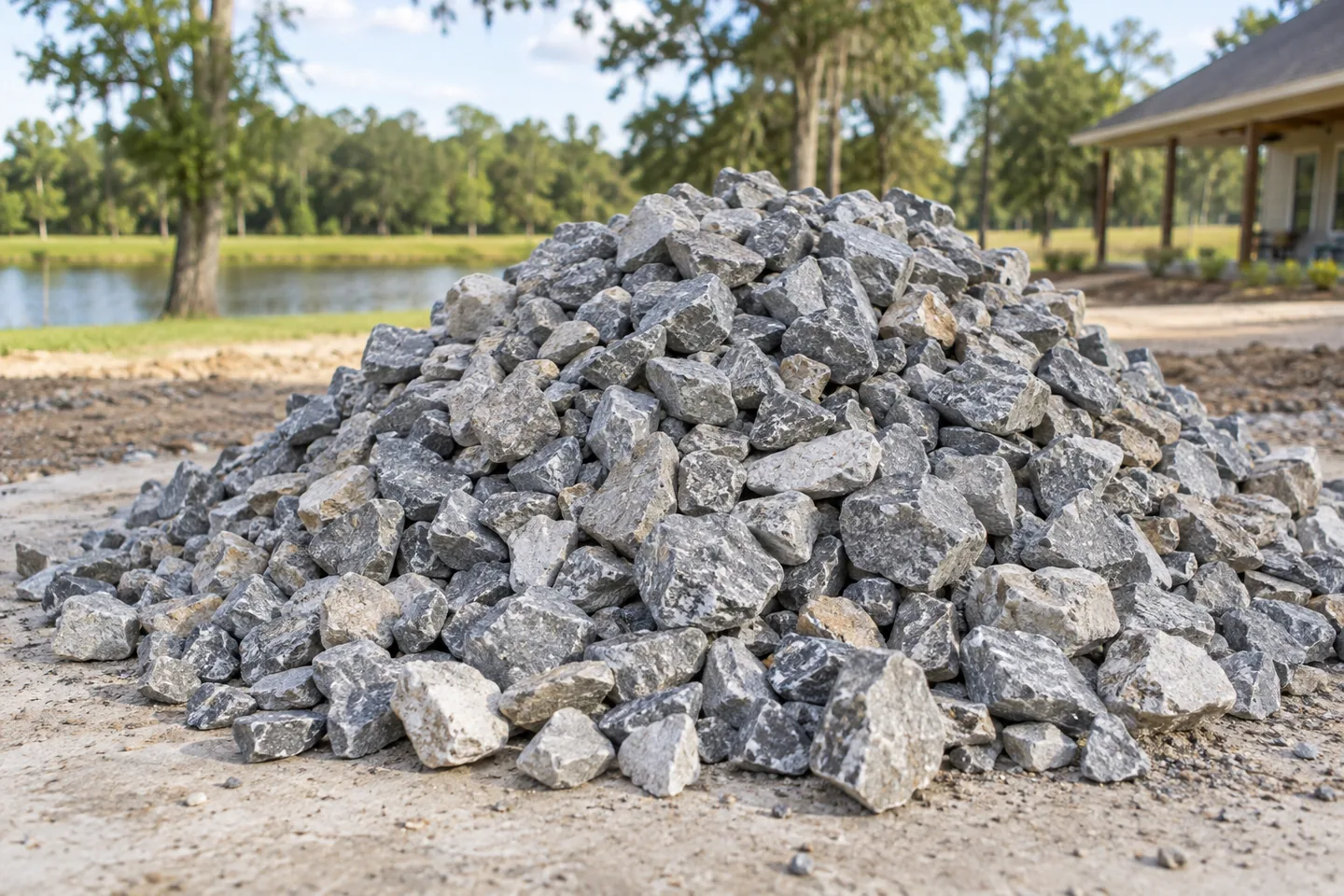
Do not judge suitability solely from color or a stockpile photograph. An image can document appearance but does not establish every required material property. The owner can ask what documentation is relevant to the actual project and how it will be connected to the work. Keep the decision focused on the proposed application and assigned responsibilities rather than on a claim that one recognizable stone is always best.
Understand gradation as a separate term
Aggregate gradation describes the distribution of particle sizes. That is different from grading a property's elevations, even though the words can sound similar. If a proposal uses the term, ask which material and requirement it refers to. Do not select a distribution from an unrelated example and treat it as appropriate for your pavement section.
Keep gradation, material identity and placement responsibilities connected in the quote discussion. A product can have a familiar name while the actual project requirement remains unclear. Ask for clarification before approving a scope that relies on that uncertainty. The contractor and any responsible designer should identify the relevant requirements; the owner should understand what is being purchased and which records will support the description.
Discuss recycled material without blanket assumptions
If reclaimed or recycled material is proposed, ask what product is intended, where it will be used and what requirements apply. Do not assume all recycled construction material is the same, or that its origin alone determines whether it is appropriate. The application and project-specific review should guide the decision.
Keep material substitutions documented where they change the accepted scope. A delivery description or a supplier conversation should not silently replace the material in the proposal. If a substitution is recommended, ask for a clear explanation and the responsible approval. Record the decision with the work area and current proposal version. This makes future maintenance discussions more reliable than relying on a remembered description of what arrived at the site.
Clarify preparation and placement responsibilities
Read the proposal for the work below and around the aggregate layer, including removal, preparation and retained connections. Ask what placement and compaction responsibilities apply to the actual section. Do not reduce the scope to a quantity of material without understanding the construction process and the area it addresses.
If removal exposes an unexpected condition, use a defined documentation and approval process. The owner should receive the finding, proposed change and effect on price or sequence before authorizing additional work. Keep optional extensions of the support area separate. A delivery quantity is not a substitute for a clear work boundary or a procedure for conditions that were not visible during estimating.
Include access, storage and surrounding features
Show the contractor the approach to the work area, gates, retained pavement and landscaped features that affect construction access. Ask what space is needed for material handling and temporary staging. A route used by a passenger car does not automatically establish the arrangement for delivery or construction equipment.
Agree where materials may be placed and what surrounding features require protection or restoration. If the property changes the available route or staging area after the quote, inform the contractor before scheduling. A changed access arrangement can affect the construction even when the finished pavement area is unchanged. Keep those decisions with the project plan so the crew and property staff use the same current instructions.
Do not confuse loose surface material with a diagnosis
If the concern is loose particles on an existing pavement, photograph the area and describe what is visible. Include an overview and note where the condition affects use. Do not assume the material's origin or the needed repair solely from an image. Different construction and maintenance questions may require actual review.
Share prior confirmed project records where they help locate the concern. If historical material information is unknown, label it as unknown. A dated observation supports the discussion without establishing every cause. Ask which proposed work addresses the concern and what remains outside the quote. The owner should understand the relationship between the visible condition and the recommendation rather than choose a solution from the glossary term alone.
Preserve material and construction records honestly
Keep the accepted scope, relevant material records, approved substitutions, changes and final photographs together. Label the area and stage represented by each document. A stockpile photo or equipment image can be useful history, but should not be used to invent a material specification, quantity or verification result that was not recorded.
At closeout, retain the reopening guidance for the actual finished work and the relevant users. Record any remaining tasks or areas outside the agreement. A useful maintenance folder connects the proposal to the work performed while keeping missing information visible. This is especially helpful when a new owner or manager later reviews a project they did not arrange.
Use the term to ask better quote questions
Compare proposals for the same application, work areas, preparation, material description and construction responsibilities. Ask about a difference before deciding that two totals represent identical work. A concise list of open questions can help the authorized owner make a decision without attempting to design the pavement from material names.
Contact Asphalt Solutions with the exact property address, visible concern, useful overview images and intended use. The company serves Greater New Orleans and the Northshore; the Slidell contact location is by appointment only. Call or text before arranging a visit. General FHWA and USGS aggregate information provides background on the terminology, while the actual private-property material and section require their own review. Before accepting the proposal, ask the authorized property contact to review the material wording alongside the work map. A person absent from estimating should be able to identify whether the aggregate belongs in selected support repairs, a whole-area layer or the asphalt mixture. Keep open material questions attached to the current proposal version. If a supplier document is provided later, connect it to the relevant construction stage instead of placing it in an unlabelled folder. This small amount of organization helps preserve the difference between confirmed project information and a general description used during planning.
Questions before you request the estimate
Turn the property facts into a clear next step
Explore the asphalt repair service guide, project planning checklists and photo gallery. Bring the actual property address, useful photographs and access needs to the quote discussion.