
What the term catch basin describes
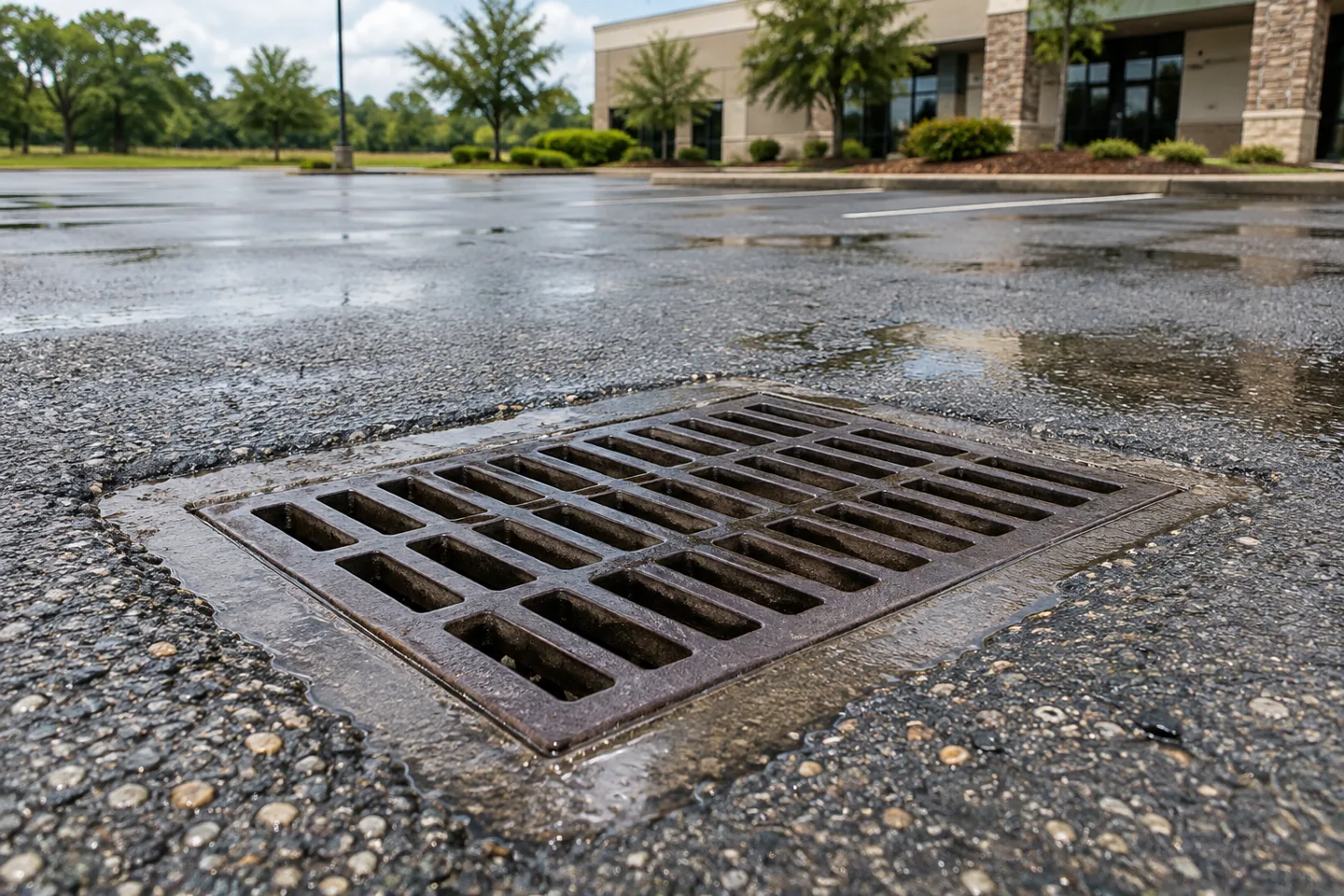
Catch basins are associated with inlets to storm-drain systems. The visible grate or opening is only part of the arrangement; the structure and its connections belong in the drainage discussion. The Environmental Protection Agency describes stormwater inlets, including catch basins, as entry points to storm-drain systems. That terminology does not establish the condition, capacity or ownership of a particular feature.
For an owner planning pavement work, start by identifying the actual inlet and what concern occurs around it. The request may involve nearby pavement damage, water remaining beside the opening or a proposed change in surface elevation. Those are different questions from inspection or reconstruction of the connected drainage system. Ask the proposal to distinguish the tasks and the parties responsible for them.
Locate the inlet within the whole property
Take overview photos showing the inlet, surrounding pavement, curbs, entrances and nearby buildings. Add a location reference on a simple sketch. A close-up of a grate alone cannot show where the surface water comes from or how vehicles use the area. Include the exact property address rather than assume the image identifies the site.
Mark the pavement proposed for work and the features intended to remain. If several inlets are present, give each a stable reference and explain which one the concern involves. Keep the references on photos, notes and proposals. This helps separate a local pavement connection from a broader property-system question and prevents images of different structures from being combined into one apparently continuous record.
Document the observation without diagnosing the system
Describe where water remains, when it is observed relative to rain and how it affects use. If visible debris is present at the opening, record that fact without assuming it explains the whole problem. A photograph cannot establish every condition inside a structure or downstream pipe. The next step may require review beyond the pavement surface.
Do not lift covers, enter structures or attempt to inspect a concealed system merely to obtain estimate photos. Use safe visible observations and identify the question for the responsible party. If historical maintenance or inspection records exist, share the relevant confirmed information. Mark unknown details as unknown rather than inferring pipe dimensions, connection routes or system capacity from the surface opening.
Distinguish pavement work from drainage-system work
Ask whether the quote concerns removal or repair around the inlet, an elevation adjustment, a structure change or another specifically described task. A proposal to pave near a catch basin does not automatically include cleaning, inspecting, repairing or replacing the connected system. Keep those responsibilities explicit before comparing a price.
Where another professional, owner or service provider must review the drainage feature, identify who arranges that coordination and when. The contractor should know which retained connection the pavement is expected to meet. A surface repair and a system task can belong in one coordinated project while remaining distinct scope decisions. Clear boundaries help the owner understand what is being purchased.
Review the finished elevation and retained connection
Show the relationship between the existing inlet and nearby pavement from useful viewpoints. Ask how the proposed work meets the retained opening or structure and which elevations require review. Do not assume that raising or lowering one visible part is a harmless solution to water beside it. The actual water path, structure and surrounding surface need to be considered together.
If another project will alter the inlet, share its current information before the paving quote is finalized. A contractor estimating against the existing feature may need a revised scope when the connection changes. Keep the accepted plan and any updates together. The owner should not approve one arrangement while expecting a different finished condition that was never explained to the construction team.
Identify vehicles and pedestrians using the area
Describe the normal travel, turning, stopping and walking routes around the inlet. Include deliveries and collection vehicles where relevant. Product and construction requirements should be reviewed for the actual use, not selected from the appearance of a grate in a photograph. The owner supplies the operation information and asks which responsibilities apply.
For a business or shared route, involve the person responsible for property access requirements where the proposed work affects them. A feature at a pedestrian entrance creates different coordination questions from one outside a normal route. Keep temporary closures, alternate access and provider arrangements in the construction plan. Do not improvise a shortcut through an active service area after work begins.
Clarify ownership, approvals and maintenance responsibility
Identify who controls the inlet and the connected drainage feature. A structure on a commercial property or near a street should not automatically be assumed under the tenant's control. Share available records and ask who will confirm any unresolved ownership or approval question before alteration.
Assign the ongoing maintenance responsibility as well as the construction task. EPA references distinguish inlet controls and their maintenance from the basic drainage entry. Do not assume an added insert or product replaces all system responsibilities. If a separate maintenance task is needed, state who will arrange it and keep the next action with the property record. The paving proposal should not silently become an undefined drainage-service agreement.
Document exposed conditions and scope changes
Ask how unexpected connections or structure conditions encountered during work will be documented. Name the authorized contact and identify whether another party needs to review the finding. Keep the proposed change, price effect and sequence adjustment understandable before approval. A person providing access should not automatically be able to authorize an alteration.
Use the same area references in the change record. If the work extends beyond the initially marked pavement boundary, identify the new limit explicitly. The contractor should not have to rely on a broad instruction to fix whatever is around the drain. A defined process can accommodate actual conditions while keeping the owner informed and the agreement traceable.
Compare proposals for the actual included tasks
Review the removal limits, pavement preparation, retained connection, structure work, review responsibilities, access plan and exclusions. Ask whether one estimate includes a drainage-system task that another leaves separate. Two proposals using the phrase catch basin repair may describe different purchases.
Keep optional work and unresolved system questions visible. If the owner is approving remotely, provide the marked photos and a short list of settled and open items. The comparison should explain the difference without asking the owner to select a technical design from a product catalog. Request a current proposal when the connection or work limit changes.
Retain the connection and follow-up record
After the project, keep final photos, the accepted scope, approved changes and reopening instructions. Record any later water observation with its location and timing. A dry-day image does not establish all-weather system performance or concealed pipe condition. Connect a follow-up concern to the actual agreed work.
Contact Asphalt Solutions with the exact address, visible pavement concern, inlet reference and useful overview images. The company serves Greater New Orleans and the Northshore; the Slidell contact location is by appointment only. Call or text before arranging a visit. General EPA inlet information provides terminology and maintenance context, while the actual property's feature and any system work require appropriate review and assigned responsibilities.
Distinguish an inlet control from a complete system change
An inlet insert or other control can have a particular collection or pretreatment task without replacing the surrounding structure and connected drainage system. Ask which component the proposal addresses. A product added inside an existing feature is a different scope from repairing the pavement around it or reviewing the downstream connection.
As a planning example, one quote might restore the pavement-to-inlet connection while another includes a separately defined system inspection. Those descriptions should not be compared as identical work. Identify the task, responsible party and result of each review. Keep an unresolved system question open until the appropriate information is available rather than assuming that a new visible component proves the entire route is functioning as intended.
Record which component and location each maintenance document refers to. This makes future conversations clearer when a property manager or provider changes. The record should preserve the actual task completed and the next responsibility, not turn a broad catch-basin label into a promise covering every water concern on the property.
Questions before you request the estimate
Turn the property facts into a clear next step
Explore the asphalt repair service guide, project planning checklists and photo gallery. Bring the actual property address, useful photographs and access needs to the quote discussion.