
What ponding describes
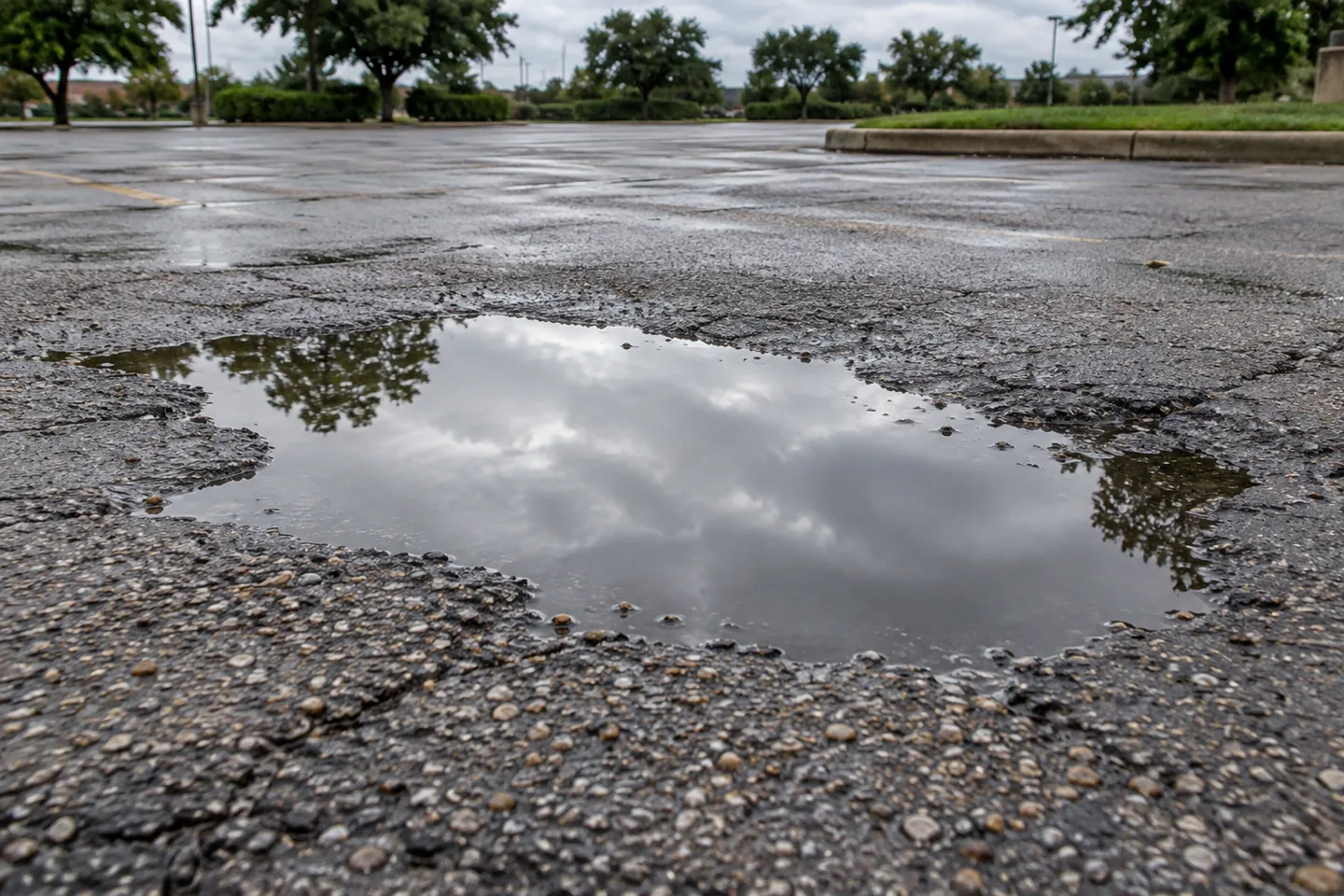
Ponding describes water collecting and remaining at a location. It identifies an observation, not a complete explanation of why it happens or which work will resolve it. The affected pavement may have a local low area, a retained connection or a drainage-system question requiring review. Do not assign the cause from the word itself or from one photograph.
For a property owner, the useful starting point is a clear record of the location and circumstances. Explain how the water affects access, parking, a garage connection or another operation. A contractor can use that information to discuss the next review step. The owner does not need to choose a repair method, drain product or grade before contacting the company.
Give the location a stable reference
Mark the ponding area on a simple property sketch or overview image. Include the building, entrances, travel routes and nearby drainage features that locate it. Use the same reference in photographs and later messages. A description such as the puddle at the back can be ambiguous on a property with several parking sections or entrances.
Record whether the photographed area represents the whole concern or only its most visible portion. Keep proposed work limits separate from the observed water outline. A contractor may need to discuss a connection beyond the puddle, but that should become an understandable scope rather than an assumed extension. Stable references make that conversation easier and keep separate concerns from being combined into one vague repair request.
Record the timing relative to rain
Note when a photograph was taken and whether rain was falling, had recently stopped or occurred earlier. Different timings can show different conditions. If repeated observations are available, retain their dates rather than choosing an image without context. The record should describe what happened, not infer a duration that was never measured.
Use safe viewpoints and avoid entering traffic, moving water or restricted areas for a picture. If a useful connection cannot be observed safely, explain that it needs an appropriate site review. A missing image is not a reason to invent the condition. Where the water recedes between observations, record that fact clearly so the next person understands the sequence.
Photograph the surrounding connections
Include curbs, garage thresholds, walkways, drain inlets, downspouts and visible ditch edges near the area. An overview can show relationships that a close-up misses. Take detail views only after the location can be understood. Retain original files and identify cropped copies where context has been removed.
Do not edit photos to exaggerate or hide the water. A useful estimate set documents the actual observation. If a neighboring feature or separate property appears relevant, describe what is visible without claiming its cause or responsibility. The contractor and any appropriate professional need the property context to identify the questions requiring review.
Separate the water observation from visible pavement damage
Record cracks, holes, broken edges or settlement concerns at the same location as separate observations. Water and visible distress can occur together without a photograph proving the relationship between them. Describe each condition and its effect on use. Keep prior confirmed repair records available where they help locate the concern.
If a surface issue has recurred, identify what the earlier accepted scope actually addressed. Do not conclude that a specific concealed layer or system failed solely because water is present again. A reliable history preserves the known work, current observation and uncertainty. That record supports a more useful quote discussion than an assumed technical diagnosis.
Describe the operational effect
Explain whether the location affects a customer entrance, pedestrian route, normal parking, garage access or a provider lane. Note the users and vehicles involved. The planning significance is not determined only by the puddle's visible size. A smaller area at an important connection can create a practical question that deserves separate discussion.
For a business or shared property, involve the person responsible for access requirements where the concern or proposed work affects a route. Do not improvise a detour through a service area or lawn and assume it is appropriate. Record the issue and the next action needed. The observation log should support a responsible decision rather than declare the route compliant or unsuitable without the relevant review.
Ask which part of the project addresses the concern
When reviewing a proposal, ask how the recommended work relates to the ponding location and its retained connections. Identify whether the scope involves pavement removal, preparation, elevation work, a drain feature or another specifically described task. A general maintenance treatment should not automatically be assumed to correct a water-related problem.
Clarify drainage responsibilities, excluded work and any required professional or ownership review. A new surface or added feature does not by itself explain the complete intended water path. Keep the destination and retained system questions visible. The owner should know what the purchase is intended to accomplish and which concern remains open before approving the total price.
Define work limits and changes clearly
Use marked photographs or a sketch to identify repaired and retained areas. If the proposed boundary differs from the water outline, ask why. Optional surrounding work should remain separate from the base scope. The accepted proposal needs to be understandable to the authorized owner and the person coordinating access.
Agree how unexpected conditions encountered during removal or connection work will be documented and approved. Name the decision maker and a backup where appropriate. Do not let a broad instruction to fix the puddle become an undefined authorization for additional work. The contractor should provide an understandable revised scope and its effect on price or sequence before the owner accepts the change.
Keep follow-up observations factual
After work, retain the accepted scope, approved changes, final images and any project-specific follow-up guidance. If water is observed later, record the timing and location using the same references. A dry-day completion photo does not prove performance during every rain event, and a later image should not be used to rewrite the original agreement.
Compare the concern with the work actually purchased. Separate a question about the completed scope from a remaining issue outside it. Where another party controls an unresolved connection, identify the appropriate next contact. Keep any offered follow-up terms in their actual written form rather than infer a guarantee from a general discussion.
Send a concise inquiry with the useful record
Provide Asphalt Solutions with the exact property address, main concern, labeled overview images and known access constraints. Include the timing of the water observations and confirmed project history where relevant. Say which details are unknown instead of inventing measurements or a system description to complete the request.
The company serves Greater New Orleans and the Northshore; the Slidell contact location is by appointment only. Call or text before arranging a visit. General pavement-drainage references can help explain terminology, while the actual property may require a site discussion and appropriate review. A good ponding record connects what was observed with the questions that need answers before a defined scope is accepted.
Make repeated photographs comparable
If one image is taken soon after rainfall and another much later, label their timing instead of presenting them as equivalent conditions. A simple sequence can show that the visible water area changed, but it does not establish what happened between the photographs or why the change occurred. Keep the dates, viewpoints and descriptions together so a contractor can read the observation accurately.
If different people contribute images, ask one property contact to organize the final set. Confirm that each image belongs to the same address and location reference. An older photo from a different area should not be inserted into the sequence without explanation. Retain the original files and avoid captions that assign a technical cause before review. The resulting record should communicate what the property actually observed and identify any gap needing a site discussion, rather than create a confident story from disconnected pictures.
Questions before you request the estimate
Turn the property facts into a clear next step
Explore the asphalt repair service guide, project planning checklists and photo gallery. Bring the actual property address, useful photographs and access needs to the quote discussion.