
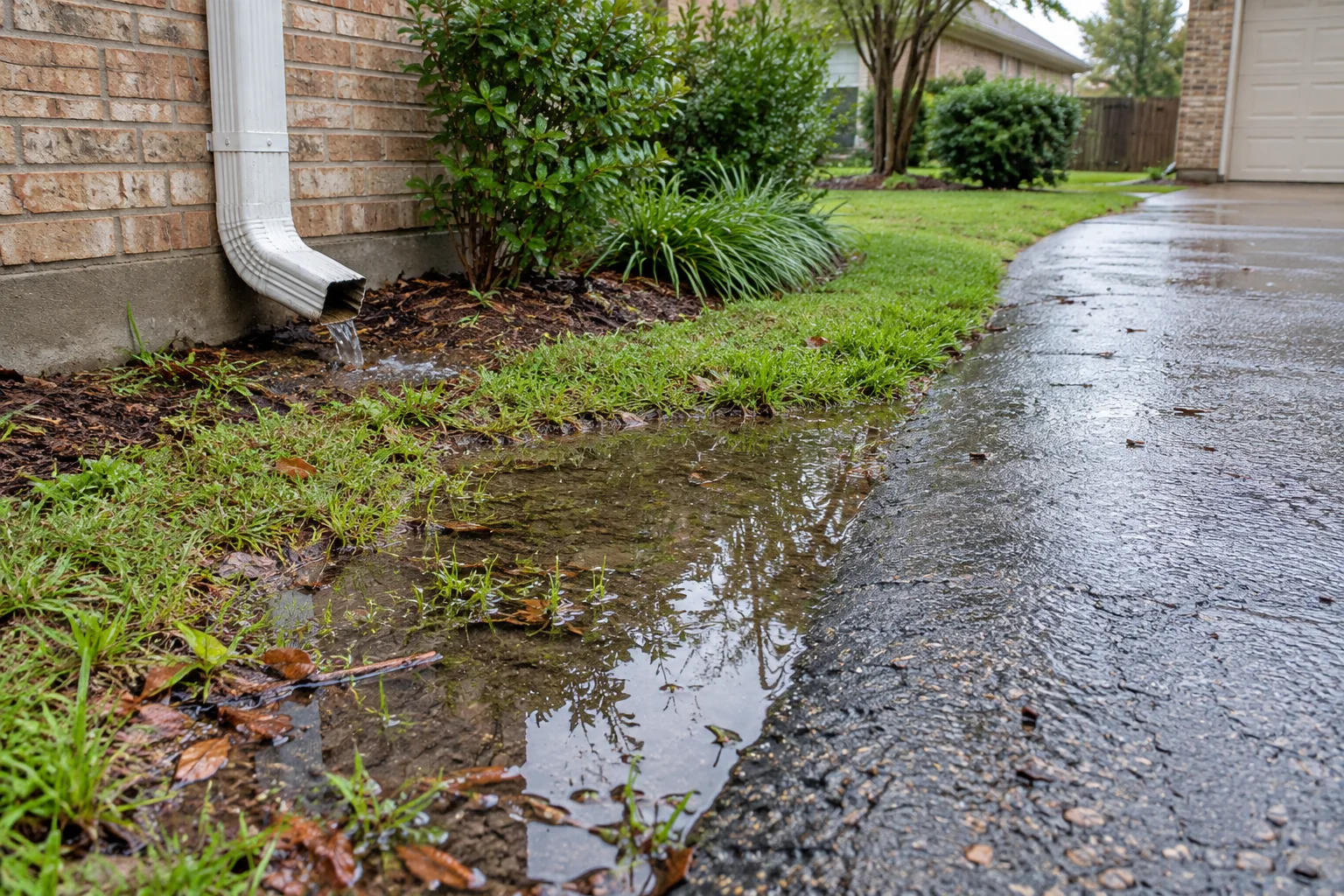
Review the water source and pavement together
A low-looking driveway area beside a downspout should be reviewed with the discharge and surrounding surface. Filling a visible depression does not automatically address recurring roof water or establish an appropriate outlet. Show the downspout, nearby ground and driveway in the same overall view so the connection is clear.
Describe water collection, surface damage or a changed flow observation separately. The nearby outlet is useful context, but proximity alone does not prove the complete cause of a low spot or the condition beneath the pavement. A photograph cannot establish every water source, retained layer or downstream connection relevant to the property.
Explain the practical concern: water across access, collection near an entrance, a damaged edge or another actual effect. The evaluator should identify which pavement and drainage questions need review before an activity is chosen. A useful proposal describes what it is intended to accomplish without imply that surface work includes correction of every roof-water or site-drainage condition.
Record discharge and collection safely
Take a safe overall photograph identifying the outlet and affected driveway area. Add representative close views and show nearby retained surfaces. Include a dry-weather view if available so features obscured by water remain visible. A cropped puddle image alone does not explain the roof discharge, available ground or wider pavement relationship.
Note approximate timing after rain and known conditions for each observation. Keep several events distinct rather than combine them into a claim that every storm behaves identically. If water is seen arriving from another direction, identify that observation as well. The owner can supply useful context without guessing volumes or a complete drainage explanation.
Do not climb, disconnect a downspout or create a hose-flow demonstration for a quote. Use safe locations and identify what cannot be observed. Ask which measurements or examination are appropriate to the actual decision. The initial request does not need to disturb the roof-water system or reproduce runoff to show where a review is needed.
Share known roof-water and driveway history
Provide actual records of driveway repairs, resurfacing, downspout changes and related drainage work where available. Identify dates and boundaries rather than infer them from appearance. If the outlet route or construction history is unknown, say so. The current photograph does not supply a reliable account of buried connections or earlier decisions.
Describe when collection or a surface change was first noticed and retain genuine earlier photos of the same location if you have them. Timing helps prepare review but does not alone establish cause, responsibility or warranty coverage. Keep known events separate from assumptions about what they produced.
Identify who handles roof drainage, pavement and any other connected system. A paving estimate should not silently represent roof-system inspection or a promise to redesign a discharge. If another provider must supply a finding first, name the dependency and explain how it informs the surface scope before work is scheduled.
Resolve the intended water path before changing levels
Ask the appropriate reviewer to explain the intended outlet and how it relates to retained elevations, entrances and surrounding ground. A crew should not be left to choose a new discharge destination during installation. The water decision needs to be understood before a surface change redirects an existing path somewhere else.
Clarify which tasks concern pavement, downspout work, grading or drainage infrastructure. Separate providers can coordinate when they share the intended finished connection and sequence. The owner should know who supplies each decision and restoration task. Avoid leaving a generic assumption that another person will handle an unspecified adjacent condition after paving.
This guide does not prescribe a drainage design, downspout extension or permissible discharge location for an unseen site. Resolve actual property constraints, ownership and needed review with appropriate parties. Do not assume water can simply be sent toward adjoining land. The scope should identify unresolved questions before its price is interpreted as a complete solution.
Compare correction boundaries and retained conditions
Ask the contractor to locate removal, retained pavement and restoration and explain why the boundary fits the findings. A small visible puddle does not automatically define every dimension of the repair. The proposal should explain the intended connection to fixed levels and any related water-source work.
Compare alternatives by their actual objectives. A limited surface activity and a coordinated project that includes discharge or grading work may cover different needs. Identify preparation, related-provider dependencies, exclusions and uncertainty before comparing totals. A higher or lower price is not a useful distinction until the owner understands what each option accepts responsibility to provide.
If investigation is proposed, ask its question, location, extent and limits. Clarify how findings change the recommendation. Agree who receives unexpected information during authorized removal, who approves a change and how it is priced. A clear process makes the decision reviewable without treating a low-looking surface image as proof of hidden supporting condition.
Plan access and provider handoffs
Tell the contractor which walking and vehicle routes use the area and whether access can close. Include household parking, deliveries and other operational needs. If downspout or drainage work happens before or after paving, identify the handoff and interim arrangement. The sequence should reflect actual dependencies rather than treat surface placement as an isolated task.
Agree who communicates closures and changes to users and providers. A temporary path should be considered against actual use rather than assumed suitable because it avoids the puddle. Keep the intended outlet and retained connections clear when several parties work in the same small area so one activity does not silently change another's plan.
Follow actual reopening and care instructions for the work and conditions. Document any pending discharge, grading or restoration task separately from paving completion. A new-looking surface does not prove the full coordinated connection is finished. The owner needs to know what remains, who handles each question and when normal use is released.
An example of coordinating discharge and paving
Suppose an owner requests a patch for a low-looking driveway area while roof water is discharged nearby. Before selecting a boundary, ask the relevant providers to identify the intended water connection and retained elevations. A pavement-only estimate and an option including separate discharge or grading work may not cover the same outcome. Clarify that distinction and identify any pending review before a work date is confirmed. Share actual prior changes without assuming timing proves the full cause. Keep any proposed water path separate from a legal boundary or permission finding that still needs resolution. The owner should understand who supplies each task and how changes are approved if new information appears. At the handoff, distinguish completed paving from pending adjacent work. A dry finished photo does not establish performance under every storm or prove every water source has been corrected. A clear plan gives later observations a useful reference without leaving a crew to improvise a new outlet while placing material.
Keep the result and later rain observations traceable
At closeout, retain genuine photos showing the pavement and included water connection, the scope and approved changes. Identify retained conditions and excluded tasks. One dry photo does not establish performance in every future storm. The record should explain actual work and the intended outcome without a universal drainage guarantee inferred from appearance.
If later rainfall raises a concern, safely record location, timing and extent for the responsible provider. Describe known new outlet or site changes separately. Keep the observation factual rather than assign complete cause from a single event. The earlier plan and history help follow-up address the right connection and actual responsibilities.
Contact Asphalt Solutions with the property address, safe overall views and known discharge history. Most work is at customer job sites. Visits to the Slidell contact location are appointment only; listed hours mainly concern phone availability. Call or text to discuss the review needed before a low spot is filled or a water connection is changed.
Questions about driveway low spot beside a downspout
The direct answer
A roof-water discharge can affect a local pavement area, but the downspout and site drainage should be reviewed together.
What to discuss before choosing a repair
Discuss discharge routing and pavement correction as distinct parts of the work.
What to observe and record
- Show the downspout outlet
- Record the rainwater path
- Photograph the low spot
A mistake to avoid
Filling the low area may leave concentrated roof runoff unaddressed.
Continue with the right next step
Property conditions determine the final scope. These planning notes do not replace a site evaluation. How to use our pavement guidance