
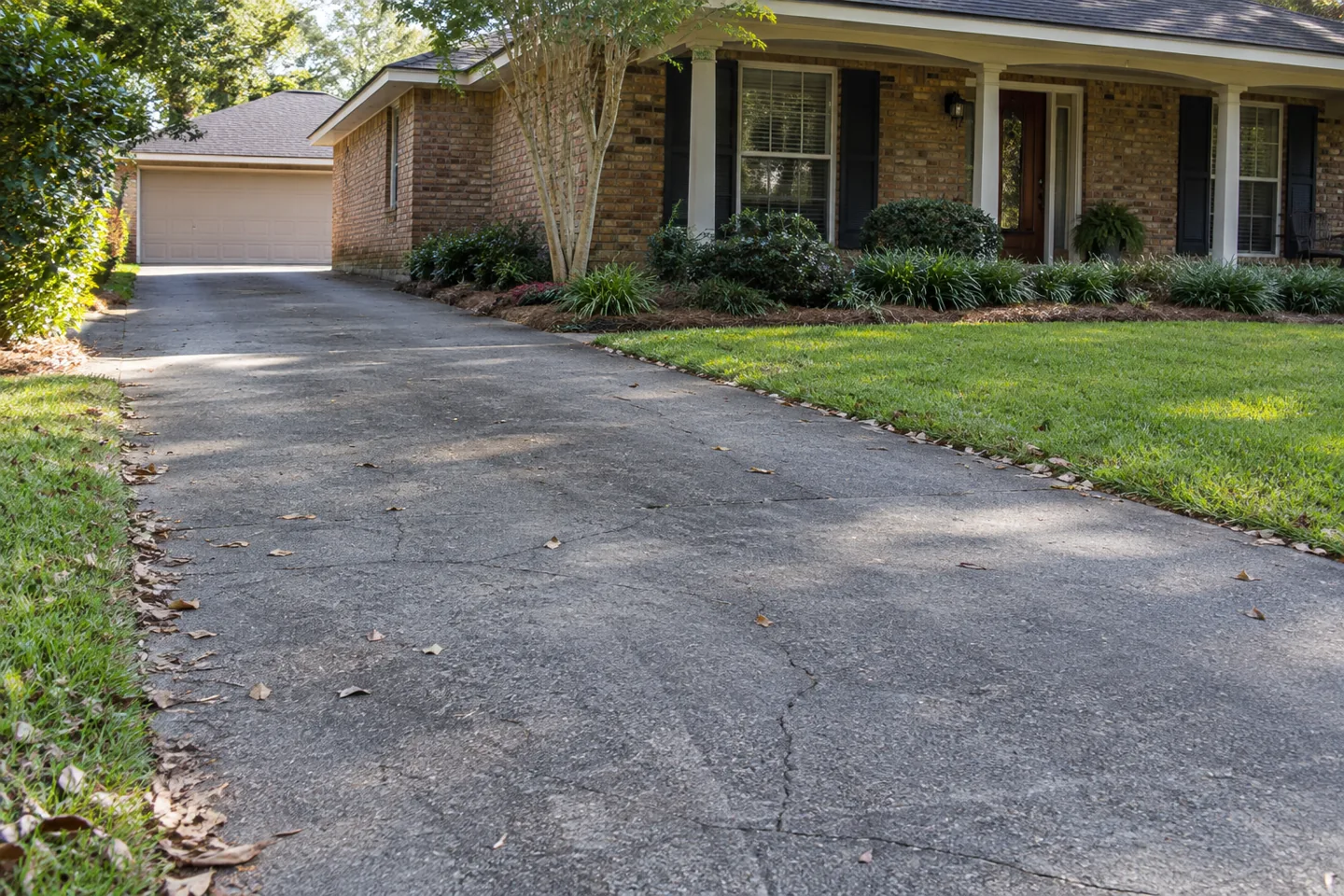
Explain why you are considering maintenance
Begin a sealcoating inquiry with the condition you see and the result you want. A faded but serviceable driveway presents a different decision from a lot with repeated potholes or broad deterioration. Describe those concerns separately and show the retained surface. Sealcoating is maintenance for suitable asphalt, not reconstruction of its supporting structure. The assessment should explain which areas are candidates and which need another operation before treatment.
Mark separate paved sections on a simple sketch. A front drive, side parking area and rear service route may have different conditions or uses. Approximate dimensions help start the discussion, but the proposal should confirm boundaries and quantities. Identify sections you want excluded as well as those included. A request to coat the whole property can leave uncertainty about a damaged patch, isolated pad or adjoining material that needs separate assessment.
Describe the actual traffic and known treatment history. Include regular parking, tight turns, heavier service visits and previous repairs if available. Do not select a fixed maintenance interval solely because another property follows it. Condition, use and the selected system inform the recommendation. A useful inquiry explains your pavement’s starting point rather than assumes another coat is appropriate whenever the surface looks lighter than it once did.
Photograph the surface before choosing repairs
Take overall views of the paved areas, entrances and retained concrete connections. Then photograph cracks, potholes, depressed sections and previous patch boundaries more closely. Label the detail images against your sketch. The wider view helps explain where a concern lies and how it relates to traffic or water. A photograph of one crack does not establish whether the entire area needs the same maintenance or repair operation.
Tell the estimator about damage that keeps returning. Describe previous repairs and what happens under normal use or after rain. The owner does not need to diagnose supporting material, but the history can focus an assessment. Ask why the proposed correction differs from earlier work and whether the affected area will be repaired, rebuilt or excluded pending another operation. A dark coating should not conceal an unresolved scope decision.
Share visible observations safely. Do not disturb failed material, enter active traffic or lift drain covers to investigate the surface. Include after-rain photographs when accessible and useful. If a concern cannot be pictured safely, describe it for an arranged assessment. Preparing the inquiry means documenting what you can observe, not taking on construction or hidden-condition investigation yourself.
Separate repair work from application preparation
Cleaning a surface for application is different from repairing failed pavement. Ask the proposal to identify crack work, localized repair and any reconstruction before coating. Confirm the locations, methods and limitations. A broad sealcoating total does not establish that every opening or depression will be corrected structurally. The estimate should make those operations understandable before the owner compares it with an application-only price.
A crack in otherwise stable pavement can present a different question from one associated with movement or recurring failure. Ask the assessment to explain the proposed response rather than assume the same treatment applies everywhere. Check whether a condition will remain visible or unresolved after maintenance. Clear expectations are particularly useful where older retained material meets recent patches and the appearance of the starting surface varies.
Review the sequence when repair and coating are combined. The selected repair materials and coating system can affect readiness for application. Ask how that timing is determined and whether restrictions apply during separate visits. A request to perform every operation on one preferred day does not establish a suitable sequence. The written scope should identify the tasks and access implications of the actual coordinated plan.
Review cleaning, contamination and perimeter protection
Show vegetation, loose material and known contamination during the inquiry. Tell the estimator where vehicles leak or soil repeatedly washes onto the pavement. Ask which cleaning or other preparation is included and what limitation remains at a problem spot. An area estimate alone does not describe the starting condition needed for the proposed treatment. The assessment should relate preparation to the actual retained surface.
Identify items that prevent access to the work area. Vehicles, planters and stored materials may need relocation before preparation or application. Clarify who handles each task and when. Adjacent vegetation work or landscape changes should be defined rather than silently included in a general maintenance request. A clear responsibility list helps the agreed work window depend on tasks that someone has actually planned to complete.
Discuss the boundaries beside concrete, doors, brickwork, curbs and other retained features. Ask how the application area will be established and surrounding surfaces protected. For a commercial lot, identify drain features and equipment pads as well as parking sections. The owner should be able to relate those boundaries to the proposal rather than assume everything visible beside the asphalt belongs to the coating operation.
Treat water collection as its own assessment question
Provide safe after-rain photographs showing the low area, surrounding pavement and apparent outlet. Include runoff sources and fixed connections where relevant. Sealcoating does not redesign finished elevations or create a missing water path. If a puddle is the principal concern, discuss it directly instead of choosing maintenance only because its appearance or price seems attractive compared with a paving project.
Ask whether a drainage-related correction is proposed before coating and what it includes. A retained threshold, downspout, inlet or neighboring surface can affect the result. Raising or repairing one section may alter another connection. The estimate should distinguish the maintenance application from any related operation needed to address the observed water concern. That separation makes the intended outcome easier to evaluate.
On a commercial property, show the routes used by customers, staff and service vehicles when the pavement is wet. The actual condition and use should guide the scope. A lot can contain suitable maintenance areas beside a section requiring repair or reconstruction. Ask the proposal to identify those differences and explain how they affect phases, preparation and reopening rather than apply one blanket description to the entire address.
Coordinate the work window and reopening
Ask how suitable application and curing conditions are determined for the selected system. Discuss when the team confirms the work window and how postponement is communicated. A scheduled date should support coordination without becoming a promise to apply the treatment regardless of conditions. Keep an authorized contact available to manage changed access arrangements if the sequence needs to move.
At a home, arrange temporary parking and tell household members or visitors about restrictions. Ask for pedestrian guidance separately from vehicle use. At a business, review essential routes, deliveries and service visits against each proposed phase. Open spaces still need a usable access lane. Confirm the practical arrangement before promising that all users can move through the property while another area is being maintained.
Follow project-specific instructions for parking, turning and heavier traffic. A surface that looks dry is not itself permission to resume every activity. Ask how the installer communicates reopening and whether marking work creates an additional restriction. Keep the completion guidance with the written proposal so later maintenance decisions refer to the selected system and agreed work rather than an online universal timetable.
Compare the complete maintenance scope
Compare repairs, preparation, defined application areas and the proposed system alongside price. Ask what allowances and exclusions mean for your pavement. Keep revised scope documents if the work boundaries change. Include the address, photographs, known defects and access constraints when contacting Asphalt Solutions at (985) 788-0493 or through the quote form. Visits to 299 Ashton Parc, Slidell, LA 70458 are by appointment only; the inquiry needs the actual construction address.
Before approving the proposal, confirm the condition in which retained areas and adjacent features will be left. Check which defects remain outside the work and which owner tasks must be completed before the start. This final review helps the estimate describe a practical maintenance result and a usable access plan rather than leave the decision focused only on a new black appearance.
Questions before you request the estimate
Turn the property facts into a clear next step
Explore the sealcoating service guide, project planning checklists and photo gallery. Bring the actual property address, useful photographs and access needs to the quote discussion.