
Choose a record that can be maintained
A pavement-maintenance record should be simple enough that the property actually uses it. Start with the exact address, a basic map and a consistent location reference for each area. A spreadsheet, shared folder or paper file can work if the information is organized and accessible to the responsible people. The format matters less than keeping the same relationship between locations, photographs and decisions.
Identify who will update the record and where it will be kept. If a manager leaves or an owner delegates maintenance, the next person should be able to find it without searching through individual phones and email accounts. Avoid building an elaborate system that no one has time to maintain. A practical record preserves what was observed, what was approved and what happened next.
Start with the current visible condition
Take overview photographs and note the date of the observation. Identify visible cracks, holes, broken edges, low areas or other concerns using plain language. Keep suspected causes separate from observations. A photograph can show a condition without establishing the appropriate repair or what lies beneath the pavement. Mark any section not observed so a blank area is not mistaken for a confirmation that it has no concerns.
Include the normal use of the area: parking, travel, loading, pedestrian access or occasional heavy vehicles. The same visible condition can have different operational effects depending on its location. Record how it affects the property rather than assigning a priority solely from size. Use stable references on the map and images so later entries can be compared without guessing which area they describe.
Retain estimates and approved boundaries
Store each proposal with the work area it covers, its date and its status. Distinguish requested, reviewed, accepted and deferred proposals. An estimate collected for planning is not evidence that the work was performed. Likewise, a paid project should be connected to the actual accepted scope and any later approved changes rather than only a total in a financial record.
Keep marked photographs or sketches that identify repaired and retained surfaces. Where a proposal changes, preserve the earlier version as history but identify the current accepted one. Record optional work that was deferred without implying that it belongs to the completed project. These distinctions make the maintenance record useful when someone later asks why a visible area was left untouched.
Document work with verified information
For completed work, record the contractor, date information actually known and the agreed work locations. Attach final photographs, approved changes and reopening instructions. Do not infer a material specification, project date or location from the appearance of a photo. If historical information is uncertain, label it as uncertain rather than filling the record with a confident guess.
Keep original images available where practical and label edited copies. A public gallery caption and a private maintenance record serve different purposes, but both should use confirmed information. Do not pair unrelated photos to imply a transformation. The record should preserve a reliable history, including what cannot be confirmed. That honesty makes it more useful when a contractor reviews the property years later.
Track recurring observations without diagnosing them
When a concern returns or changes, add a dated entry linked to the same area reference. Describe what is visible and how it affects use. Include photos from a similar viewpoint where practical. Do not overwrite the previous entry with the newest conclusion. A sequence of observations can help a discussion, while still not proving the cause or establishing a final repair method.
For water concerns, note the timing relative to rain and visible nearby features. For damage near a travel route, note any change in use or provider equipment that is actually known. Keep the observation concise and consistent. If the condition requires a site review, record the requested next step and responsible contact. The log should support decisions rather than become a collection of unassigned concerns.
Record changes in property operation
Update the record when tenants, delivery patterns, waste collection or heavy-vehicle use change. Include confirmed information from the relevant provider where available. A pavement project planned around one operation should not automatically be assumed suitable for every later use. Keeping the operation history can help explain what information a contractor needs for the next discussion.
Note modifications to gates, drainage features, landscaping or adjoining construction that affect the pavement area. Avoid declaring that a later project caused a condition without appropriate review. Record dates and visible facts separately from suspected relationships. This gives the owner a useful chronology while preserving uncertainty. A future contractor can discuss the actual connections more effectively when the record identifies what changed and what remains unknown.
Keep follow-up and responsibility decisions together
Attach any offered follow-up or warranty terms in their actual written form. Record questions raised with the contractor and the response. If an action is agreed, identify its location, purpose and current status. Separate new optional work from a follow-up item tied to the completed scope. The log should make that difference understandable to another property contact.
Name the person responsible for the next decision and any provider or professional involved. An unresolved issue is more likely to be addressed when it has a clear next action. Do not use the record to imply approval that was never given. Retain the actual authorization for work and changes so the maintenance history remains connected to the agreements governing the project.
Use the record for future budgeting discussions
Group known concerns by location and operational effect when discussing future work. Keep observed conditions, planning priorities and approved repairs separate. A budget conversation can identify areas for review without selecting a technical method before the property is assessed. Use the record to show the contractor the history relevant to that discussion rather than sending every document ever collected.
Ask how proposed work connects to previous repairs and retained surfaces. Include the current address, map references and operation information when contacting Asphalt Solutions. The company serves Greater New Orleans and the Northshore; the Slidell contact location is by appointment only. A reliable record helps the conversation begin with facts while leaving design, concealed conditions and final scope to the appropriate review.
Maintain privacy and a clear handoff
Limit access to the record according to the property's needs, especially where it includes contact details or private documents. Share only the relevant information with a contractor or provider. A maintenance file does not need to expose unrelated tenant information or personal records to be useful. Keep the public use of photos separate from the private project history.
When responsibility changes, provide a short handoff explaining the map references, current concerns, approved work and unresolved questions. Identify where the authoritative documents are stored and which contact handles the next action. Review the record periodically for outdated instructions, while retaining historical versions as history. The objective is a file the next person can act on without inventing a story about what happened at the property.
Set a repeatable review routine
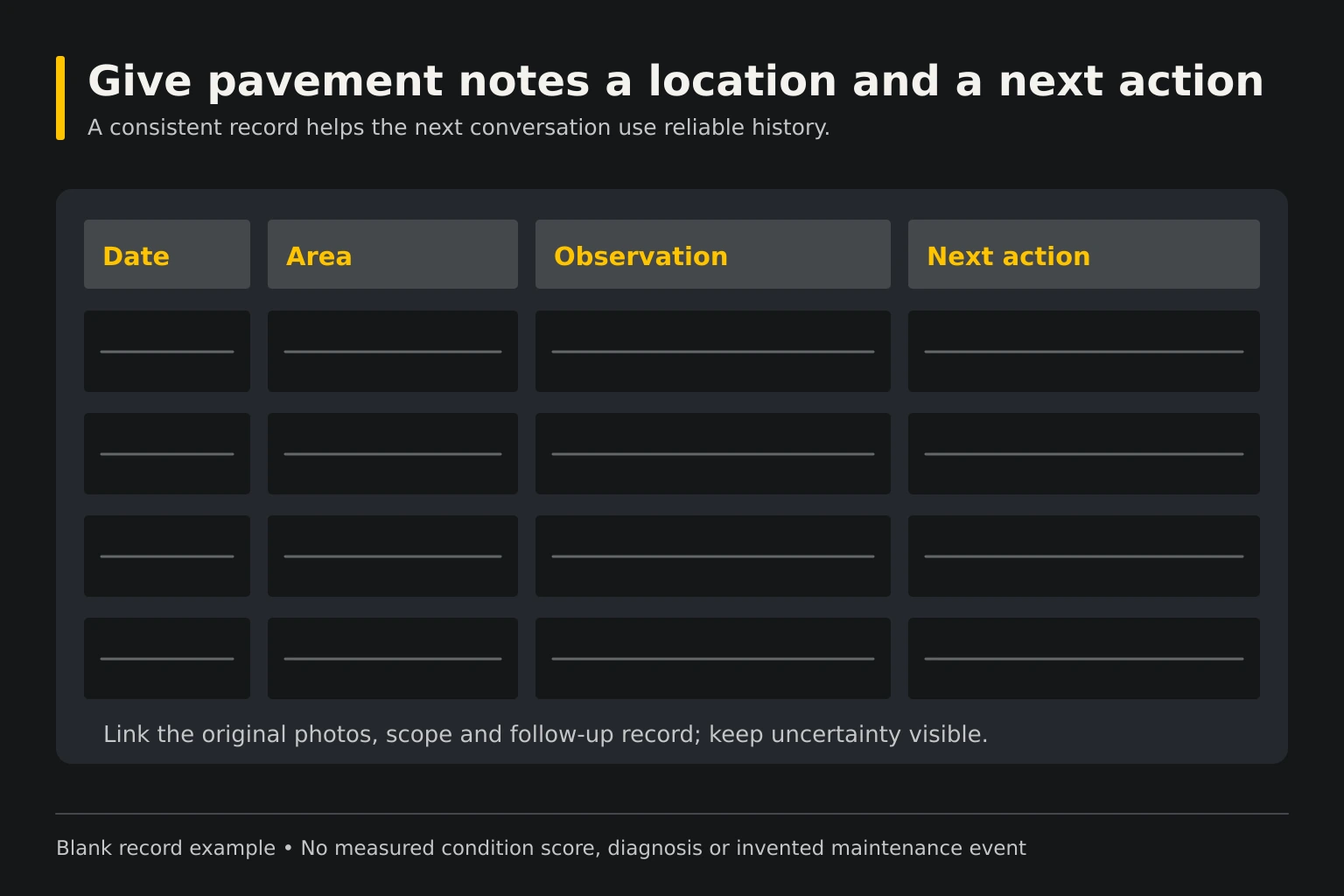
Choose a practical way to add observations during the property's normal management routine. The record should not depend on someone remembering to recreate a full survey every time a concern appears. Keep a short entry format with the date, area reference, visible condition, photograph and requested next action. Use the same fields so different staff members can contribute information consistently.
When reviewing older entries, update their current status without deleting the historical observation. Mark a concern addressed only when the relevant work or decision has actually occurred. A request for an estimate is different from an accepted proposal, and an accepted proposal is different from completed construction. These distinctions keep the file trustworthy. They also make future budget discussions easier because the owner can see which items remain observations, which have an agreed scope and which already have a completed project record.
Questions before you request the estimate
Turn the property facts into a clear next step
Explore the asphalt repair service guide, project planning checklists and photo gallery. Bring the actual property address, useful photographs and access needs to the quote discussion.