
Make sure the proposals address the same decision
Begin by writing the problem you want the work to solve. A driveway that needs a better entrance, a parking lot with recurring holes and a maintenance treatment for a serviceable surface are different decisions. Two proposals may respond to the same request while recommending different work. Do not assume that matching project titles mean matching scopes. Read what each contractor intends to address, what will remain and what result is being described. Keep the original inquiry and photos available so you can compare the proposed work against your actual concern.
If the recommendations differ, ask each contractor to explain the basis for the approach in plain language. A photo conversation, a site visit and an estimate made from old measurements do not provide the same level of information. Record what was reviewed and what remains uncertain. Avoid interpreting a confident price as proof that every hidden condition is known. A useful comparison makes those uncertainties visible before you decide.
Put work limits beside each price
Use one marked photograph or sketch to locate the areas in every proposal. Note whether the estimate covers the whole driveway, selected repairs or only a maintenance treatment. For commercial work, identify the parking areas, travel lanes and service approaches included. A price for one section cannot be compared directly with a price for the entire property. Ask for a clear boundary where the proposal uses a broad phrase such as repair damaged pavement.
Keep optional areas separate from the base scope. If one contractor includes a connection another leaves untouched, record that difference rather than treating it as a price discrepancy. Identify retained surfaces and existing damage outside the repair. A written limit should remain understandable when the person who collected the estimate is not present during construction. This is one of the most useful steps an owner can take without pretending to make a technical design decision.
Compare preparation and concealed-condition assumptions
Look for a description of removal, preparation and the treatment of the surface or ground that will support the work. Do not focus only on the visible finish. Ask what the contractor expects to find, what has actually been reviewed and how an unexpected condition would be handled. A proposal can reasonably acknowledge uncertainty, but it should explain the decision process if that uncertainty changes the scope. The owner should know who can authorize an addition.
Compare any allowances and exclusions carefully. An estimate with a concealed-condition allowance is not automatically worse than one without it; the important question is whether the two proposals assume the same conditions and explain the same responsibilities. Ask how findings will be documented, how revised pricing will be communicated and when approval is required. Keep that process in writing so a discussion at the work site does not become an unclear verbal instruction.
Read materials and construction details in context
Identify what material and work method each proposal actually includes. Ask the contractor to explain why that method fits the property and the stated concern. Do not convert a material name into a claim that one proposal will always perform better. Conditions, preparation, intended use and construction details matter to the discussion. Where the project requires design or other professional input, clarify who is responsible for it rather than assuming the estimate provides it.
If a detail is not understandable, ask for clarification before approving the work. You do not need to become a pavement specialist to request a clear explanation. Be cautious about comparing a single specification without the surrounding scope. A thicker surface, for example, does not answer every question about a damaged connection or unsuitable conditions below it. The written proposal should support an informed conversation rather than force you to choose from isolated technical terms.
Check drainage, transitions and retained features
Compare the way each proposal treats the connection to garages, streets, curbs, sidewalks and drain inlets. Ask whether water-related work is included, excluded or pending additional review. If the reason for the project is ponding, an estimate that replaces a surface without addressing the water concern may not answer your request. Do not assume that drainage correction is included simply because the contractor has seen a puddle.
List features that need to remain, move or be protected, including gates, landscaping, signs and utility covers. Confirm restoration responsibilities after excavation or equipment access. Where another trade or authority must be involved, note the coordination in the comparison. These differences can explain part of a price difference while also affecting the schedule. A proposal should not be accepted on the assumption that every surrounding feature will be handled automatically.
Compare access and scheduling responsibilities
Ask each contractor how the property will operate during the work. A business may need pedestrian access, deliveries, waste collection and tenant parking to continue. A home may depend on one driveway for all vehicle access. Compare the proposed sequence and the areas closed at each stage. Do not treat a completion date as a complete access plan. Placement, cleanup and unrestricted reopening can be separate events.
Identify who will send notices, move vehicles and coordinate providers. Ask what circumstances can change the sequence and how updates will be communicated. If one quote includes phased work and another assumes a full closure, those are meaningful scope differences. Keep weather-related schedule flexibility separate from the owner's fixed operational needs. The best proposal for the property is one whose access plan can actually be carried out by the people responsible.
Review commercial terms without overlooking scope
Confirm the company's stated payment, scheduling and change terms directly. Keep the accepted proposal and later written revisions together. If warranty or follow-up terms are offered, read the actual language and ask what work and conditions they cover. Do not infer a promise that is not in the agreement. The purpose of the comparison is to understand the purchase, not to turn a general phrase into a guarantee.
Name the person authorized to approve work and changes, particularly where a manager gathers quotes for an owner. Ask how the contractor will confirm approval before proceeding with an additional item. If the price expires or depends on a proposed date, note that condition. A proposal that is clear today can become outdated if the property condition or requested limits change. Reconfirm the current version before scheduling instead of relying on an earlier conversation.
Make the final decision and retain the reasoning
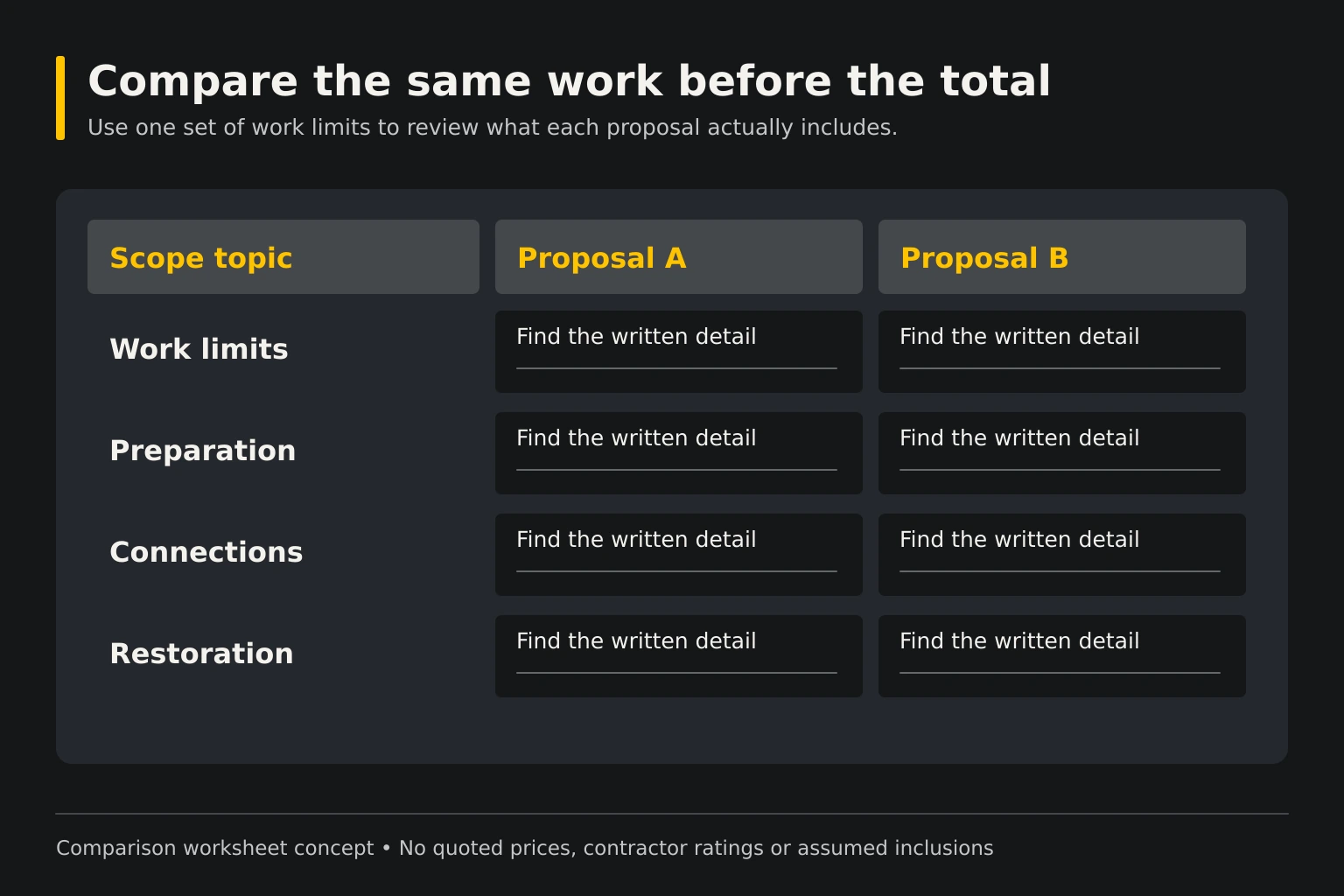
Create a short comparison showing the included areas, preparation, materials, transitions, drainage, access plan, exclusions and unresolved questions. Use it to identify the questions that still need answers. Do not add a score that hides a major unresolved issue behind an average. A low price with an unclear work boundary is still unclear. Once the open items are settled, keep the final accepted scope and the reasons for any optional choices.
After completion, the comparison can become the starting point for the maintenance record. Attach approved changes, final photos and reopening instructions. Record work that was intentionally left for a later phase. To begin a discussion with Asphalt Solutions, send the exact property address, the main concern and any existing proposal questions you want clarified. The company serves Greater New Orleans and the Northshore. The Slidell contact location is by appointment only, so arrange contact before planning a visit. If someone else will present the estimates for approval, prepare a short note explaining the meaningful differences rather than forwarding only the totals. Identify decisions that still require clarification and avoid calling them settled. An owner reviewing a proposal remotely should know whether the contractor has visited the site and whether the work limits have been confirmed. This small amount of preparation can prevent an approval based on an incomplete comparison and give the contractor a clear set of follow-up questions.
Questions before you request the estimate
Turn the property facts into a clear next step
Explore the asphalt repair service guide, project planning checklists and photo gallery. Bring the actual property address, useful photographs and access needs to the quote discussion.