
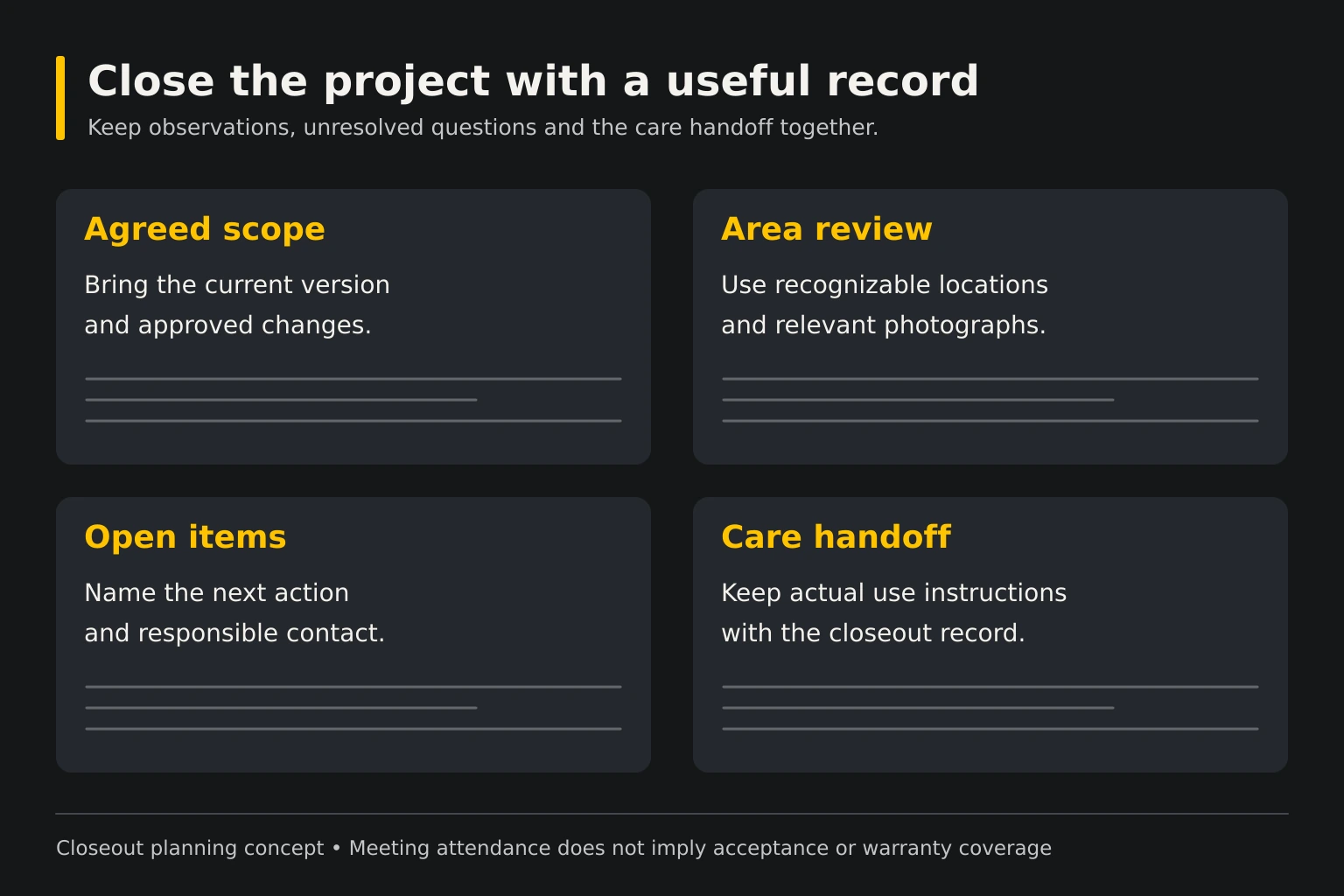
Begin with the accepted work scope
A closeout review should start with the proposal that was actually accepted and any later approved changes. Identify the property, work areas and retained surfaces. Do not evaluate the completed work against a broader wish list that was never included. Likewise, a later verbal discussion should not replace the written change record. Gather the current scope, marked photographs and access plan before walking the finished area.
Name the authorized property contact who will discuss questions with the contractor. If a manager is reviewing the work for an owner, give that manager the accepted documents rather than only the total price. A practical closeout record connects the original concern, agreed work and observed result. It is not a claim that a visual walk-through can establish every concealed construction condition.
Use the same locations and photo references
Walk the completed areas using the references from the estimate map or marked photos. Photograph the repaired locations and their connections to retained surfaces. Where possible, use the same general viewpoint as the planning images so the location remains understandable. Avoid presenting an unrelated photo as a before-and-after comparison. The record should identify the actual property and the same work area.
Keep close-up images connected to an overview. A detail with no location reference is difficult to discuss later. Note the date of the review and any area that could not be accessed. Do not fill a missing observation with an assumption that it is complete or defective. The purpose is an organized record of what can be seen and what still needs clarification against the agreed scope.
Check work boundaries and retained connections
Compare the finished work limits with the accepted proposal. Identify transitions at streets, garages, curbs, walkways, drain inlets and adjoining pavement. If a boundary differs from the marked plan, check whether an approved change explains it. Ask the contractor for clarification rather than assuming that every difference represents a failure or an extra benefit.
Record existing damage outside the scope separately. A retained area can still need future work without being an incomplete item from this project. Likewise, a condition at a new connection should be discussed specifically instead of described as the whole job being wrong. Clear location references make the conversation more useful. Keep the accepted and revised boundaries together so the owner can see how the final work relates to the actual purchase.
Review the operational handoff
Confirm which routes and areas are ready for the uses relevant to the property. Ask about pedestrians, ordinary vehicles, trailers, deliveries and concentrated loads where applicable. Visible completion does not automatically mean every operation can resume. The reopening guidance should reflect the actual work and conditions, rather than a waiting period remembered from another job.
Share the instructions with residents, tenants, staff and providers who control access. Identify who will retain or remove barriers after the crew leaves. If another phase remains, keep the boundary between reopened and restricted areas clear. A message saying the job is finished should not obscure a continuing restriction on a particular route. Retain the actual guidance in the project record so the handoff remains understandable to someone absent from the final conversation.
Discuss water observations in the agreed context
If water was part of the original concern, compare the completed scope with the drainage responsibilities described in the proposal. Record visible observations without assuming that one dry-day review establishes performance during every rain event. Ask what observation or follow-up is appropriate for the actual work. A final photo cannot prove conditions that are not visible.
Keep issues outside the agreed drainage scope separate from questions about the completed work. If a retained inlet, building connection or neighboring runoff source still needs review, identify it as such. Do not convert a general expectation of a dry property into a promise that was never included. At the same time, ask for clarification if the completed connection differs from the accepted water-related scope. Specific records support a more productive conversation than broad conclusions.
Record cleanup and restoration responsibilities
Review disposal, site cleanup and restoration items included in the proposal. Identify features another trade was expected to address, such as planting, irrigation, posts or enclosure work. A closeout list should reflect those assigned responsibilities. Do not assume that an outstanding landscape task is part of the paving contractor's scope if it was explicitly excluded, and do not overlook a restoration item that was included.
Photograph any specific question and connect it to the relevant proposal item. Name the party responsible for the next action and the expected communication. If a decision is unresolved, record it as open rather than describing it as settled. Clear handoffs are useful when several trades have worked at the property. The owner should know which conversation to continue and what information supports it.
Keep follow-up terms and questions accurate
Retain any offered warranty or follow-up terms in their actual written form. Ask what work and conditions they cover rather than inferring a guarantee from a general phrase. If a concern arises, provide the address, work reference, photographs and a concise description. Do not rewrite the project history to support the concern. The accepted scope and approved changes are the best starting points.
Keep a dated list of questions raised during closeout and the contractor's response. Where an action is agreed, record its location and purpose. Separate it from optional future work. This helps prevent a follow-up conversation from becoming a new scope with no clear approval. If the property contact changes, the next person should be able to understand the record without relying on someone's recollection of the final visit.
Create the long-term project folder
Store the accepted proposal, approved changes, final limits, photos, reopening guidance and relevant follow-up terms together. Keep the original condition photos as history, clearly labeled with their dates. The record can support future maintenance without pretending that images establish hidden construction details. Include the intended vehicle use and any operational constraints that shaped the project.
When contacting Asphalt Solutions about the completed work or a future phase, use the exact property address and the existing area references. Explain whether the question concerns the completed scope or new work. The company serves Greater New Orleans and the Northshore, and the Slidell contact location is by appointment only. Call or text before arranging a visit. A useful project folder makes future discussions more efficient and preserves the decisions made during the work.
Use a short written handoff summary
Prepare a concise summary for the people who operate the property after construction. Identify the areas completed, any continuing restrictions, the remaining tasks assigned to other parties and the contact for questions. This summary should reflect the actual closeout record rather than introduce new promises. Give it to staff or household members who were not present at the review.
If the project was phased, state whether all stages are complete or a later stage remains deferred. Keep the deferred work distinct from an unresolved question about the finished areas. Date the summary and update it when an agreed action is completed. A reliable handoff preserves the practical result of the project while preventing an old restriction, optional improvement or unanswered question from being mistaken for the current status. If the property has several people reviewing different areas, combine their questions into one dated list before sending it to the contractor. Keep each question tied to an area reference and the relevant scope item. This makes the response easier to organize and reduces the chance that several partial messages create contradictory instructions. Do not describe a concern as an agreed correction until the contractor and authorized owner have actually settled the action. The list should preserve open questions honestly and identify which ones have been answered. Keep that combined question list with the final response.
Questions before you request the estimate
Turn the property facts into a clear next step
Explore the asphalt repair service guide, project planning checklists and photo gallery. Bring the actual property address, useful photographs and access needs to the quote discussion.