
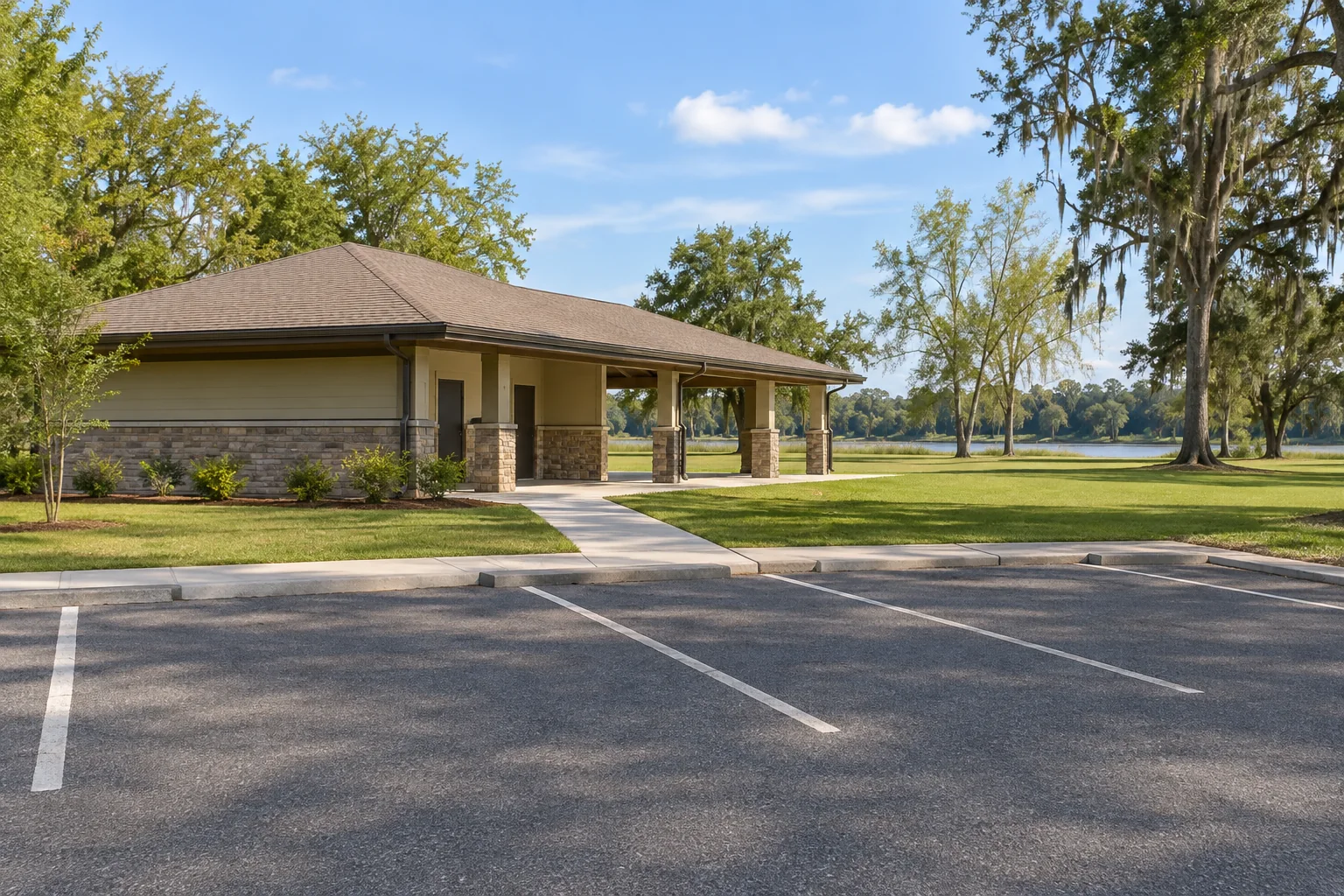
Review the arrival experience for the actual recreation activity
A recreational property may be quiet during an assessment but busy when an event or activity begins. Identify the real calendar and the users who rely on the paved arrival area. Show the proposed work boundary together with building entrances, walking connections and any service route. The planning question concerns how people reach their destination during the actual phase.
Ask the responsible operator and providers to review any alternate arrangement before it is communicated. An open path or another door is not automatically suitable merely because it appears available. Keep relevant user needs and appropriate review visible. The guide helps organize those questions without certifying a temporary route, surface or recreation layout for the property.
If different groups use the facility, identify who coordinates the shared decision and communicates the authorized plan. A change to one event's arrival area may affect another activity or service visit. State what is confirmed and which dependency remains open rather than promise that every operation can continue unaffected while the work proceeds.
Keep the event handoff and completion record consistent
Before an event uses a completed phase, follow the directions for the actual work and intended activities. A finished-looking surface does not independently establish readiness or complete a separate provider's task. Identify who receives the release information and communicates the current arrangement to staff, volunteers or other relevant users.
If the sequence changes, update the physical direction and advance information together. The people helping visitors can explain the approved arrangement while referring an unresolved concern to the responsible decision maker. Avoid letting an informal suggestion become a new route or use instruction that has not been reviewed by the appropriate parties.
At closeout, compare the actual work with the authorized scope and retain genuine photographs, changes and relevant care instructions. Keep deferred and excluded areas identifiable in the property record. Later observations should describe a location, date if known and actual behavior without assigning a hidden cause from appearance. This history supports the next discussion without transforming a limited pavement task into certification of every surface or activity at the facility.
Contact Asphalt Solutions by call or text with the recreation-property address, affected area and operating calendar. Most projects take place at customer properties. Visits to the Slidell contact location are appointment only; listed hours mainly concern phone availability. Arrange the site discussion and actual work sequence directly before dates or arrival instructions are communicated as final.
Define the paved area and its intended use
A recreational property can use pavement for parking, access, walking connections and service routes. Those areas do not all have the same purpose. Start by identifying the actual paved space you want assessed and the result you need. Avoid treating a general recreational-property label as a construction specification for every route or activity on the site.
Describe ordinary users, visitor traffic and service vehicles, including occasional larger deliveries. Show where vehicles enter, turn or stand and where people move between parking and activities. The estimator needs the operating pattern rather than assumptions based on the property looking empty during one visit.
Map observed defects and connect them to wide and detail photos. Identify recurring repairs, low areas and transitions to retained surfaces. Keep observations separate from a diagnosis of hidden support. Photos organize the discussion but cannot establish every existing layer, construction quantity or activity-specific requirement.
Compare the repair purpose with the surface expectation
Localized repair, suitable maintenance, resurfacing and replacement retain different pavement conditions. Ask why the proposed operation fits the concern and intended use. A darker or smoother-looking surface should not be treated as evidence that every structural, drainage or layout issue is resolved.
Explain any activity-specific expectation to the responsible project reviewer before approval. A route used for access, a parking zone and a separately designed activity surface can raise different questions. Do not assume a general paving inquiry approves a sports, play or other specialized surface detail. Clarify what the contractor’s proposal includes and what needs separate review.
Define work limits, removal, preparation, fixed connections and exclusions before comparing totals. Optional work should be identified separately from the base scope. A small targeted repair and a larger reconstruction are different purchases, so ask which retained limitations explain the difference rather than compare only the final surface appearance.
Plan around the activity and event calendar
List operating hours, recurring activities, events and service visits using the affected routes. Distinguish preferred work periods from necessary access that cannot move easily. A quiet gap in the calendar is useful information, but it does not establish that removal, preparation, placement and reopening will all fit the interval.
Trace visitor and service routes during each proposed phase. A narrow closed connection can affect a much larger activity area when it is the only available approach. Ask whether preparation requires a different boundary from placement. The size of the parking area alone does not determine whether a partial closure leaves normal use practical.
Coordinate the arrangement with the responsible property team and relevant providers. The contractor’s proposed sequence does not automatically change an event commitment or service visit. Confirm the necessary changes before communicating an access plan that depends on another party’s cooperation.
Review pedestrian connections and retained features
Identify how people move between open parking, entrances and activity destinations while construction areas are closed. Have the responsible party review applicable site and access requirements. A general reference image cannot determine that a temporary route is suitable for the actual users or activities of the property.
Show fixed transitions, retained concrete, curbs, drains and landscape edges within the work area. Explain what stays in place and how the new pavement should connect. Added material changes elevations, so an overlay needs review of the relevant interfaces rather than an assumption that every transition improves with another layer.
Assign any separate adjustment, restoration or related operation explicitly. Paving should not be mistaken for responsibility for every feature or piece of equipment near the project. Defined boundaries help the property team understand what will be complete when the pavement operation finishes and which tasks remain with another provider.
Record drainage and the final operating layout
Photograph water collection and nearby drains or edges from safe positions, with known observations after rainfall where available. Ask what the proposed work corrects and which existing conditions remain. Surface repair alone should not be treated as a universal answer to water arriving from another part of the property.
Confirm markings, signs, wheel stops and related concrete where the project includes them. Discuss the intended final arrangement with the responsible reviewer. A refreshed surface or painted line does not by itself establish that every parking, pedestrian or activity-related requirement has been addressed.
Explain changes in use that may affect the assessment, such as a different service route or increased vehicle activity. Retain consistent photos and prior scopes. An earlier plan based on a different operating pattern should not automatically determine the next treatment without review of the current property condition and intended use.
Keep approval, reopening and records connected
Name the person authorized to approve the project and the contact handling day-to-day activities. Establish how changed conditions or access conflicts will be raised. Financial authorization and event coordination can involve different roles, so the contractor needs a clear instruction path.
Ask for written reopening guidance for the actual work and planned activities. Walking, passenger travel, service use and turning or standing loads need discussion as appropriate. Communicate the agreed restrictions to users and providers who are not present during the explanation. A visually complete surface does not establish readiness for every property activity.
Keep the scope, approved phase map, notices, dated completion photos and care instructions. Start a commercial inquiry with the address, intended use, observed concerns and calendar constraints. Ask for a property-specific assessment and defined options before confirming a construction arrangement or presenting a general paving proposal as approval of a specialized activity surface.
Questions before you plan the work
Bring the property facts to the conversation
Parking lot paving, asphalt repair and pavement maintenance address different project questions. Compare the appropriate scope for your property.