
The decision in plain language
Concentrated arrival periods can dominate access decisions.
The situation to discuss
Document pickup and drop-off routes, pedestrian movement and the periods the property can release an area for work. Coordinate the communication owner.
Your five-point decision sheet
Use these headings on a simple sketch or in your project notes. Under each one, write the actual property observation, the question you still need answered and the person responsible for the decision. Leave an unknown item marked as a question instead of assuming it is included.
- What are the confirmed arrival, pickup, bus and activity windows?
- Who can approve access changes and distribute the school notices?
- Which entrances, parking sections and pedestrian connections need review?
- How will postponements and reopening instructions reach the school contact?
- Which preparation, controls and communication tasks are assigned in the proposal?
What not to assume
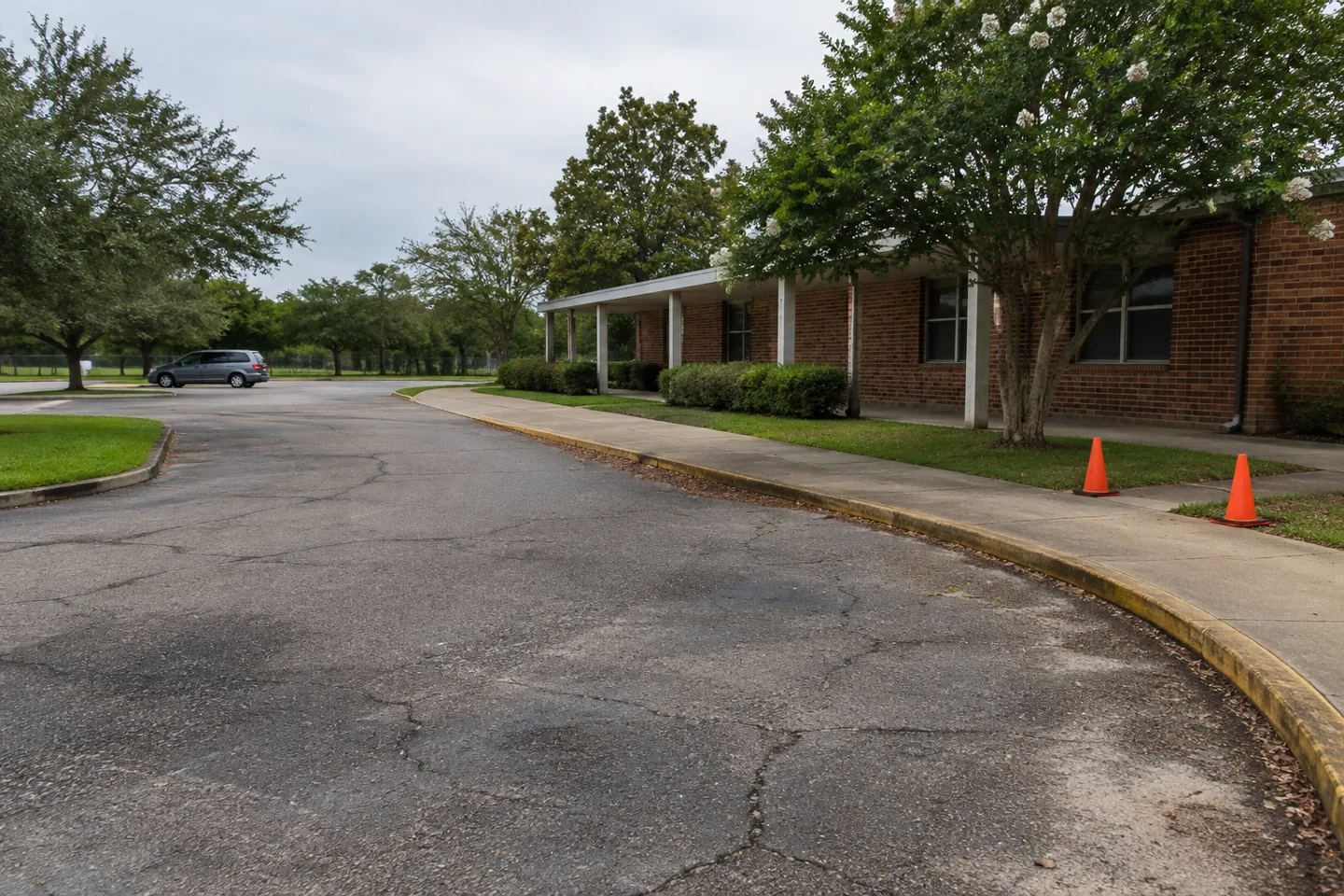
An off-peak empty lot does not show the access needs during pickup.
Turn the discussion into a clear work boundary
Keep a copy of the marked site sketch with the estimate. Identify the area being authorized and any adjoining feature that must remain protected or available. If the contractor recommends an investigation or a separate trade, record that next step before treating the proposal as a final solution. A planning guide helps you ask questions; it cannot establish hidden conditions from photographs.
When a decision changes the work, request an updated description showing what was added, removed or deferred. Confirm how any additional quantity will be measured and approved. Make sure the person giving the approval has authority for that part of the property. This prevents a useful site conversation from becoming a different job than the one the owner expected.
Bring the right information to the visit
Send your address, the overall project goal and photos showing this specific connection or operating area. Include a wide view for context and a closer view of the detail under discussion. Describe any timing or access constraint that affects the decision. Avoid placing yourself in traffic or entering inaccessible structures to collect information.
Describe the real arrival and pickup pattern
The useful starting point is a description of how the property operates on an ordinary school day. Record when staff arrive, when buses use the entrance, when families queue and when the last vehicles normally leave. Include after-school programs, evening meetings and weekend activities. A calendar showing that classrooms are closed does not necessarily mean the parking area is empty. Give the property representative enough information to identify a realistic work window instead of asking a contractor to infer the entire schedule from one quiet visit. Note which activities are confirmed and which dates are still tentative.
Separate parking, queuing and pedestrian connections
A parking space, a vehicle queue and a walkway can occupy neighboring areas while serving different needs. Mark these uses on a simple property sketch and identify the entrances they connect. Show where vehicles wait before pickup and where pedestrians normally reach the building. The sketch is an owner communication record, not an approved temporary traffic plan. Ask the people responsible for school operations to review any proposed change before families receive instructions. Keeping the uses distinct helps explain why an apparently empty section may still be needed for a later movement or building entrance.
Name the person who can approve a change
Choose one school or property contact who can answer access questions and obtain the necessary approvals. Record a backup contact for days when that person is unavailable. Explain who communicates with staff, transportation providers, parents and other users. The paving contractor should receive one current version of the agreed schedule rather than conflicting directions from several employees. A name on the worksheet does not give that person authority they do not actually have. Confirm the approval path first, particularly when a tenant school, property owner and facilities manager all share responsibility for the grounds.
Inventory events beyond the classroom calendar
Look at the specific dates proposed for work, including events immediately before and after them. Deliveries, cleaning visits, sports practices, summer programs and building maintenance can all create access needs. Ask whether a parking area is rented, shared with another organization or used for overflow during an event. Record the contact who confirmed each exception. This is more useful than a general note saying that work should happen during a holiday. A contractor can then discuss whether the requested scope fits the actual window, or whether the owner needs to consider another date or a separately defined phase.
Discuss a closed area without inventing a detour
Describe the proposed work limits and the areas that would remain available for review. Do not casually draw a replacement pickup route through a pedestrian connection or neighboring property. The school and the appropriate professionals need to decide whether an alternative arrangement can be used. Ask who supplies notices and any temporary site controls, who checks them and who handles a change during the work. Keep those responsibilities explicit in the proposal. A rough owner sketch can identify a question; it cannot establish that a substitute route is suitable for every vehicle, pedestrian or emergency use.
Write notices that match the accepted scope
A useful notice identifies the affected date, entrance or parking section, the school contact and where an updated instruction will appear. Avoid promising that an area will reopen at a fixed hour unless the responsible parties have confirmed that commitment. Distinguish the tentative planning notice from the final operating instruction. Ask the school to approve the wording before distribution so the contractor's work description and the family's instructions refer to the same area. Keep a copy of what was sent and when. If the plan changes, replace the obsolete instruction instead of allowing two different notices to circulate together.
Plan how a weather change will be communicated
An owner can prepare a communication sequence even before the final date is chosen. Decide who receives a postponement first, who updates the school notice and how people will find the current information. Ask the contractor how schedule changes are normally reported for the proposed work. Do not turn a forecast into a guaranteed completion date or assume a postponed phase can simply begin during the next pickup period. Keep a backup window as a question to resolve, with the school representative confirming that the property would actually be available during that alternative period.
Explain reopening as a separate decision
The end of on-site activity and permission for a particular use may be different events. Ask the proposal to explain who authorizes reopening and how that instruction reaches the school contact. Identify the uses being discussed: walking access, staff parking, bus movement and pickup queues should not be silently treated as one interchangeable category. Avoid choosing a universal waiting period from this worksheet. The agreed work, materials, conditions and contractor instructions determine the actual restriction. A written handoff gives the school a clear message to communicate instead of relying on the appearance of the pavement from the doorway.
Keep photographs tied to a recognizable location
Take ordinary owner photographs before the planned work when the area can be viewed without entering an active traffic movement. Use building corners, an entrance or a fixed landscape feature to identify each view. Record the date and the reason the photograph matters, such as a retained walkway connection or the edge of a proposed work section. A photo collection should support the scope discussion, not diagnose hidden pavement conditions. Avoid including identifiable students or private school records. Share only the property information needed for the estimate and keep a copy with the accepted proposal and the current access worksheet.
Review the proposal against the operating window
Before approval, compare the proposed boundaries, preparation, work sequence and exclusions with the schedule the school supplied. Ask which items require the same closure and which could require a different access discussion. Confirm whether temporary controls, notices and line marking are included or assigned elsewhere. If a question remains open, identify who will answer it before the start date. Price alone does not show that two proposals assume the same school access arrangement. An estimate that names the work area and the owner's responsibilities makes the next conversation much more specific than a broad instruction to avoid pickup time.
Close the communication record after the work
Keep the approved schedule, notices, accepted proposal, changes and reopening instruction in one property record. Add a short note describing which section was completed and which item remains deferred. If a school representative observes an unresolved concern, record the location and ask a focused question rather than announcing a hidden defect or a warranty conclusion. This record helps a future facilities contact understand the decision without reconstructing it from scattered messages. For a quote discussion, send Asphalt Solutions the address, current pavement photographs, the actual operating windows and the person authorized to coordinate property access.
Questions before you approve the work
Discuss the actual property and work limits
Send the property address, current photographs, intended use and access needs. Keep planning with these related decisions.
Reviewed October 14, 2026. Owner preparation guidance; the accepted proposal defines the actual work.