
The decision in plain language
Borders need a clear work limit and protection discussion.
The situation to discuss
Show vegetation that overhangs the pavement and areas where runoff reaches planting beds. Define trimming and cleanup responsibilities before work.
Your five-point decision sheet
Use these headings on a simple sketch or in your project notes. Under each one, write the actual property observation, the question you still need answered and the person responsible for the decision. Leave an unknown item marked as a question instead of assuming it is included.
- Where does the proposed pavement work end beside each planting bed?
- Which edging, plants, lights and irrigation components must remain?
- Who moves planters, hoses and other items before the work?
- What landscaping or irrigation work needs separate coordination?
- Which border concerns and cleanup limits are recorded in the proposal?
What not to assume
Pavement maintenance does not automatically include landscape restoration.
Turn the discussion into a clear work boundary
Keep a copy of the marked site sketch with the estimate. Identify the area being authorized and any adjoining feature that must remain protected or available. If the contractor recommends an investigation or a separate trade, record that next step before treating the proposal as a final solution. A planning guide helps you ask questions; it cannot establish hidden conditions from photographs.
When a decision changes the work, request an updated description showing what was added, removed or deferred. Confirm how any additional quantity will be measured and approved. Make sure the person giving the approval has authority for that part of the property. This prevents a useful site conversation from becoming a different job than the one the owner expected.
Bring the right information to the visit
Send your address, the overall project goal and photos showing this specific connection or operating area. Include a wide view for context and a closer view of the detail under discussion. Describe any timing or access constraint that affects the decision. Avoid placing yourself in traffic or entering inaccessible structures to collect information.
Make the edge of the work recognizable
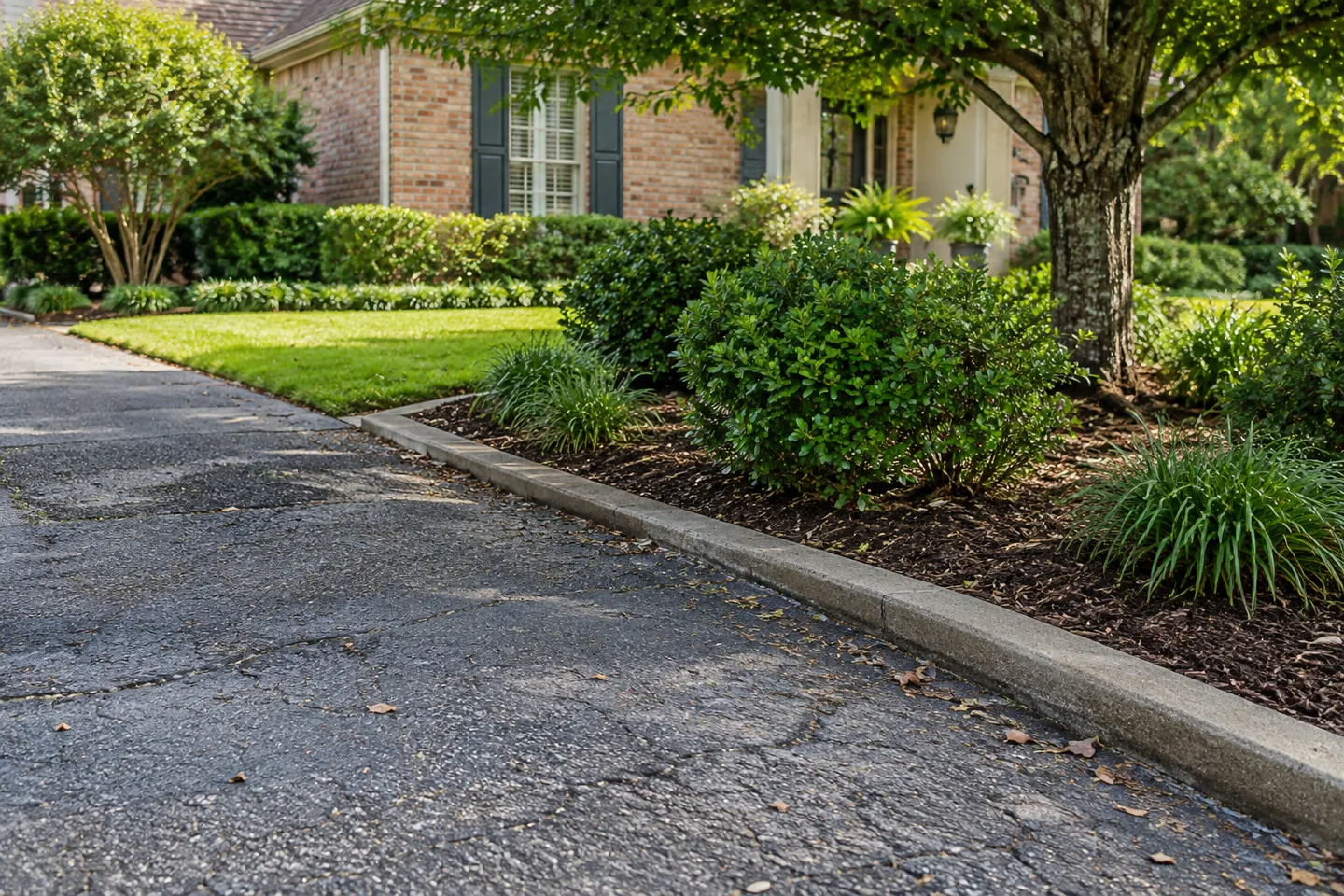
An asphalt edge beside a lawn or planting bed can be difficult to describe with a single number. Start with a wide photograph showing the driveway or lot, then a closer view of the boundary that matters. Identify fixed features such as a brick corner, concrete edging or the end of a planting bed. Explain whether the requested work ends at the existing pavement edge or whether another item is being considered. A clearly described limit helps both parties discuss what will remain in place. It also prevents a general request to improve the driveway from silently becoming a landscaping request.
List the features the owner wants retained
Record shrubs, established trees, decorative stones, edging, irrigation components, landscape lighting and other nearby features. Explain which ones the owner wants retained and which ones are already scheduled for separate work. Do not assume that every object near the pavement is easy to move or included in the paving proposal. A planter on the surface and a fixed irrigation component have different coordination needs. The list gives the contractor a starting point for discussing protection, access and exclusions. Keep it specific enough to locate the feature without making unsupported statements about root extent or buried services.
Describe irrigation without guessing where it runs
Mark visible irrigation heads, valve boxes and known controls, then state what the owner actually knows about the system. If there is a drawing, share the relevant portion and identify its date or limitations. A pipe route should not be invented from the position of one sprinkler head. Ask who coordinates with the irrigation provider if a component needs attention before or after the pavement work. Include ordinary operating schedules that may affect the proposed work window. The contractor can review the information, while the owner retains a clear record of what was confirmed and what still requires verification.
Explain who handles movable items
Walk through the items near the border that could obstruct access: pots, furniture, hoses, garden tools, temporary decorations and parked vehicles. Ask whether the owner is expected to remove them and by what point in the schedule. Identify a storage location that does not interfere with another property use. Avoid writing that the contractor will relocate a heavy planter unless the proposal says so. Small assumptions about preparation can create a larger disagreement at the start of a job. A short responsibility list lets the owner prepare the actual area rather than clearing the wrong section of the property.
Discuss protection as a defined proposal item
Ask how retained features near the work boundary will be addressed for the proposed activity and which responsibilities belong to the owner. The answer should describe the actual arrangement rather than promise that every landscaping condition is covered. If separate gardening or irrigation work is needed, name the coordinating party and explain when it must occur. This guide does not prescribe a protection material or equipment method. The contractor needs to choose an approach for the accepted scope and site. Put any important agreement in the proposal or a documented revision so it survives beyond the original conversation at the driveway.
Keep existing border concerns visible in the record
Photograph loose edging, existing marks, damaged fixtures or an irregular pavement edge before the work discussion. Describe what can be seen without assigning a cause that has not been assessed. For example, record that a border stone is displaced instead of claiming that roots or pavement movement caused it. Ask whether the concern is inside the proposed work or remains a separate item. This keeps an existing issue from disappearing into a broad phrase such as landscape protection. It also helps an owner explain the difference between the retained condition and the improvement they are actually asking the contractor to price.
Coordinate gardening and pavement schedules
If the owner has a landscaper, irrigation provider or tree professional scheduled, give the pavement contractor those dates and the intended activities. Explain which work must be resolved first and which timing remains open. Do not presume that several trades can work along the same narrow edge at the same time. Ask the responsible parties to agree on the sequence for their actual tasks. An owner record can connect the schedules without directing technical methods. Keep the final agreed sequence with the proposal and let each provider know when a date changes so an old calendar does not control the property preparation.
Ask about cleanup limits before approval
Clarify which pavement preparation and cleanup items are included and how the boundary with the planted area is described. Distinguish routine preparation within the accepted work from gardening, soil replacement, bed rebuilding or irrigation repairs. Those additional activities should be identified rather than folded into an undefined expectation that everything will look new. If the owner has a concern about residue or a retained finish, show the specific feature during the estimate discussion. The useful question is how that feature is addressed by this proposal, not whether a general maintenance package automatically covers every neighboring material and surface.
Document water observations as observations
If the owner has noticed water collecting along a landscaped border, record the location, approximate timing and a photograph when it can be taken safely. Explain whether this happens after irrigation, after rain or under an uncertain condition. Do not treat a surface photograph as proof of a drainage design or underground failure. Ask the contractor whether the concern affects the proposed maintenance discussion or requires a separate review. The purpose is to keep a known question visible before the scope is approved. An attractive finished surface should not cause an unrelated water concern to be forgotten or silently assumed resolved.
Use a border-by-border acceptance conversation
After the agreed work, review the accessible perimeter against the accepted boundaries and retained-feature list. Use the same fixed landmarks from the preparation photographs so both parties can identify a concern. Record anything that needs clarification, including whether a separate provider still has an assigned task. Avoid turning an appearance difference into an unsupported conclusion about responsibility or hidden damage. A focused message can say which feature is in question and ask how it relates to the proposal. Keep the answer and any agreed follow-up with the property record instead of relying on an informal recollection later.
Send a useful estimate request
For an initial conversation, share the property address, a wide pavement view, the landscaped boundaries and the particular features you want retained. Add the irrigation contact or relevant drawing if available, movable-item responsibilities that need discussion and any separate landscaping dates. Explain whether you want pavement maintenance only or also need another item evaluated. Asphalt Solutions can review that information with the actual property and requested scope. The goal is a practical written agreement covering the pavement limits and coordination questions, with separate work clearly identified rather than guessed from photographs of a landscaped driveway.
Questions before you approve the work
Discuss the actual property and work limits
Send the property address, current photographs, intended use and access needs. Keep planning with these related decisions.
Reviewed October 14, 2026. Owner preparation guidance; the accepted proposal defines the actual work.