
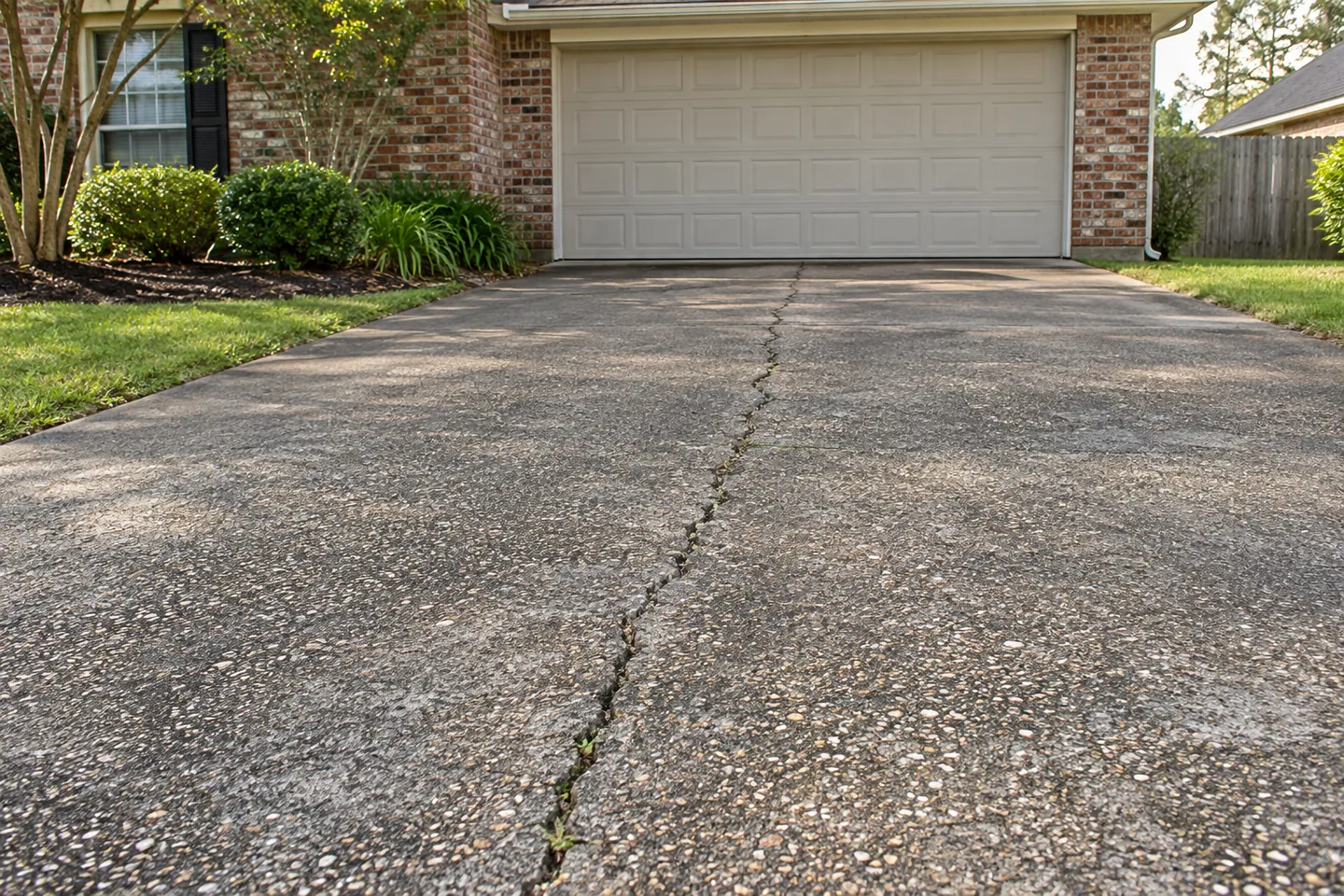
Direction is a description, not a repair prescription
Longitudinal cracking runs generally along the pavement's length or the direction of travel. It gives an owner a useful way to describe a visible line, but does not establish why the crack formed or how deep the affected condition extends. Start an inquiry with its location and appearance. The property assessment should connect those observations to a recommendation rather than selecting a treatment solely because the crack points toward the garage or follows a driving route.
A long crack can pass through several different parts of a driveway or lot. One section may be beside a retained edge while another crosses an older patch or a turning area. Show those relationships separately. A single label should not flatten the whole length into one assumed condition. Ask whether the contractor is evaluating the crack as one continuous concern or identifying sections with different repair recommendations and written limits.
Distinguish the line from a connected network. If smaller cracks branch into adjoining pavement, record that pattern too. If the nearby surface has missing material or displaced areas, describe those visible features in addition to direction. The glossary term can help organize photographs, but a contractor needs context beyond a close view of one line. An owner does not need to classify every branch before asking what assessment and scope can be offered.
Locate the line along the complete route
Take a wide view showing the crack's course and fixed references such as the entrance, garage or curb. Add closer views of distinct sections when safe. Use consistent location labels so a concern near the street is not confused with another near the back of the property. A rough sketch can connect photographs that cannot show the entire length in one frame. Keep estimated locations distinct from measured quantities until the contractor confirms the proposed work.
At a parking area, show whether the line follows a drive aisle, a parking row or the boundary between visibly different surfaces. Include the direction vehicles actually travel and the place they turn or stop. This context may inform the site discussion, but it does not identify a cause by itself. A line near a vehicle route should not become an unsupported claim that traffic alone damaged the pavement or that a particular structural specification is required.
If the crack runs near a grass edge, curb or concrete slab, photograph that connection. Note visible changes such as broken material beside the line without probing or lifting it. Share wet-weather observations where safely available and show the surrounding water route. The location record should explain what you can see. It should not claim a hidden drainage path, unsupported ground condition or legal responsibility for work beyond the pavement area.
Keep maintenance and repair descriptions separate
Ask what purpose the proposed treatment serves. A crack-related maintenance operation and removal or replacement of a defined pavement section can describe different work. The recommendation should explain which observed concerns it addresses and which remain outside the scope. Do not assume every long crack needs the same operation, or that a maintenance coating restores damaged supporting material simply because it makes the surface look more uniform.
If a proposal uses crack filling and crack sealing, ask how the contractor uses those terms in the actual estimate. Terminology can involve distinctions that depend on the condition and treatment being offered. The owner should receive a plain-language description of the work, preparation and limits. Avoid choosing a material or process from an isolated glossary definition. A useful comparison focuses on the offered operation and why it is recommended for the assessed section.
Where the proposal includes localized repairs along the line, identify their boundaries separately from any broader surface treatment. Ask what is removed or retained and whether supporting conditions require further review. Clarify how findings outside the initial recommendation will be documented and approved. A long line in a photograph may cross several priced items, so the written plan should make those relationships understandable before work begins.
Use history without inventing a cause
Share known earlier repair records along the same route. A dated photograph, invoice or maintenance note may show that part of the line existed before a surface renewal or that a particular section was previously patched. If the history is unknown, say so. A visual seam or darker strip is not proof of a construction joint, utility cut or a specific earlier method. The contractor should receive known facts and clearly labeled uncertainty.
If you have photographs from different dates, compare the same locations rather than simply comparing the longest visible lines. Record whether the concern appears to extend farther, has new branches or includes missing material. Seasonal appearance and image lighting can also change what is visible. Do not assign movement measurements from unmatched photographs. Consistent views create a useful observation record without pretending to provide a technical monitoring study.
Explain changes in property use that are actually known. Additional delivery traffic, a new parking arrangement or another contractor working through the entrance may be relevant background. Present them as dated events, not proven causes. This lets the assessment consider the property's history without directing it toward an unsupported diagnosis. Keep the desired improvement clear, whether the owner wants a specific damaged section reviewed or a broader surface option compared.
Connect the work to access and closeout
Review how the proposed treatment or repair affects vehicle and pedestrian routes along the crack. A long work strip can pass across several entrances or turning movements even when each individual repair area is narrow. For an occupied lot, coordinate notices with the people managing customers and deliveries. At a home, identify garage access and vehicle storage. The operating plan should follow the marked work rather than assuming a crack-shaped boundary creates little disruption.
At acceptance, agree the included sections, exclusions, optional work and approval procedure for discoveries. Request written reopening and care instructions for the actual treatment. At completion, keep a wider photograph showing the treated route and closer views of defined repair boundaries. The finished appearance does not verify hidden depth or a guaranteed service life. The accepted scope and project record should explain what was offered and what was performed.
To discuss longitudinal cracking with Asphalt Solutions, give the property address, location photographs and known history. Explain where the line runs and which observable change prompted the inquiry. Ask what site assessment and work can be offered rather than requesting a guaranteed fix based only on direction. The glossary term supports a clearer conversation while the property-specific recommendation determines the actual scope.
Longitudinal-crack inquiry worksheet
Mark the crack's course on a simple property sketch, then label distinct sections near the entrance, along retained concrete and beside an older repair. Match each label to a wide photograph and any safe closer view. Record known history for that specific section rather than assigning one story to the entire line. If the contractor recommends different operations along its course, write the proposal item beside the relevant location.
Before acceptance, compare those marked locations with the written included work and exclusions. Note where quantities require confirmation and how additional repair is approved. Add the occupied route affected by each item, because a long narrow work area may cross several movements. At closeout, use the same labels to record the visible treated sections. This keeps direction, assessment, offered work and follow-up connected without claiming that a line photograph reveals concealed pavement conditions.
Questions about longitudinal cracking
Meaning in plain language
Longitudinal cracking runs generally along the direction of the pavement or travel path. The pattern, movement and surrounding condition help determine its significance.
A practical example
Record whether the crack follows traffic, a construction joint or an earlier utility cut. Its alignment helps describe it consistently.
Use the term in your project discussion
Document whether the crack is isolated, widening or accompanied by other distress.
Details that matter
- Crack length
- Edge proximity
- Related settlement
A mistake to avoid
Crack direction alone does not establish its cause.
Continue with the right next step
Property conditions determine the final scope. These planning notes do not replace a site evaluation. How to use our pavement guidance