
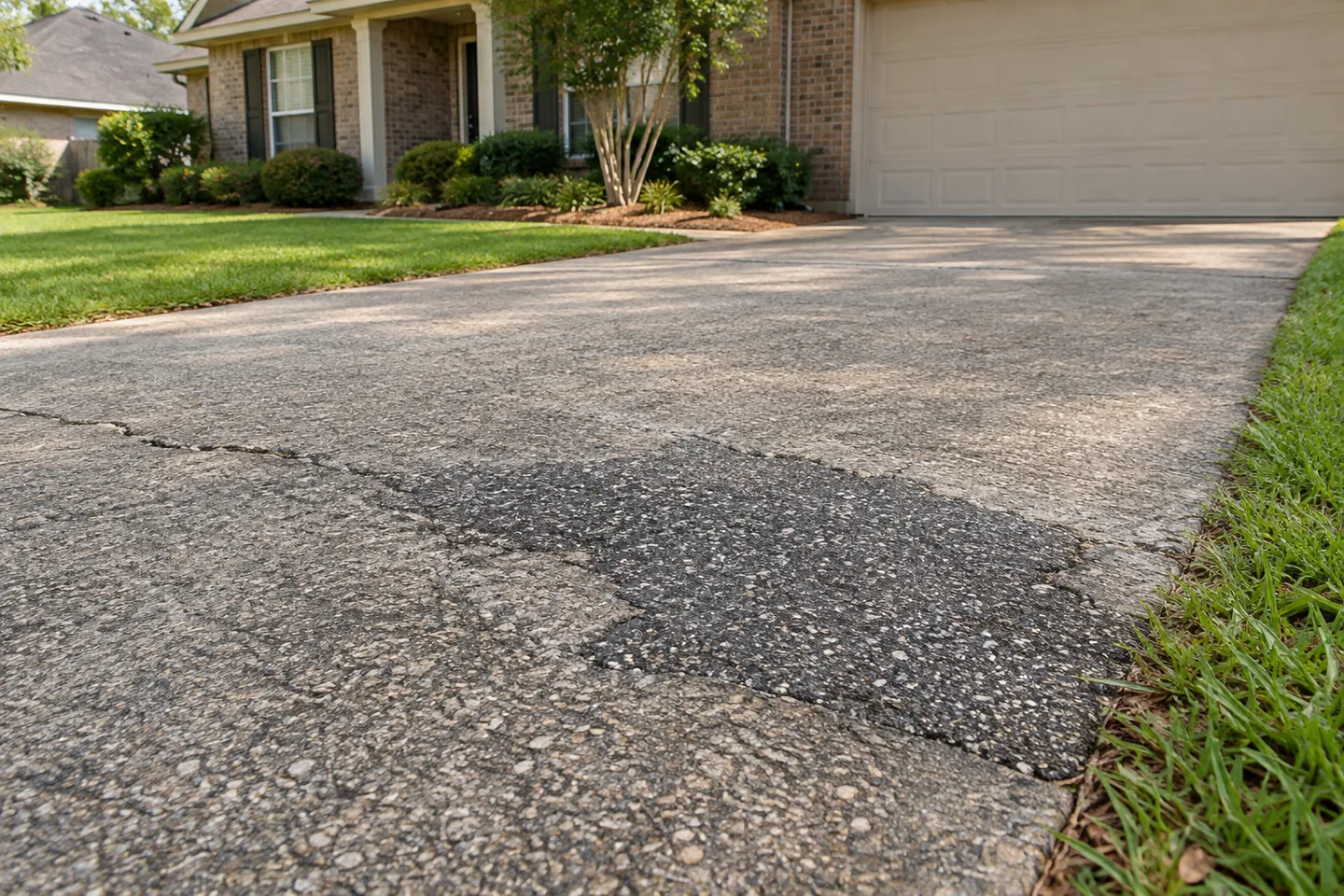
A surface patch has a limited purpose
A surface patch treats a localized area near the top of existing pavement. The phrase should prompt a conversation about the intended depth and purpose rather than an assumption that the entire damaged section will be rebuilt. Ask what visible concern the proposed patch addresses and which existing material remains. An estimate needs to explain those boundaries so the owner can distinguish a limited surface intervention from removal and replacement through the pavement thickness.
The word patch is often used casually for many different repairs. A homeowner might use it to describe a rough spot, while a contractor may be proposing a specific preparation and placement operation. Translate that shared word into a written description. Ask whether the work is intended as an interim measure or a longer-term repair recommendation for the observed condition. Neither purpose should be inferred solely from the patch's size, color or apparent simplicity.
Do not choose a surface patch simply because the visible opening appears shallow. A photograph cannot establish the depth of deterioration or the supporting conditions below it. Explain what you have observed, including whether the same section has been treated before. The contractor's property assessment should connect the proposed repair to that history. If the recommendation excludes deeper work, ask how that limitation affects the expected purpose of the patch.
Describe the defect and its immediate surroundings
Use a wide view to locate the affected area, then take a closer view from a safe position. Include any adjacent cracks, older patch outlines and loose material visible without disturbing the surface. Mention whether the concern sits in a wheel route, beside a curb or near the garage entrance. These observations help describe the location and use. They do not justify assigning a technical cause or treating all nearby deterioration as automatically included.
An earlier patch can provide useful context. Record when work occurred if you know, what was reportedly included and how the visible area changed afterward. If the history is uncertain, say so. A different texture or darker surface may identify an old repair, but does not prove its depth or material. Keep actual invoices and known dates distinct from guesses based on appearance so the contractor receives an honest account of the section.
Show connections around the patch. A repair next to concrete, a drain opening or a narrow turning area may require more discussion than a similar defect in an open section. Photograph the retained feature and the approach to it. Ask how the proposed patch meets the neighboring pavement and whether transition work is included. An owner expectation of a flush usable connection should be discussed explicitly, rather than left inside the general word repair.
Make preparation and placement visible in the proposal
Ask how the area will be prepared and where that preparation ends. Surface patching does not name every operation or material by itself. The written proposal should identify the intended treatment in a way the owner can recognize and compare. If loose or damaged material is present, ask how the contractor's recommendation accounts for it. Avoid directing a particular construction procedure from this guide; request the property-specific method and limits being offered.
Clarify the relationship between the patch and surrounding cracks. The proposed work may cover one defined area while leaving other cracks outside it. Ask whether separate crack treatment is included, optional or excluded. If a maintenance coating is also discussed, request the sequence and purpose of each operation. A coating should not be described as rebuilding support, and the existence of a patch does not mean every condition around it has been assessed or treated.
If the contractor expects conditions to be checked during preparation, agree what happens when deeper or wider damage is found. Identify the person who approves a change, how the finding is documented and how pricing is confirmed. A narrow surface repair should not quietly become a different project without that conversation. Equally, an owner should not assume a limited price includes an unspecified expansion merely because the new concern is close to the original mark.
Understand appearance, access and timing
New patch material may look different from weathered pavement. Ask about the finish expected within the patch boundary and the appearance where it meets retained asphalt. A texture difference does not, on its own, establish defective work or a particular hidden condition. If the goal is a uniform-looking larger surface, discuss that as a separate expectation. A localized repair price and a whole-driveway appearance goal can describe very different amounts of work.
The size of the patch is not the only access issue. A small area at the driveway entrance may interrupt all vehicle access, while a larger area elsewhere may leave a usable route. Show where people walk and vehicles travel before agreeing the sequence. Request instructions for protecting the work and reopening the area. Do not rely on a generic wait time or assume that a patch is ready because its top appears dry or level.
For an occupied lot, tell the property manager and contractor about deliveries, customer movements and service visits that use the affected section. Clarify how users receive notice and how the closed area is identified. If the repair is proposed between larger project phases, record the intended intermediate condition and future work separately. An interim patch should have an understandable present purpose without being mistaken for the completion of an unapproved later surface project.
Compare alternatives using purpose and limits
A surface patch and a full-depth repair can both be called a patch in casual conversation while retaining different amounts of existing material. Ask each contractor why the recommended approach fits the observed area. Compare repair boundaries, preparation, placed material, retained connections, exclusions and follow-up instructions. A lower total for limited work is not proof that it will address the same concerns as a broader proposal. The written purpose is essential to a fair comparison.
At completion, photograph the repair in its wider setting and retain the accepted scope. Note any agreed exclusions or changes and the instructions for use. If a concern returns, record the date, location and observable change rather than declaring that every patch on the property has failed. The original repair record helps a later discussion distinguish the treated area from adjacent deterioration and understand whether the work was intended as an interim or broader repair.
For a surface-patch inquiry, give Asphalt Solutions the property address, the location of the concern and any known previous repairs. Send photographs that show the patch area and its connections, then explain what improvement you want reviewed. Ask what evaluation and work can be offered. The glossary helps organize that conversation; it cannot confirm suitability, a guaranteed service life or the final repair method without the actual property assessment.
Surface-patch expectation worksheet
Write the visible defect, the improvement you want and the purpose the contractor assigns to the proposed patch. Keep those three descriptions separate. For example, an owner may want a whole-driveway appearance improvement while the offered work addresses one localized worn section. Note retained surrounding cracks and the proposed boundary. Ask which concerns the limited repair is intended to address before treating its price as a complete renewal plan.
Record whether the patch is described as interim or longer-term work, what preparation is included and which nearby features remain unchanged. Add access and use instructions when they are supplied. At closeout, refer to these specific items rather than comparing the patch with an imagined uniform surface. If a concern later returns, the worksheet helps explain what was observed, what was offered and what was actually accepted. It provides context without claiming a guaranteed outcome or diagnosing hidden pavement conditions.
Questions about surface patch
Meaning in plain language
A surface patch treats a localized area near the pavement surface. Its usefulness depends on the depth and cause of damage.
A practical example
A surface patch can address a limited surface concern, but the scope should explain any supporting failure it excludes.
Use the term in your project discussion
Ask whether the proposed patch addresses the failed material or only covers it.
Details that matter
- Defect depth
- Edge condition
- Previous repairs
A mistake to avoid
A surface patch and a structural repair are not interchangeable.
Continue with the right next step
Property conditions determine the final scope. These planning notes do not replace a site evaluation. How to use our pavement guidance