
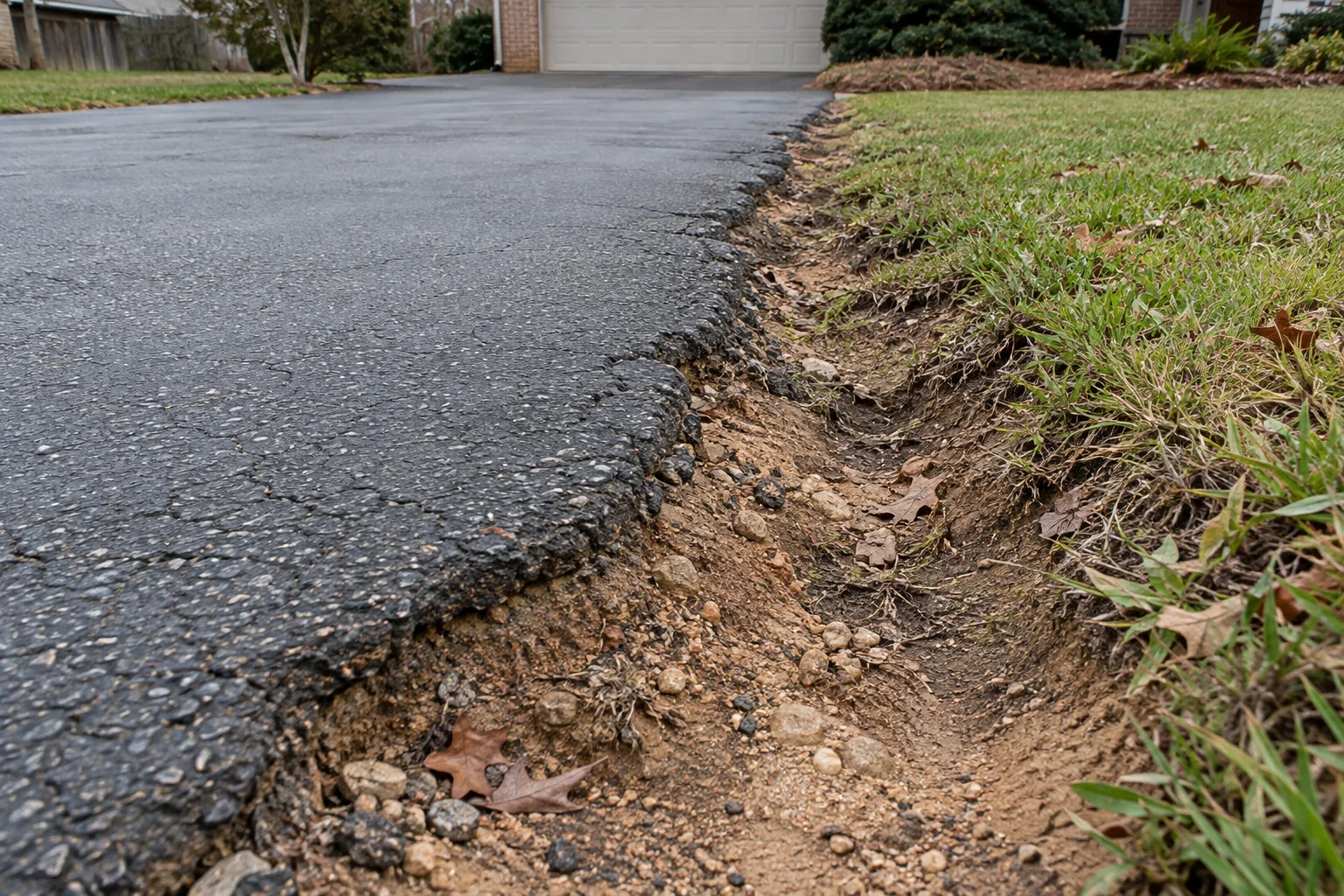
Review the pavement edge and adjoining ground
Erosion beside a driveway is a concern at the connection between pavement and the surrounding site. Show the asphalt edge and the adjacent ground together. Exposed soil, channels, displaced landscape material and a broken pavement edge are different observations that may occur in the same area. Describe each one instead of assuming a single repair activity addresses all of them.
Start with the practical effect on the property. The concern may be an edge that is becoming difficult to use, soil washing onto another surface or damage appearing after rainfall. Identify the affected driveway section and whether it is near the entrance, a slope, a downspout discharge or another visible feature. That context helps define what should be examined during the visit.
A photo can locate erosion, but it does not verify the hidden condition under the pavement or establish a complete drainage explanation. Ask the evaluator to distinguish the observations from the cause and proposed correction. The initial goal is an understandable review boundary that includes relevant adjoining ground without silently expanding a pavement estimate into unspecified landscape or drainage work.
Record water observations safely and clearly
If you have safely obtained after-rain photographs, include them with a dry-weather overview. Note approximately when the image was taken relative to the rain and describe what you actually saw. Water crossing the driveway, flowing alongside it and collecting at one point are useful distinctions. Avoid saying that every channel is active during every storm when the record shows only one event.
Look at the surrounding context from safe positions. A roof discharge, adjoining slope, paved connection or drainage feature may be relevant to the discussion. Identify these features without declaring that one is definitely responsible. There is no need to stand in moving water, approach traffic or recreate runoff to prepare a request for review.
Keep the location of each observation clear. A wide photograph with the concern marked can connect a close view of washed soil to the actual driveway edge. If several sections are affected, identify them separately. This helps the contractor understand whether one continuous boundary or several distinct locations need attention before a scope is proposed.
Explain the history of changes around the edge
Describe known changes to the driveway, landscaping or nearby water connections. Share actual dates and records where available. A new downspout arrangement, recently disturbed ground or an earlier edge repair can be relevant context, but timing alone does not prove causation. Keep what happened separate from what you think it caused so the site discussion can test the explanation.
Tell the contractor whether soil or landscape material has been replaced repeatedly and where it went afterward, if that is known. Include earlier photographs that honestly show the same location. A recurring maintenance activity can help establish the practical concern without proving that the same correction should be repeated or that the entire driveway requires replacement.
Do not excavate beside the edge to inspect support before the visit. Explain visible openings, loose edges or other concerns as they are. If further investigation is appropriate, ask what it is intended to determine and how its limits will be described. An initial paving conversation should not depend on an owner disturbing soil or attempting an improvised test.
Separate pavement, shoulder and drainage scopes
Ask which part of the proposed work concerns the asphalt and which part concerns the adjoining ground. A pavement-edge repair does not automatically include reshaping the surrounding grade, establishing ground cover or changing a water route. These activities may need coordination, but their boundaries and responsible providers should be clear before approval.
If several providers are involved, discuss the order in which they need to work. The person responsible for the final edge connection should understand the intended adjacent grade, and the party handling water or landscaping should understand the retained pavement. Avoid leaving each provider to assume that another scope will supply an unspecified finished condition.
Clarify whether off-property drainage, shared features or public connections require separate confirmation. Do not direct water toward another property as an informal repair plan. Ask who must resolve any authority or ownership question for the actual location. This guide does not establish a drainage design, local approval requirement or right to alter adjoining land.
Compare the proposed repair boundary and purpose
The contractor should explain why the suggested pavement boundary fits the concern being addressed. It may extend beyond the most visibly broken edge or leave sound pavement in place, depending on actual findings. Ask what is retained and how the finished connection will be made. The visible length of washed soil alone does not define every dimension of pavement work.
Compare alternatives by their purpose. A localized pavement repair and a broader project with adjacent site work can represent different objectives. Ask what each is expected to accomplish, which conditions remain and what further information is needed. A clear comparison helps an owner understand a price difference without treating every option as the same repair with a different material amount.
Discuss how unexpected conditions after authorized removal would be handled. The agreement should identify who receives the findings, how a changed scope is priced and who approves it. Keep allowances and exclusions understandable. That process matters particularly where the relationship between the visible pavement edge and surrounding ground cannot be fully established before work begins.
Plan access and protect the agreed work area
Identify the vehicles and walking routes that use the affected edge. Explain whether drivers routinely place wheels near it or whether the driveway provides the only property access. Include deliveries and temporary parking in the planning conversation. The contractor can then discuss closures and sequencing against the actual use rather than assume the entire driveway can remain unused.
Agree how people will be told where they may drive or walk during the work. If another provider must complete adjacent work afterward, clarify interim conditions and who communicates restrictions. A finished paving activity does not necessarily mean every adjoining restoration task is complete. The owner needs an understandable handoff between those stages.
Follow the reopening and care instructions for the actual work. Ask which provider handles questions about the pavement and which handles landscaping or drainage concerns. Keep the scopes and instructions together so a later observation can be directed to the right person. Do not assume an unrelated online waiting period or maintenance method applies to this particular edge repair.
An example of coordinating the edge work
Suppose soil has washed from a driveway edge near a changed roof discharge, and a short length of asphalt is also broken. The timing and location are useful observations, but they do not settle the complete cause. Ask the relevant providers to identify the intended water connection and adjoining finished grade before the pavement boundary is finalized. If one estimate covers only asphalt removal and replacement, show where the soil and drainage tasks appear in the coordinated plan. If those tasks are excluded, understand what remains unresolved and who will handle it. This makes the decision about the whole connection reviewable without treating a narrow strip of new pavement as a guarantee that every source of erosion has been corrected.
Use a completion record that includes the connection
At closeout, photograph the finished pavement edge and adjoining work included in the agreement. Compare the actual boundary with the approved scope and record changes. If a separate provider still has work to finish, identify that clearly. A close photograph of new asphalt should not hide an unresolved adjacent-ground task that was always part of the coordinated plan.
After later rainfall, safely record any concern with its location and timing. Report observations without concluding that one storm proves every cause or warranty question. The before-work record and written responsibilities make the follow-up more useful. They also help distinguish a concern within the agreed work from conditions that were documented but excluded.
Contact Asphalt Solutions with the actual project address, an overall edge photograph and known water observations. Most jobs are handled at customer job sites. Visits to the Slidell contact location are by appointment only, and the listed hours mainly concern phone availability. Call or text to discuss access, the affected driveway section and the review needed before a repair boundary is settled.
Questions about erosion alongside a driveway
The direct answer
Erosion can remove support near pavement edges and change drainage paths. Repair needs to consider where runoff originates and exits.
What to discuss before choosing a repair
Discuss water management and edge rebuilding together.
What to observe and record
- Show erosion channels
- Record adjacent grades
- Photograph during a manageable rainfall
A mistake to avoid
Repairing asphalt without addressing continuing erosion may leave it vulnerable.
Continue with the right next step
Property conditions determine the final scope. These planning notes do not replace a site evaluation. How to use our pavement guidance