
Start with the condition you can actually describe
This hub helps you choose a useful observation guide when something about a driveway, parking lot or paved entrance concerns you. You do not need to diagnose the pavement before contacting a contractor. Start with the visible condition: a crack, loose material, a depression, standing water, a damaged edge or an awkward connection. The individual guides help turn that observation into a clearer project question.
A symptom can have more than one explanation, and several concerns can occur in the same area. A photograph of water in a wheel path does not identify which pavement layer moved. Loose stones do not automatically establish that an entire driveway needs replacement. Use the guides to organize what you know and what still needs evaluation, rather than choose a repair from a label alone.
The practical next step is a property-specific discussion. Share the actual site address, the location of the concern and the information that explains how the area is used. A contractor can then describe what it can assess and whether additional investigation or another professional is needed. The website provides planning guidance, not a remote construction design or a diagnosis of unseen conditions.
Cracks and broken areas: record the pattern and location
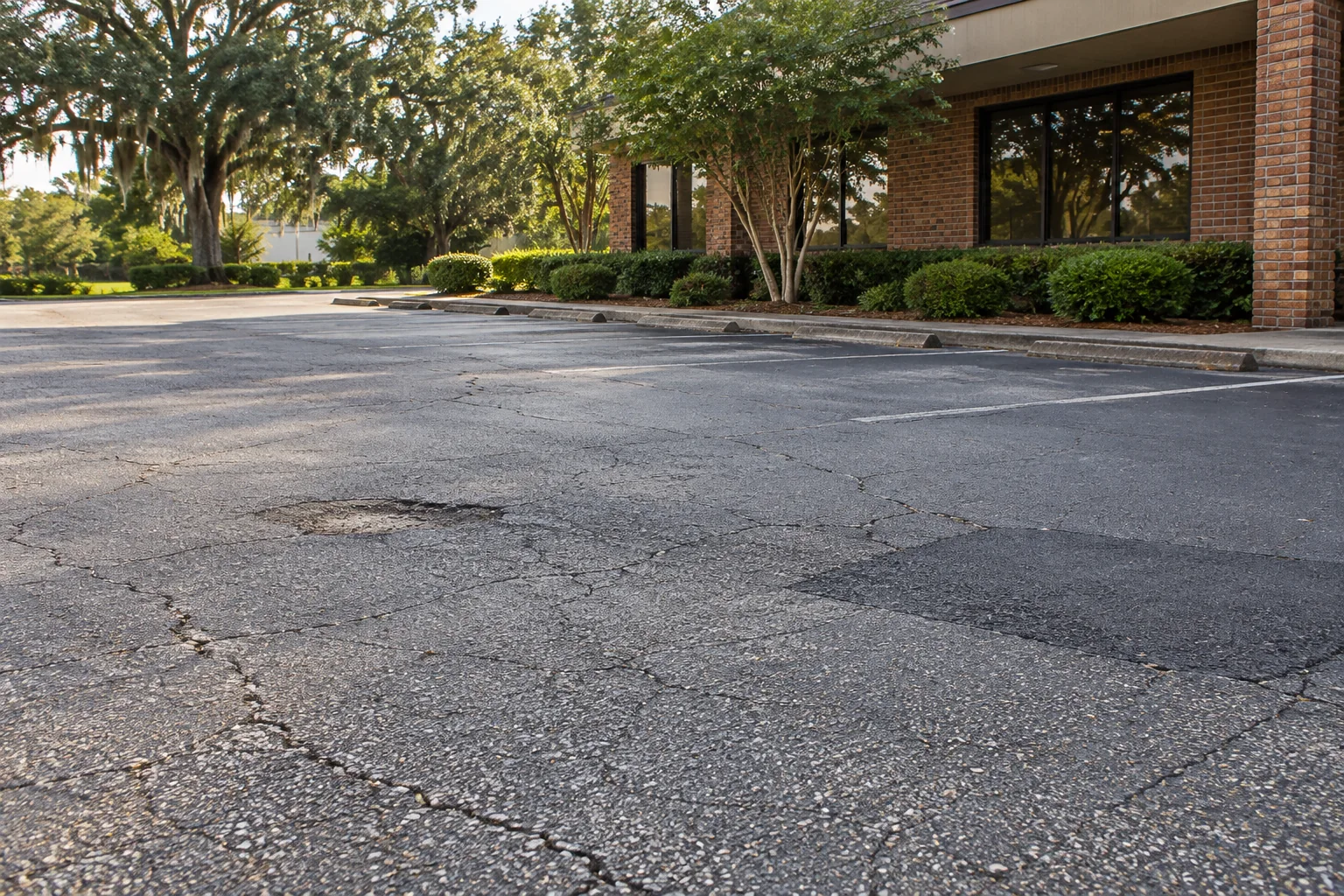
For cracks, show the pattern in a wider view before focusing on a close detail. Note whether the concern follows an old patch, a utility restoration, a pavement edge or another recognizable feature. That context helps the evaluator understand which locations need attention. Do not assume that two cracks with a similar appearance share the same cause or require identical work.
Broken areas deserve the same location record. Identify the affected entrance, parking row or driveway section and describe whether the condition has changed. If previous work occurred there, attach the actual scope when available. A recurring concern at a repaired area is useful history, but it is not proof of why the repair deteriorated. Ask what information is needed to evaluate the next step.
The guides below separate common observations so you can find a relevant starting point. If several apply, identify the related locations together. A contractor may need to review the broader area rather than price each visible symptom as an isolated patch. Keep your request focused on what you want evaluated and the practical effect on access or use.
Water and depressions: include the surrounding path
If water collection is the concern, include the area around the puddle as well as the puddle itself. Note nearby drains, retained concrete, entrances and changes in pavement level that you can observe safely. Explain when the water appears and whether the condition seems new or recurring. These details describe the problem without pretending that a photo establishes the needed grade.
Distinguish an observed wheel-path depression from a general low area where possible. The pattern can help frame the review, but it does not determine which material or layer is responsible. Ask whether the proposal evaluates the depression, the surrounding water path or both. Filling a visible low point and addressing the broader drainage question should not be treated as automatically identical scopes.
Never enter traffic, an active work area or an unstable-looking location to collect better images. A safe wider view and clear description are enough to start a conversation. The appropriate evaluator can determine what measurements or further information are needed. The purpose of these guides is to help arrange a useful review, not encourage owners to perform tests or construction work themselves.
Loose material and turning wear: describe change and use
Loose aggregate, rough texture and tire marks can raise different questions. Describe whether material appears to be increasing, whether the surface beneath it looks different and where the condition sits in relation to normal traffic. A turning area may deserve a different use description from a straight driveway approach. Include that information rather than select a cause from surface color.
If work was completed recently, keep the original instructions and contact the responsible provider about the concern. A general web guide cannot replace the actual product, project and reopening information. Tell the evaluator when you first noticed the condition and what activity occurs there. Do not deliberately pivot a vehicle or probe the pavement to demonstrate that something is soft.
The individual guides help distinguish the observation from the repair decision. A maintenance activity may have a different purpose from a repair addressing damaged material or support. Ask the contractor to explain what the proposed work addresses and what remains outside it. That question is more useful than assuming that a familiar service name solves every visible pavement concern.
Edges, connections and nearby features belong in the request
Concerns often appear at the places where different surfaces meet. A driveway edge, garage apron, sidewalk connection or drain surround can affect how people and vehicles cross the area. Show both sides of the connection and a wider view of the approach. Identify what remains and what nearby work has changed, if known.
If the concern affects a walking approach or accessible parking arrangement, identify that context early. The appropriate person may need to review more than the visible pavement defect. A localized repair proposal should not be interpreted as a complete accessibility evaluation unless that service is actually included. Ask who evaluates the relevant arrangement and how the construction scope relates to it.
Also identify property limits or features controlled by another party. A public connection, shared access or separately owned drainage feature can create a coordination question. The contractor needs to know that constraint before assuming it can modify the area. These guides do not set local permission rules; they help make the responsibility question visible in the project discussion.
Prepare one clear evaluation request
A useful request combines the site address, recognizable location, visible concern, known history and current use. Add wide and close photographs where safe. State the outcome you want reviewed, such as understanding a recurring repair, addressing an entrance problem or planning broader pavement work. The contractor should not have to infer your goal from an unlabeled image.
When an offer is prepared, compare the same areas and concerns across providers. Ask what preparation, repair, retained connections and access arrangements are included. If a question requires more evaluation, record that next step instead of treating a preliminary allowance as a final diagnosis. Keep limitations and owner responsibilities beside the relevant work item so they remain visible when comparing totals.
For an occupied property, describe vehicle movements, deliveries and pedestrian needs before scheduling. A small damaged area can sit at an essential entrance. Ask what access changes the work requires and how reopening will be communicated. The appropriate repair and the practical work plan belong in the same conversation, even when they are documented as separate responsibilities.
Choose a guide, then discuss the actual property
Use the linked condition guides below to prepare your observations. You can also use the pavement glossary when a proposal contains an unfamiliar term. Keep the distinction clear: terminology explains a topic, while the condition guides help organize a reported concern. Neither replaces evaluation of the actual driveway or lot.
Call or text Asphalt Solutions with the job-site address and the concern you want reviewed. Most projects take place at customer properties. Visits to the Slidell contact location are by appointment, and listed phone availability is separate from work scheduling.
Keep the next-step decision visible
After using a guide, write down the question you want the contractor to answer. It might concern the extent of a repair, whether another evaluation is needed or how a specific entrance can remain available during work. Keep that question with the photographs so the conversation is not reduced to choosing a familiar service name. If a recommendation leaves another concern unresolved, record it as open. A useful property file distinguishes the observation, evaluated recommendation, accepted scope and completed work instead of treating every conversation as a finished repair.
Questions about pavement problems
Find the question that fits your property
Use these focused guides alongside an on-site evaluation. A photograph or definition cannot establish pavement structure, drainage performance or a final repair specification.
- Asphalt scuffing from parked vehicles
- Asphalt separating from a concrete curb
- Concrete damage beside a joint
- Concrete panel rocking under traffic
- Concrete surface flaking
- Crack pattern around a manhole
- Cracked concrete driveway panels
- Cracked pavement at a building entrance
- Cracking beside a trench drain
- Cracks around a parking drain
- Cracks following an old utility trench
- Cracks reappearing through an overlay
- Damaged asphalt beside a gate
- Driveway edge breaking away
- Driveway entrance scraping vehicles
- Driveway low spot beside a downspout
- Driveway repair creating a new lip
- Driveway water running toward a neighbor
- Dust or loose material after paving work
- Erosion alongside a driveway
- Faded parking lines
- Grass growing in pavement cracks
- Heavy trucks damaging an asphalt corner
- Loose parking bumpers
- Loose stones on an asphalt surface
- New cracks after a rainy period
- Oil stains before sealcoating
- Old sealcoat peeling or wearing unevenly
- Parking drainage blocked by debris
- Parking lot puddles around wheel stops
- Parking spaces difficult to understand
- Patch boundaries breaking apart
- Pavement deteriorating beside landscaping
- Pavement higher than a drain inlet
- Pavement ridge at a delivery entrance
- Pedestrian access during lot repairs
- Puddles after resurfacing
- Recurring pothole after patching
- Repeated damage at a dumpster pad
- Roots lifting a driveway
- Shiny asphalt in hot weather
- Soft asphalt in a turning area
- Standing water at a sidewalk crossing
- Surface cracks without visible settlement
- Surface damage where vehicles brake
- Trip edge between concrete and asphalt
- Unclear reopening time after sealcoating
- Uneven pavement after utility restoration
- Vehicles blocking a walking route
- Water collecting in accessible parking
- Water entering asphalt cracks
- Water pooling beside a garage
- Wheel-path ruts holding water
- Widespread cracking across a parking lot